

 By Karan Sharma
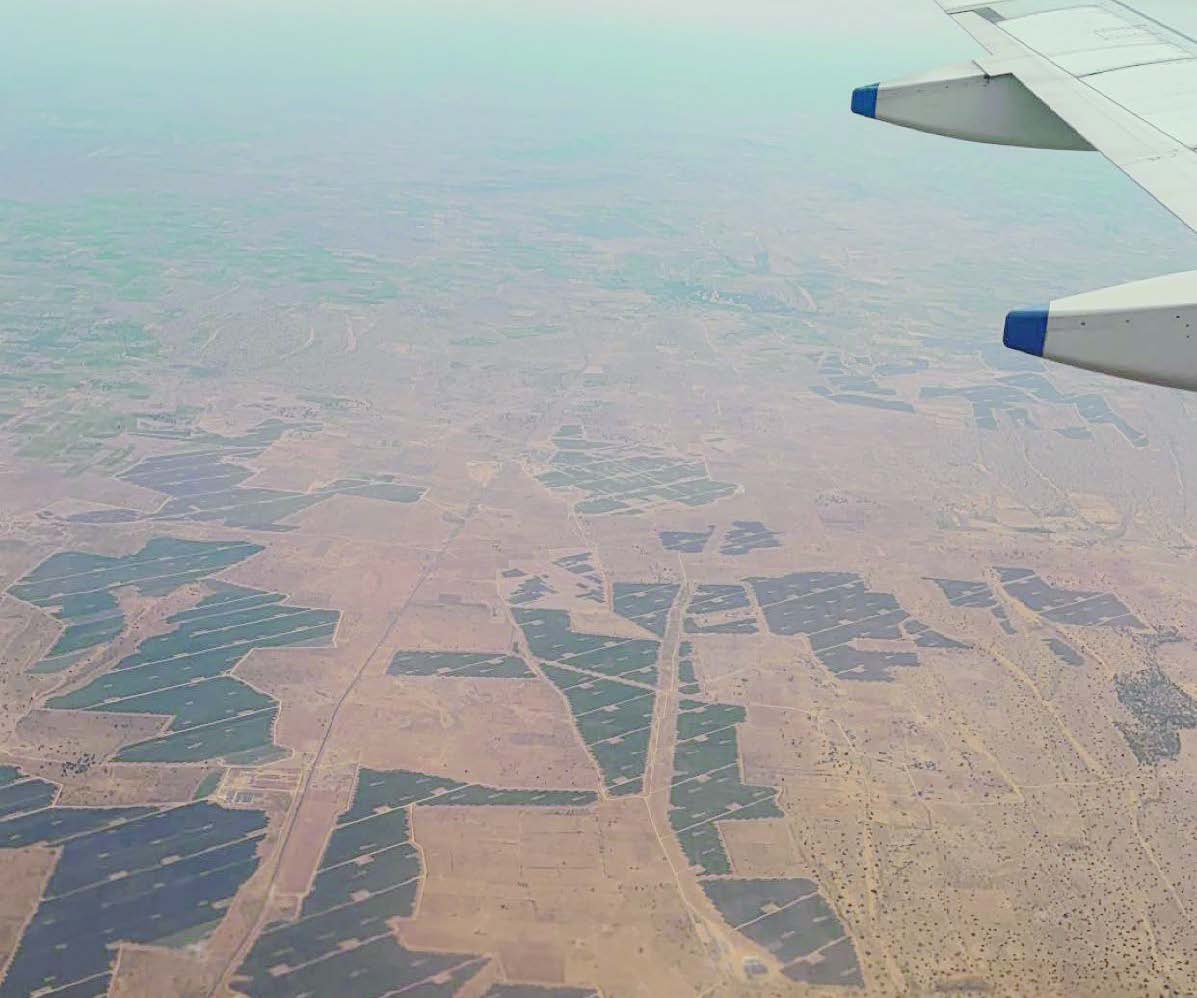
They make for a stunning aerial sight. Just a few minutes before touching down in Jaisalmer, they come into view suddenly – arrays of solar panels and giant wind farms, stretching endlessly across the stark desertscape. The medieval fort town, known for its formidable fortresses built by its Rajput rulers, now stands at the epicentre of India’s renewable energy transition, making use of the region’s abundant sunlight and strong desert winds.
I was on a visit to ACME Solar Holdings Limited’s recently commissioned 1,200 MW solar project in Sanawara, Jaisalmer district. A two-hour bus ride through the beautiful countryside – one of the highlights of the visit – took me to the project site, 107 km away from the golden city. The main objective of the visit was to get a first-hand view of the project’s scale and operations, and an understanding of ACME Solar’s larger renewable energy vision. The three-day visit encompassed not only a visit to the solar plant but also a taste of Rajasthan, from the delectable gatte ki sabzi to the sand dunes of Thar!
The visit provided key insights into the ground-level challenges and realities of developing renewable energy projects in India, as well as the impact of renewable energy deployment in remote, border regions that previously lacked infrastructure and essential resources. This article presents the key takeaways from the visit, focusing on the project details, its implications for the region, and ACME’s growth plans.
Project overview
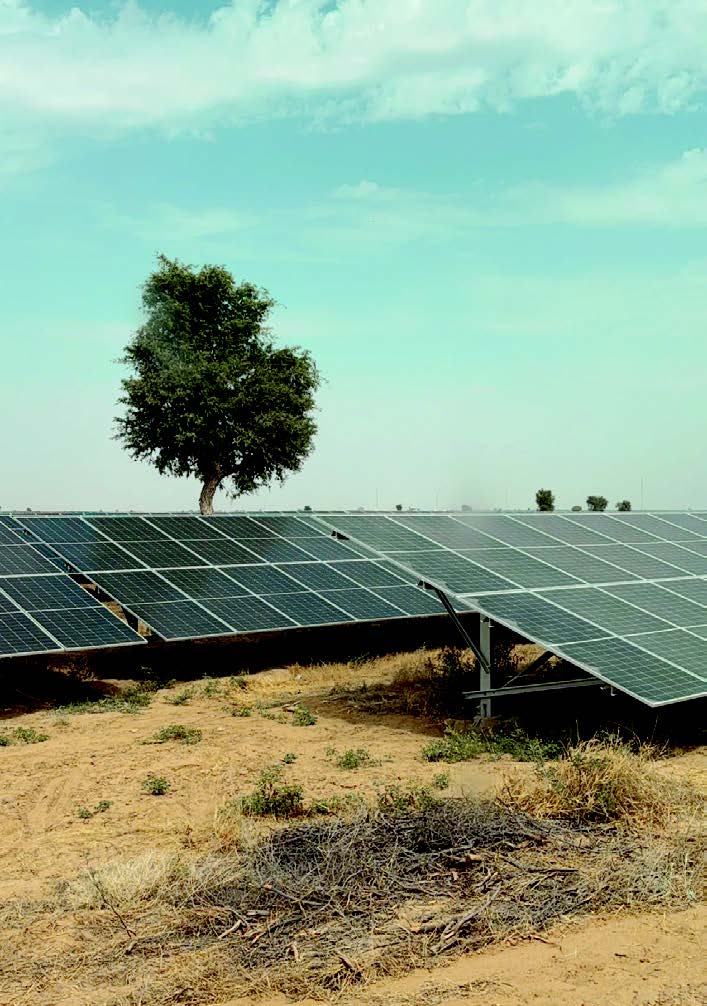 The 1,200 MW Jaisalmer interstate transmission system (ISTS) solar project has been developed by four special purpose vehicles – ACME Deogarh, ACME Phalodi, ACME Raisar and ACME Dhaulpur – each constructing 300 MW and interconnected via a central substation at a single location. The company won this solar project at a tariff of Rs 2.44 per kWh, 600 MW each from two different auctions – Solar Energy Corporation of India Limited’s (SECI) 2,000 MW ISTS-connected solar project auction (Tranche I) and 3,000 MW ISTS-connected solar project auction (Tranche II). The project is strategically located in one of the best solar irradiation zones of the country and leverages common infrastructure from all four plants (300 MW each) to evacuate power leading to optimised generation at a higher efficiency. The project covers a total area of 4,400 acres and comprises 31,68,918 solar modules mounted on 56,225 precision-engineered tables, supported by a robust structural foundation with a total structural weight of 30,923 tonnes. The project also includes 384 inverters and 100 transformers, and is connected to the grid at the Fatehgarh pooling substation (operating at 220/400 kV). The project operates with an AC-to-DC ratio of 1.46:1 and has shown a capacity utilisation factor of 30 per cent in the past two to three months of operation, benefiting from the high solar radiation levels of 2,050 kWh per square metre in the region. The energy generated is contracted to SECI, with the project being connected to the ISTS and supplying power to several places in India, including discoms in Bihar (North Bihar Power Distribution Company Limited and South Bihar Power Distribution Company Limited), Puducherry (Electricity Department of Puducherry), and Delhi (Tata Power Delhi Distribution Limited) via offtake agreements.
The energy output from the project is expected to reach around 3,200 MUs annually, thereby reducing greenhouse gas emissions by 3 million tonnes per year. The project was financed from PFC Limited and REC Limited. According to Ashutosh Singh, O&M Head, ACME Solar, the project employs Rockwell supervisory control and data acquisition (SCADA) system, Toshiba transformers, and modules supplied by JA, Jinko, Cecep as well as various other manufacturers, since the project began construction in the pre-Approved List of Models and Manufacturers (ALMM) era. Like all ACME projects, the entire engineering, procurement and construction of the project was managed in-house by ACME Solar, ensuring cost efficiency and quality control.
During project implementation, land acquisition posed a significant challenge due to local ownership complexities and negotiations with multiple stakeholders. ACME addressed this by establishing long-term lease agreements and ensuring transparent communication with local communities. Additionally, integrating multiple vendors for equipment supply and construction created coordination bottlenecks. ACME addressed this by implementing vendor diversification strategies, including a mix of local and geographically distant (remote) vendors to ensure supply chain stability. By integrating remote vendors, ACME ensured that even if logistical or operational issues arise in one region, alternative suppliers elsewhere can maintain project momentum. This strategy helped manage challenges such as logistics, communication and delays when relying solely on local partners.
 Project O&M
Singh shared that the company’s O&M strategies are designed to optimise plant performance through predictive maintenance, drone surveys and real-time string-level monitoring. Unlike other companies that rely on third-party O&M services, ACME manages its O&M in-house, allowing full control over system performance and troubleshooting. The use of in-house software for performance monitoring enables real-time control and enhances the ability to identify and address issues quickly. Drone thermography is used weekly to inspect the solar fields, and quarterly checks are conducted on transmission lines and switchyards. The O&M team also performs regular testing of critical equipment, including transformers and AC systems. The site employs a SCADA system that plays a pivotal role in overseeing plant operations, ensuring that real-time data from different components, including modules, inverters, transformers and grid interconnection points, is continuously assessed. Singh further shared that one of the key aspect at the site level is forecasting and scheduling for which company has implemented predictive analytics models to estimate energy generation patterns more accurately.
The O&M team follows structured standard operating procedures and ensures rapid response times to technical faults, minimising the mean time before failure and mean time to repair. Advanced robotic cleaning systems enable module cleaning within 24-48 hours, improving efficiency in Rajasthan’s high-dust environment. The in-house O&M team provides round-the-clock on-call and on-site support, ensuring smooth operations.
According to Singh, ACME Solar has implemented cybersecurity protocols as mandated by the Central Electricity Authority’s Cyber Security in Power Sector Guidelines, 2021, ensuring all sites have multi-protocol label switching connections and are centrally governed from its Gurugram office, with annual third-party audits conducted for compliance. No local-level personnel can override cybersecurity measures by disconnecting equipment, and strict governance policies ensure all cyber risks are mitigated. Local-level disconnection of cybersecurity protocols is strictly prohibited, ensuring secure and uninterrupted operations.
Growth strategy and future plans
ACME Solar is a renewable energy independent power producer in India with a diversified portfolio spanning solar, wind hybrid and FDRE energy solutions. In 2009, ACME group entered into the renewable energy sector, commissioning its first solar power plant in 2011.
ACME Solar has been expanding its renewable portfolio and has planned an investment of Rs 170 billion to achieve 5,000 MW capacity by 2026, with signifcant focus on hybrid and firm despatchable renewable energy (FDRE) projects. As of May 2025, ACME’s total portfolio stands at 6,970 MW, with 2,705 MW of capacity being operational and 4,265 MW under construction. The operational capacity is primarily solar based, but as the portfolio expands, it is projected to have an equal distribution between solar and hybrid/FDRE projects. The company has grid connectivity in place for a large part of under-construction capacity projects, with an additional 2,000 MW available for future expansion. ACME’s portfolio is supported by a diverse off-taker mix, with approximately 86 per cent of power contracted to central agencies like SECI, NTPC Limited, SJVN Limited and NHPC Limited, and 14 per cent to state utilities.
Nikhil Dhingra, chief executive officer, ACME Solar, stated during the visit that the company’s growth strategy is focused on diversifying its portfolio beyond solar into FDRE and hybrid energy. “Most of our projects and PPAs from FY2025 onwards are hybrid or FDRE” he said. While these plans are at a preliminary stage, they indicate a diversified approach to the company’s long-term strategy. Additionally, he highlighted that the company’s total current contracted portfolio of 6,970 MW represents a critical step towards achieving its target of 10,000 MW of operational capacity by 2030. Further, capital expenditure planning, refinancing initiatives, execution excellence and timely procurement of land and connectivity will be key priorities of the company to ensure scalability.
Parting thoughts
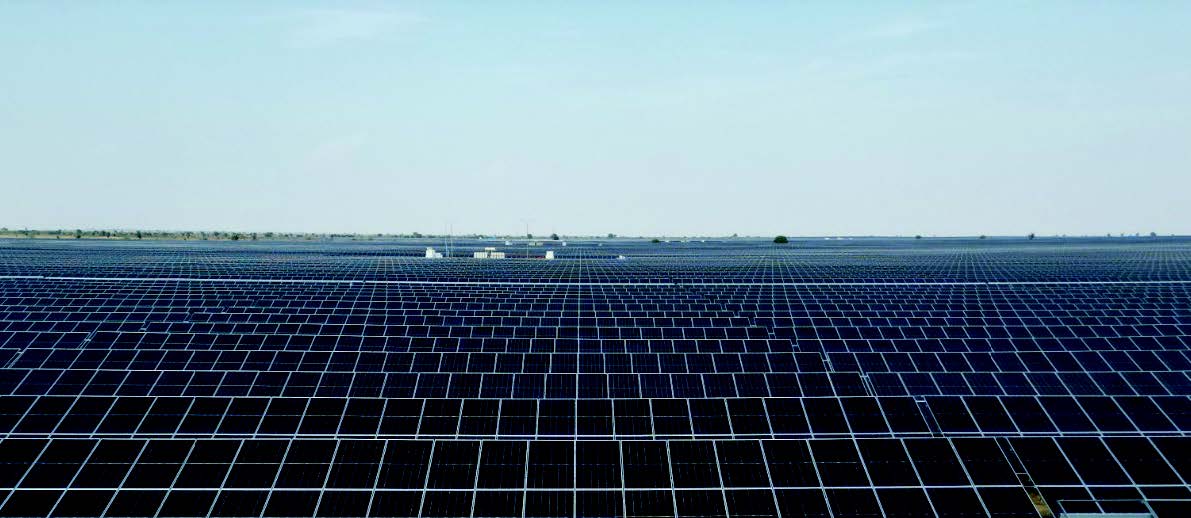 The implications of the 1,200 MW Jaisalmer solar project on the region are substantial. Rajasthan is already a hub for renewable energy deployment, and ACME’s solar project further reinforces the state’s position as a key contributor to India’s renewable energy mix. These projects provide direct and indirect employment, facilitate infrastructure development in remote areas, and contribute to grid stability by adding large-scale renewable capacity to the ISTS. However, the project has also faced land acquisition complexities and vendor coordination challenges, underscoring the need for improved regulatory mechanisms, transmission planning and hybrid energy solutions. As solar alone will not be sufficient to meet the demands of a stable and reliable power supply, the integration of battery storage and hybrid energy solutions is set to play a critical role in ensuring that projects like this contribute to grid stability.
One of the key observations from the visit was the role of automation and predictive maintenance in ensuring the plant’s efficiency. Singh explained how automatic robotic cleaning systems have been implemented across the site to maintain panel efficiency in Rajasthan’s high-dust environment. He noted that the system is dry and waterless, a critical factor given the region’s limited water availability.
Moreover, the project provides a close understanding of the complexities of scaling renewable energy in remote locations – the engineering behind multi-GW solar plants, the financial structuring required to sustain them and the operational challenges of maintaining efficiency in harsh climatic conditions.
The visit was a reminder that while the numbers – 1,200 MW, 4,400 acres, 31,68,918 modules, etc. – tell one part of the story, the real impact lies in how these projects are redefining the renewable landscape by using desert land productively, promoting rural economies through employment generation and using advanced O&M techniques to manage day-to-day operational challenges. Above all, the visit was an opportunity to see the energy transition transition taking place, gradually but surely.
