

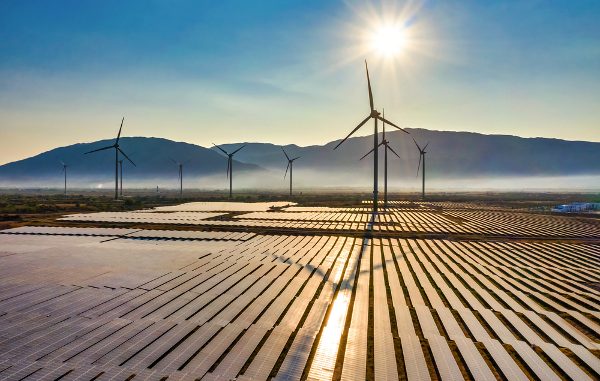
By Nathsai Parashar, Manager, Project Development and WRA, and Kuljyoti Sharma, Assistant Manager, WRA, Acme Solar Holdings Limited
India’s ambitious clean energy targets, including achieving 50 per cent electricity from non-fossil sources by 2030, have intensified the focus on integrating renewable energy with energy storage systems (ESSs). Firm and despatchable renewable energy (FDRE) is emerging as the cornerstone of India’s strategy to provide reliable, round-the-clock power while addressing the grid stability challenges posed by intermittent solar and wind generation. Thus, the intermittent nature of renewable energy, combined with the country’s rising energy demand, necessitates solutions that can bridge the gap between variable power supply and continuous demand. By integrating renewable energy with ESS, FDRE enables consistent power delivery, optimises transmission infrastructure and enhances overall grid stability. ESS stores surplus energy during high generation periods and despatches it during demand peaks, ensuring grid reliability, minimising curtailment and maximising grid asset utilisation, ultimately leading to higher capacity utilisation factors (CUFs).
ACME’s experience
ACME Solar Holdings has been at the forefront of implementing hybrid renewable energy and FDRE projects in India, with a contracted capacity of 6,970 MW, including 3,380 MW allocated to hybrid and FDRE projects across states such as Rajasthan, Gujarat and Madhya Pradesh. Further, it has 2,540 MW of operational capacity and 4,430 MW capacity under construction. Its key projects include the 680 MW ACME-NHPC FDRE project, which integrates solar, wind and battery storage to deliver firm power. By geographically diversifying assets and employing advanced forecasting models, ACME ensures optimised generation and despatch even during weather variability. Additionally, another project is the 250 MW FDRE project secured through a competitive NHPC auction.
Through the 680 MW ACME-NHPC FDRE project, ACME addresses geographic and resource variability through strategic asset dispersion across states. ESS bridges generation shortfalls, while hybrid control systems use real-time data to optimise power despatch. The project’s high CUF demonstrates the potential of hybrid FDRE to rival traditional power plants in reliability and cost efficiency.
Challenges
Despite the benefits, hybrid and FDRE projects face several challenges. Technical integration remains complex, requiring advanced predictive models and real-time energy despatch systems, especially when assets are geographically dispersed. High capital costs, although decreasing, require significant upfront investment. Financing these projects often involves long payback periods, creating a need for innovative funding mechanisms. Regulatory complexities, including lengthy approval processes and a lack of uniform state policies, delay hybrid and FDRE project implementation, while evolving guidelines on hybrid configurations introduce uncertainties. Additionally, accurate forecasting of wind and solar output remains critical for ESS performance, which is frequently hindered by unpredictable weather conditions.
Policy suggestions
To accelerate FDRE adoption, targeted policy interventions are essential. Government incentives such as subsidies, tax exemptions and viability gap funding can help offset high capital costs, while expanding the production-linked incentive (PLI) scheme for advanced battery manufacturing can reduce import dependency and lower costs. A streamlined regulatory framework across states with faster approval processes and flexible guidelines will facilitate smoother project execution, resulting in reduced delays and the accommodation of diverse project configurations respectively. Access to green financing, including green bonds, low-interest loans and public-private partnerships, can ease financial constraints, while collaborations with international climate finance institutions can mitigate project risks. Strengthening domestic battery manufacturing through PLI schemes will enhance supply chain security and drive down ESS costs. Furthermore, investing in skill development and research and development for hybrid project design, installation and operation is crucial for driving innovation in cost-effective ESS technologies.
Tendering trends and outlook
Recent FDRE tenders have demonstrated increasing competitiveness, with auction results showcasing significant cost reduction potential. For instance, SJVN Limited’s competitive tariff bid win at Rs 4.38 per kWh for a 1,500 MW FDRE project in September 2024 highlights FDRE’s ability to compete with conventional thermal power. Developers are also adopting overcapacity strategies to ensure 90 per cent monthly demand fulfilment, optimising installations and reducing overall costs.
Hybrid renewables and FDRE systems are central to India’s clean energy transition. With the right policy support, technological advancements and innovative financing, these solutions can provide reliable and sustainable power while reducing dependency on fossil fuels. ACME’s experience too showcases the commercial and technical viability of large-scale hybrid systems, serving as a model for future development. As India advances its clean energy agenda, FDRE will play a critical role in ensuring grid stability and sustainable power delivery.
