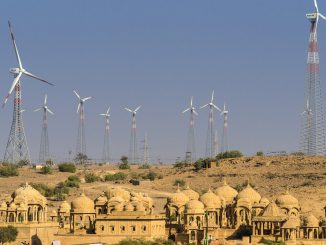
 The wind power segment, once the fastest growing renewable energy segment in India, has been facing ups and downs, posing challenges for wind turbine manufacturers. However, this trend now seems to be changing on the back of a growth surge in solar-wind hybrid and round-the-clock renewable power projects, and also the immense untapped potential of the offshore wind segment. Suzlon’s landmark comeback is a testament to the recovery of the wind power segment and presents a positive outlook for domestic manufacturers. In an interview with Renewable Watch, Vivek Srivastava, Chief Executive Officer, WTG Division, Suzlon Group, talks about the key trends and challenges in the wind power space as well as the emerging opportunities…
What have been the key hits and misses in India’s wind power segment over the past year?
India is blessed with excellent wind power potential of close to 1.1 TW. With the advancements in wind technology and innovation, the exploitable potential has more than doubled in the past three decades. However, we have been able to harness only 47 GW of wind energy (4 per cent of the total potential).
India has a clear road map for securing 50 per cent of its energy requirements from renewable sources by 2030. It is planned to have 500 GW of renewable energy capacity by 2030, of which wind is expected to account for 100 GW.
Several factors can accelerate wind development in the country and position India as a global manufacturing hub for wind power. Introducing policies that support the local manufacturing ecosystem and aligning transmission infrastructure development with wind power development will be critical to achieving this goal.
Currently, there is overdependency on the central grid (central transmission utility [CTU]), which is close to saturation, and there is hardly any capacity available before 2027. Special attention is required to revive state-level bids and augment the state grid infrastructure to accelerate the development of wind energy.
“We are looking at expanding our manufacturing capacity from 3.1 GW to 4.5 GW over the next year.”
On the deployment side, issues such as land acquisition are getting the attention of state governments, and while there is traction in resolving them, much more needs to be done.
What were the key achievements of the company over the past year? What are your plans and targets?
Suzlon has scripted one of the most remarkable comeback stories, consolidating its market position and achieving key milestones. Over the past two to three years, our primary goals have been attaining fiscal prudence, streamlining operations and enhancing operational efficiency. Today, we are not only debt-free but have also retained our undisputed market leadership, with a 30 per cent market share.
We now have a robust balance sheet and a booming 5.1 GW order book, showing an impressive 3.2x growth, driven by new client acquisitions, including NTPC (India’s largest wind order) and Jindal Renewables, supporting decarbonisation in steel manufacturing. Additionally, our recent acquisition of a 51 per cent stake in Renom Energy positions us to target 32 GW of non-Suzlon business for our operations and maintenance, further solidifying our growth trajectory and long-term commitment to customers.
Going forward, we are looking at expanding our manufacturing capacity from 3.1 GW to 4.5 GW over the next year to cater to our healthy order book. We continue to look at new customer segments as evident from the revival of the PSU segment and the success with the NTPC tender.
What are the key technology advancements that Suzlon is focusing on? Is offshore wind an area of interest for you?
Suzlon is the only wind turbine manufacturer in India with an in-house research and development facility, a well-established product portfolio, and a strong team of experts spread across Germany, Denmark and India (Chennai and Pune). Our latest product, the S144, is specifically designed for low-wind Indian conditions and currently accounts for 90 per cent of the order book. We take pride in designing wind turbines tailored to India’s unique conditions such as temperature variations and distinctive wind patterns across geographies and ensuring efficient operation over a lifespan of 25 years.
Offshore wind is a promising area of interest for us. With India’s extensive 7,600 km coastline, initial estimates suggest an offshore wind potential of about 70 GW, particularly along the Gujarat and Tamil Nadu coasts. Recognising this opportunity, we are actively exploring this segment, by aligning with global trends to harness the stronger, more consistent offshore winds.
What is your take on the recent bidding activity and tariffs in the wind power segment? How do firm and despatchable renewable energy (FDRE) and hybrid tariffs compare with wind power tariffs?
The recent bidding activity in India’s wind power segment has been both challenging and competitive. While lower tariffs, resulting from aggressive bidding, can make projects more attractive initially, some contracts have seen tariffs drop to levels that raise concerns about long-term sustainability and profitability for developers.
FDRE tariffs provide a level of certainty for investors but may not always reflect the current market conditions or costs associated with new technologies. In contrast, hybrid tariffs offer flexibility by integrating multiple energy sources, which can help optimise overall costs and enhance grid stability. Ultimately, finding a balance between competitive pricing and sustainable project development is essential for the growth of our sector.
There is an urgent need to free up capacities at substations that are overwhelmed by solar power, especially in areas with significant wind potential. Reserving fresh capacities for wind is immediately required for successful execution of FDRE and hybrid power projects. Granting an additional 25 per cent of wind capacity over and above the already granted solar capacity for bays that are dedicated to solar power projects at the Fatehgarh III, Fatehgarh IV and Barmer 1 CTU grid substations could be the first step.
What is your view on the recent supply chain issues in the global wind power industry? How have those supply chain and commodity issues impacted your operations?
The recent supply chain issues have undoubtedly posed significant challenges for the global wind power industry. Disruptions caused by geopolitical tensions, raw material shortages and logistical challenges have led to delays in project execution and increased the cost of essential components. However, most of our order book is domestic, so it has not impacted our operations to that extent.
What are the key challenges for wind turbine manufacturers in India? What policy measures are needed to address them?
Both the central and state governments are making efforts to encourage and ensure policy continuity, which is important for the growth of the sector. The industry is working with the Ministry of New and Renewable Energy and other stakeholders in the government for strategic interventions to strengthen domestic wind manufacturing and make wind manufacturing atmanirbhar for the long-term economic development of the country.
Introducing a mandatory 60 per cent domestic content requirement in the Revised List of Models and Manufacturers would promote indigenous manufacturing and encourage investment in local supply chains, something that Niti Aayog has strongly advocated in its report of March 2024. Aligning import duties with solar and international developments in the wind sector, along with a ban on imported finished wind turbine components such as nacelle, tubular tower, blade and full wind turbines would not only lead to a thriving ecosystem for India but also enable a strong global play.
“Finding a balance between competitive pricing and sustainable project development is essential for the growth of our sector.”
It is heartening that policymakers have taken note of the security breaches across the globe and started focusing their attention beyond risks related to generation from individual turbines to risks associated with continuity of grid operations. Similar to the European Union’s Wind Power Action Plan and Net-Zero Industry Act, there is an urgent need to tighten the stance on cybersecurity requirements and certifications for wind energy projects and ensure data is stored in servers housed in India. Energy security is at the helm of the energy transition and cybersecurity is critical for a safe and stable grid.