

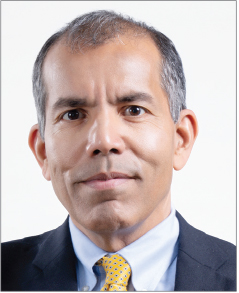
 In an interview with Renewable Watch, Dr Srivatsan Iyer, Global Chief Executive Officer, Hero Future Energies (HFE), shared his views on the key trends in the sector, the status of the domestic manufacturing and renewable C&I segments, and HFE’s achievements over the past year. He also talked about the challenges faced by IPPs and the future outlook. Excerpts…
What have been the key highs and lows for the renewable energy sector over the past one year?
The country’s installed renewable energy capacity surpassed the 200 GW milestone, reflecting the government’s commitment to a sustainable future. Renewable energy now accounts for over 46 per cent of the total installed capacity, marking a significant shift in the energy landscape. For the solar sector in particular, this has been a breakout year, with a record surge in installations and total capacity crossing 90 GW. It is noteworthy that around 40 per cent of the solar installations this year were in the form of open access or C&I projects. India has a healthy pipeline of projects with around 144 GW of renewable energy projects under implementation and another 90 GW of capacity tendered, thus keeping the country firmly on track to meet its goal of 500 GW by 2030.
The government deserves a lot of credit for the sector’s robust health, having rolled out several favourable policy announcements. The Ministry of New and Renewable Energy has unveiled a bidding trajectory of 50 GW of renewable energy capacity annually till 2027-28, thus ensuring there will be no slackening of momentum in the near future. It is also heartening to see the trend of increasing complex bids that integrate storage with conventional renewable energy. The government has signalled that it is ready to usher in the next phase of growth in renewables by focusing on peak power and round-the-clock (RTC) tenders, in a move to ensure firm supply of green power. Other key initiatives that have helped galvanise the sector include the PM-KUSUM scheme, the PM Surya Ghar Muft Bijli Yojana for rooftop solar, viability gap funding for offshore wind projects of 1 GW capacity, the production linked incentive scheme for domestic manufacturing of high-efficiency solar photovoltaic modules, and the National Green Hydrogen Mission that seeks to establish India as a global hub for green hydrogen while also catalysing our net zero journey.
All of this has resulted in the sector emerging as an attractive proposition for investors, both domestic and global. This year, we saw increased private sector participation, a steady inflow of funds, and several strategic partnerships and collaborations. I now expect the government to focus on grid modernisation and ramping up of transmission connectivity – two critical factors that go hand in hand with the rise in renewable energy capacity. Faster signing of power purchase agreements (PPAs) and power sale agreements (PSAs), simpler norms for land acquisition, and scaling up of domestic manufacturing will boost investor confidence and aid further growth of the renewable energy sector.
What were the key highlights for the company over the past year?
The past year has been one of consolidation and growth for HFE, with the aim of actively contributing to the country’s energy transition. As a strategy, we have chosen to focus on new-age, complex, high CUF tenders that require the integration of renewable energy with storage. We are confident of our ability to execute peak power and RTC renewable energy projects, which are likely to increase in number going ahead. In the past one year, we have been among the select few IPPs to have won multiple ISTS-connected RTC bids, totalling 2.5 GWp of capacity, with major central government-backed offtakers such as SECI, SJVN, NHPC and NTPC. We have also signed PPAs for 1.8 GWp of projects and started executing these, with commissioning expected in 24 months. The company is well positioned to serve the rising demand for clean energy emanating from India Inc. as more and more corporates move towards net zero. We have an open access project in Karnataka that is close to going live, which we will leverage to supply green power to C&I customers in the region. As an organisation, we have always taken pride in our ability to set industry benchmarks and offer innovative decarbonisation solutions. In line with this, the company will soon be commissioning a first-of-its-kind green hydrogen project in a hard-to-abate sector. We are also continuing to expand our global footprint, having started work on a standalone battery storage project in the UK and commissioned our first couple of C&I rooftop solar plants in Vietnam. To ensure the smooth implementation of our robust pipeline, we have executed strategic framework agreements with leading wind turbine generators and module suppliers.
What is HFE’s current project portfolio size?
HFE’s aggregate global portfolio currently stands at 6.4 GWp, of which 2.2 GWp is operational and the balance 4.2 GWp is at various stages of development. Roughly two-thirds of our total portfolio comprises hybrid plus battery energy storage system (BESS) projects. We plan to continue to grow our portfolio through a mix of complex renewable energy plus storage projects, open access projects catering to the C&I sector, and green hydrogen and its derivatives.
What is your outlook for scaling up domestic manufacturing of solar components?
The domestic solar component manufacturing segment holds immense potential. We are seeing some definite momentum now, thanks to supportive government policies, with increasing investments in local production facilities aimed at bolstering energy security and derisking the supply chain.
At HFE, we are optimistic about this shift. Our commitment extends beyond renewable project deployment to support the entire value chain. Through investments in advanced technology and strategic partnerships, we aim to contribute to a thriving ecosystem of high quality, locally produced solar components.
Scaling up domestic manufacturing is essential to achieve India’s renewable energy goals and reduce dependency on imports. This expansion will create new job opportunities and foster innovation, positioning the country as a competitive global player in solar technology. The availability of affordable finance, the right technical know how and assured offtake will help strengthen the domestic manufacturing ecosystem. HFE is proud to support and actively participate in this transformative journey.
Which states currently have a favourable regulatory environment for setting up renewable open access and rooftop C&I projects?
India’s regulatory landscape for renewable energy open access and rooftop C&I projects shows promising opportunities in states such as Karnataka, Maharashtra, Gujarat and Tamil Nadu. Karnataka leads with progressive policies and strong support for large-scale C&I projects, including favourable net metering provisions. Maharashtra and Gujarat offer investor-friendly regulations and transparent processes that facilitate project development while Tamil Nadu supports wind-solar hybrid projects and renewable open access for industrial users.
HFE has established a significant presence in these states through various projects. In Karnataka and Rajasthan, the company operates large-scale solar and wind farms, contributing to the states’ renewable energy capacity. In Maharashtra, it has successfully implemented rooftop solar and open access projects that cater to C&I clients, providing sustainable energy solutions.
What are the most pressing issues confronting IPPs in India? How can these be resolved?
One of the key issues is access to affordable and long-term finance. High capital costs, coupled with fluctuating interest rates, make it difficult for IPPs to secure the funds needed for large-scale renewable energy projects. This financial pressure can delay project timelines and limit the ability of smaller players to scale up. To resolve this, there is a need for innovative financial solutions, such as green bonds and renewable energy funds, which would provide more affordable and accessible capital.
Another challenge is related to land acquisition. Securing land for renewable energy projects remains a complex and time-consuming process, particularly in areas with high agricultural value or dense populations. Streamlining the land acquisition process, along with identifying specific renewable energy zones, could help expedite project execution.
The supply chain for renewable energy components is still vulnerable. Dependence on imports for critical components exposes IPPs to risks, such as supply delays and cost volatility. Building a strong domestic manufacturing base would reduce these risks and ensure a more resilient supply chain.
The financial health of distribution companies and delays in signing PPAs and PSAs are also a matter of concern, although, of late, we are seeing a marked improvement on both these fronts.
What are your plans in the green hydrogen and energy storage spaces?
Green hydrogen is a focal area of interest for us. HFE is well positioned to be an end-to-end solution provider – from generating renewable energy to producing green hydrogen – thanks to strategic long-term tie-ups across the hydrogen value chain. We are actively engaging with various corporates and leveraging our strong network of C&I customers to explore diverse applications and use cases. We anticipate making some announcements in the coming months as these discussions progress and materialise into concrete initiatives. Renewable energy storage will continue to be at the core of our growth plans, with roughly 65 per cent of our current portfolio comprising hybrid plus BESS projects. Our recent spree of new-age tender wins testifies to our expertise, and we expect to be a front runner in this domain.

