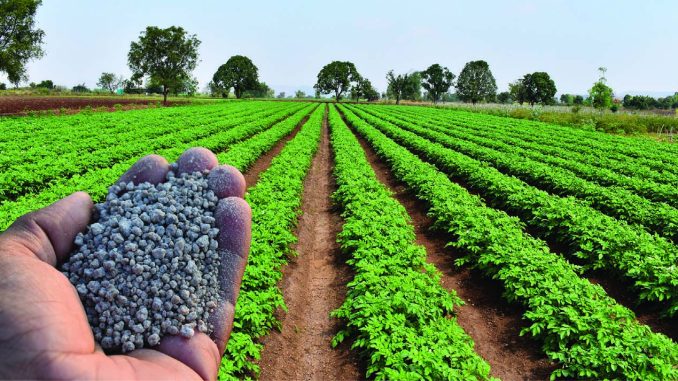
According to the Fertilizer Association of India (FAI), India is the second-largest fertiliser producer in the world and accounts for 20 per cent of global production. It has a total fertiliser demand of 60 million tonnes (mt). Of this, approximately 48 mt is produced domestically and about 10 mt is imported.
While fertilisers are crucial for enhancing crop yield, they also pose a considerable threat to the environment. This is due to the heavy reliance on fossil fuels, especially natural gas, for the production of fertilisers, which emit greenhouse gases. According to GHG Platform India, the Indian fertiliser sector emits approximately 25 mt of carbon, accounting for roughly 1 per cent of the country’s total greenhouse gas emissions. Decarbonising the fertiliser industry is key to lowering fossil fuel usage and reducing natural gas imports.
Furthermore, ammonia is used in both urea and non-urea fertilisers. Reducing the amount of carbon dioxide released during the ammonia manufacturing process is critical to achieving India’s climate targets, particularly to become net zero by 2070. Hence, the focus has rightly shifted to green ammonia, that is, ammonia produced by renewable and carbon-free energy sources. Thus, to reduce imports and decarbonise the fertiliser industry, the top priority will be to replace imported ammonia (almost 2.3 million mt) with green ammonia.
Cost considerations
Currently, the cost of imported grey ammonia is around $350 per tonne. According to FAI, the cost of using green ammonia by replacing imported grey ammonia will be $650-$750 per tonne. Thus, the gap between the cost of green and grey ammonia is substantial. With the reduced cost of renewable energy and the electrolysis process, it is expected that green ammonia will compete with grey ammonia by 2030. Until then, viability gap funding will definitely be required to promote green ammonia.
The way forward
The transition to green ammonia in the fertiliser industry is not without challenges. The current cost of producing green ammonia is higher than that of conventional ammonia production methods, which could impact the competitiveness of the fertiliser industry in the short term. Additionally, the infrastructure required for the production, storage and transportation of green ammonia needs to be developed, which will require significant investments.
To overcome these challenges, the Indian government has been proactive in promoting the use of green ammonia and developing a comprehensive policy framework. The National Hydrogen Energy Mission aims to set up two plants each for the production of green hydrogen-based urea and green hydrogen-based diammonium phosphate through a competitive bidding route. By 2034-35, the government aims to substitute all ammonia-based fertiliser imports with domestic green ammonia-based fertilisers. The incentives currently provided are a good thrust to drive the uptake of green ammonia. Another key factor that will play an important role is the revision of the New Urea Policy, which is up for revision in 2025. This entails certain readjustments of subsidies and pricing mechanisms, which are expected to have a positive impact.
In conclusion, the greater use of green ammonia in India’s fertiliser industry presents a promising opportunity to reduce greenhouse gas emissions, enhance energy security and drive economic growth. While challenges exist, the potential benefits of green ammonia in terms of environmental sustainability and long-term competitiveness make it a compelling choice for the future of the fertiliser industry. Going forward, a mature carbon trading market and the phased reduction of subsidies on traditional fertilisers will be key for the greening of the Indian fertiliser industry.
Based on a presentation by Nirlep Singh Rai, Former CMD, National Fertilizers Limited; and Chairman, Ramagundam Fertilizers and Chemicals Limited, at Renewable Watch’s “Green Hydrogen in India” conference