
Colonel Rohit Dev, Managing Director, Reveille Energy LLP
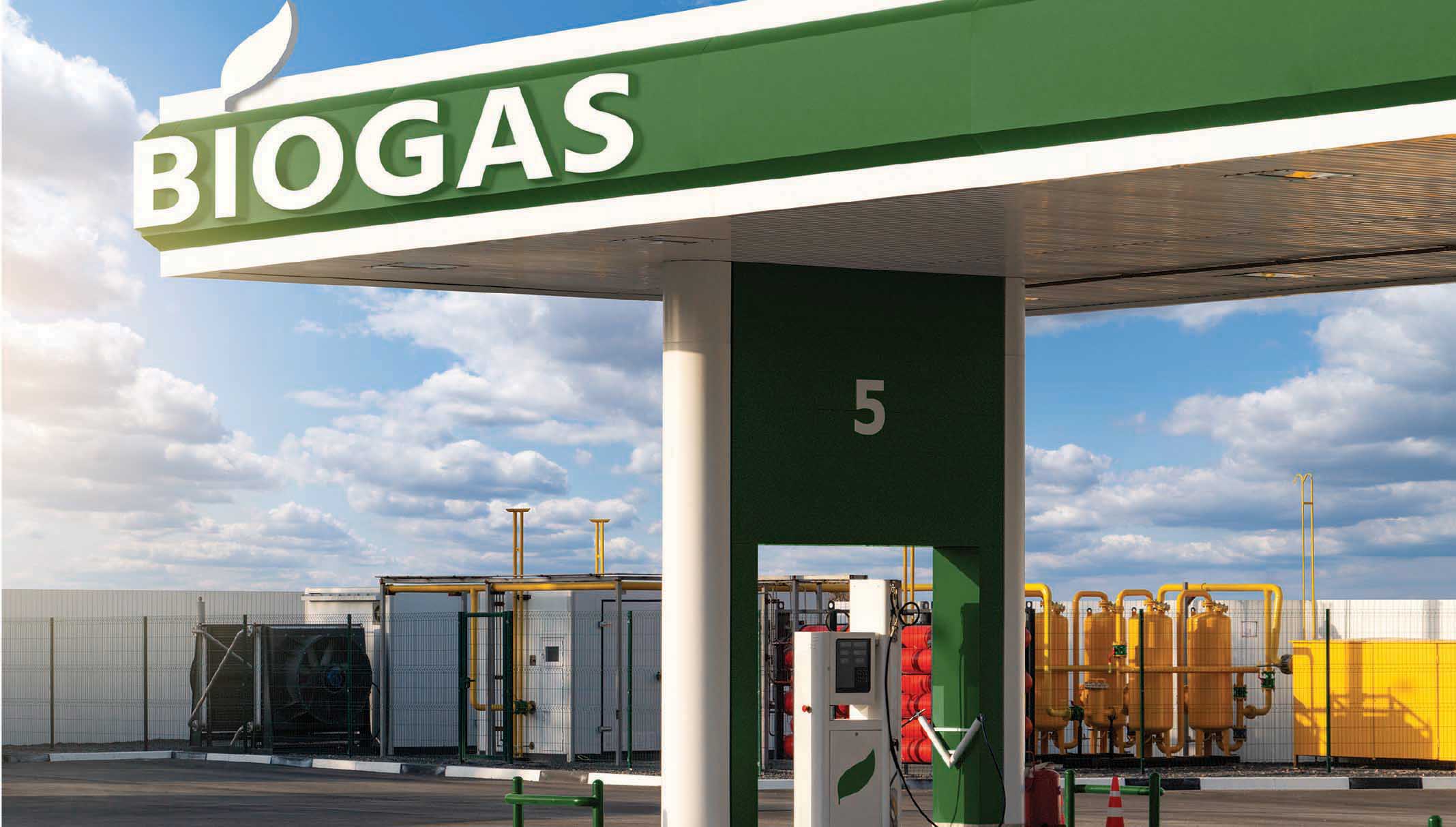
India is on course for an energy transition towards net zero, and biofuels, as part of the bioenergy space, present a desired pathway for transport, industrial and domestic usage, among others. In this space, the compressed biogas (CBG) segment was given an impetus by the government through the launch of the Sustainable Alternative Towards Affordable Transportation scheme in 2015, with the aim of supporting CBG entrepreneurs in setting up CBG plants, as well as in producing and supplying CBG to oil marketing companies for sale as automotive and industrial fuels. The plan was to set up 5,000 CBG plants by 2023, to reduce the import of fossil fuels by around 10 per cent. However, the country is significantly behind its target.
The delay in CBG gaining traction, particularly in the midstream and downstream segments, can be attributed to several factors. These include issues related to research and development (R&D), technology, investments, and offtake guarantees. Biomass supply chain management (SCM) in the upstream has been the bugbear, accounting for nearly 80 per cent of the project cost and with limited focus from stakeholders during the project planning stage. While they understand the criticality, they do little to address the elephant in the room. In fact, biomass SCM has been the single most critical factor for all bioenergy projects and yet it continues to deter investments and partnerships necessary to make the biofuels segment grow at a desired pace. This article covers the key challenges in India’s CBG space and recommendations to solve these issues…
Challenges in the CBG sector
The entire value chain/ecosystem of CBG has not been financially viable, and disruptions in the supply chain due to financial and non-financial factors have resulted in limited players operating in the sector. Thus 5,000 letters of interest issued by the government have not yet fructified into running projects. Right from farmers in SCM, numerous risks persist, many of which remain unaddressed to date. Some common gaps observed include the requirement for a CBG developer or its partner SCM company to aggregate biomass for a project in bulk and manage its post-harvest processes, transportation, warehousing, insurance, hiring manpower, and upkeep, among others, and quite surprisingly, companies cannot discern a price point on biomass until they go through the tender process. Later, it was discovered that the lowest bid in the tenders was not low enough in most cases. The emergence of this issue was predictable, given that bidders earlier had not worked enough on risk mitigation strategies for SCM. When those risks were taken into account, the prices increased. Private entities have also either attempted to manage the SCM themselves, with limited success; or contracted SCM companies at higher costs and with more risks.
On another front, the SCM has not been a bankable proposition for private or national banks. While the Indian Renewable Energy Development Agency has been able to initiate funding for biomass-based projects and provide working capital term loans for SCM to a limited number of companies, much more needs to be done by financing and banking institutions. Foreign financial institutions also understand these challenges, and thus have not yet significantly invested in India. The lack of funding, combined with factors such as credibility ratings and high interest rates, does not permit entrepreneurial advent, leading to stagnation in the sector. This will persist until big-ticket projects in bio fuels take off. Further, the lack of implementation of central agencies’ policies by states is another factor for the sluggish growth of this sector. This adds to risks and discourages both investors and project developers. Schemes are rolled out by various ministries without deliberate inter-ministerial coordination, leading to an anticipated “biomass pull” in certain envisaged geographies, which could lead to scarcity for certain projects later. The zoning of areas for various large-scale projects is not being done to support structured growth in the bioenergy space, increasing the risk in the upstream value chain for CBG as well. Moreover, technological challenges exist in the CBG sector, which hinders the full utilisation of biomass, and plants are working at a plant load factor of 25-30 per cent on average. The key component of biomass SCM – the farmer – is still not seen as a critical stakeholder, leading to flawed SCM financial models and the failure of projects. In Punjab, cartel formation for balers and other services related to biomass SCM has posed a serious issue for companies involved in SCM and those promoting CBG projects based on paddy straw. Similar negative trends have been visible in rice husk-based SCM in West Bengal and other states. Further, skill development in CBG is still a gap that needs to be solved.
 Recommendations to address the issues in the CBG sector
The aim is to prevent the consumption of fossil fuels and utilise more biomass, as this would directly benefit farmers, foster rural sector development, meet all aspirational sustainable development goals (SDGs) of the Paris Agreement, and mitigate greenhouse gas emissions, in line with the aim to become net zero by 2070. The focus is on making the biomass-based bioenergy space, including CBG, financially viable, without undue subsidies, and generating additional income for farmers while promoting the rural economy. A people-public-private partnership (PPPP) model will propel this sector to the next level by bringing in more skin in the game for all stakeholders and improving the standard of living for the masses, especially rural communities. Apart from this, some recommendations for decision-makers, industry and stakeholders are:
Energy security in the union list only: There is a need to place all aspects of energy security, including policy enunciation and implementation, solely under the central government through the union list, without other federal structures intervening or interfering, as energy security is critical for India. This is also essential in the upstream value chain of CBG and other segments of the bioenergy space.
Inter-ministerial coordination cell: This cell could be conceived under the aegis of the Ministry of New and Renewable Energy (MNRE) or the Ministry of Petroleum and Natural Gas (MoPNG) and NITI Aayog. Inter-ministerial coordination should be established for the initial estimation of biomass usage in various sectors (under different ministries) for the next 50 years, based on India’s energy needs. Various ministries need to develop a biomass consumption matrix and an energy transition plan for 2070 and work towards implementing them. The mapping of biomass-based projects and delineation of geographies should be done jointly and on priority. A long-term vision, capturing population needs and SDGs must guide short-term missions, concerted implementation plans, and periodic audits and reviews.
Financial requisites: The bioenergy sector (including the CBG space) needs to be deemed as and accorded the due status of being a priority sector as it is directly linked to farming and agriculture. There is a need to reduce the cost of borrowing through non-banking financial companies, banks and government financial institutions, among others. Interest rates between 4-6 per cent can enable competition with coal-based businesses. Moreover, zero GST on the entire biomass-based supply chain is needed in the upstream as that will largely benefit farmers. As a start, the government should allocate approximately Rs 500 billion in the next financial year for biomass-based energy projects, with nearly 60 per cent allocation earmarked for the CBG sector. It should provide due guarantees (through central and state partnership-led models) to established private companies and stakeholders, primarily for pilot projects to be developed under the PPPP model.
Infrastructure development: Support for biomass depots, where farmers can supply biomass, which in turn supports industrial development in rural India, is needed. State-of-the-art warehousing infrastructure should be created by government units such as the National Bank for Agriculture and Rural Development and National Agricultural Cooperative Marketing Federation of India Limited. These facilities can be leased to farmers and SCM companies at low costs. The creation of such warehousing can also be facilitated through the PPP model.
Collaborative technologies and manufacturing: Collaboration for technologies and manufacturing should be encouraged, with a focus on the Make in India initiative. There are numerous superior technologies available in the global market, and our endeavour should be to increase their demand and incentivise their manufacturing in India. With this, technology will be transferred, and more importantly, jobs will be created in both structured and unstructured sectors.
PMO-monitored implementation of pilot projects: Project management office (PMO)-led monitoring for pilot projects, which are slated for implementation in Phase I within the next three years, is a must. Projects of various types should be identified and time-bound actions must ensue. State governments should provide land at zero cost (both non-agricultural and agricultural) for projects. A larger impetus should be given to this sector, with the involvement of all stakeholders for biomass-based bioenergy projects across India to achieve the SDGs, focus on rural development, and generate jobs.
Digital biomass platform: A digital platform for biomass and biomass-based bioenergy services will enhance the scope of growth of the biomass-based bioenergy sector. These could be effectively conceived at the state level with a pan-India application.
Bioenergy commission: A bioenergy commission could be instituted at the central level under the MNRE to bolster the bioenergy and biofuels sectors, including CBG, second-generation ethanol and sustainable aviation fuel, which could be coordinated by the MoPNG. This commission could comprise eminent people from the sector, serving both chair and member roles on a term basis.
Special packages for the north-east region: A special package could be planned for biomass-based CBG and other renewable energy projects in the north-eastern states as it will support regional growth and create employment opportunities. This could be overseen by the Ministry of Development of North Eastern Region.
Command areas and energy plantation: With a plethora of industries seeking biomass, there could be a situation in the coming years wherein certain regions may face biomass scarcity (especially agri-residue), which would eventually extend to other regions as well. To pre-empt this situation, command areas should be designated through synchronised efforts between central and state governments. Large-scale energy plantation should be undertaken by state governments, the private sector and other stakeholders, with water planning dovetailed among them to be overseen by the concerned ministries and agencies.
Manufacturing in India: There has to be a concerted push for the manufacture of pre-harvest, harvest and post-harvest machinery and tools in India to facilitate large-scale growth in the bioenergy segment. This will enable the rapid scale-up of the sector, generate more jobs, promote better agricultural practices and create larger cultivation areas for energy plantation. Eventually, India can become a manufacturing hub for exports to Africa, the next destination for rapid bioenergy growth. Promoting manufacturing in the country is vital, given many companies are opting for a “China plus One” strategy. While technologies are widely available for the CBG sector, there is a need to boost manufacturing significantly, especially critical items like membranes.
Research and development: The promotion of R&D in the CBG sector through collaborations between Indian companies and other countries is crucial. Government R&D funds, along with those from government-to-government agencies, should be channelize, with support from organisations such as the World Bank, United States Agency for International Development, United Nations Industrial Development Organisation, Japan International Cooperation Agency, International Finance Corporation, and Development Finance Corporation to foster a robust R&D base in the agricultural, technological, supply chain and transportation domains. This will eventually enable a better and more sustainable ecosystem. Inter governmental collaborations will bring in greater business growth in the biomass-based bioenergy sector for reducing the import of fossil fuels and achieving greater sustainability for clean energy in India. Japan, the UK, the US, Israel and Europe have very promising R&D capabilities, technologies and business opportunities, along with substantial funds for utilisation.
Awareness enhancement: There is a need to enhance awareness through various forms of new media and special seminars by the ministries, NITI Aayog, the Confederation of Indian Industry, and the Federation of Indian Chambers of Commerce and Industry to promote the bioenergy sector and attract investments. An annual conclave dedicated to the biomass-based bioenergy sector, with participation from stakeholders, governments, media and other agencies, could facilitate knowledge sharing.