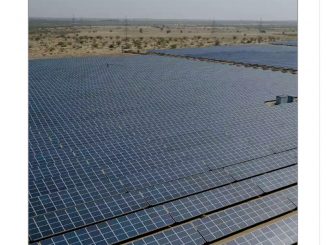
Floating solar has become a popular clean energy solution in many markets across the globe, owing to the rise in concerns over the acquisition of large tracts of land and the unavailability of adequate land , which is required for setting up other clean energy projects. A single megawatt of solar capacity can require up to 4-5 acres of land, depending on the technology used. This is a major concern, as empty land is increasingly becoming scarce and expensive. Floating solar projects can be a solution, as they do not require land at all and can be installed on the surface of waterbodies that are otherwise unutilised.
The benefits of floating solar projects are not limited to conservation of land and efficient utilisation of water reservoirs. They reportedly improve solar project efficiency, prevent water evaporation and reduce algal growth. They also have short gestation periods, as they do not require extensive civil works and can be synergised with collocated renewable energy projects, especially hydropower and offshore wind, for optimum utilisation of transmission infrastructure. The cost economics of these projects are also increasingly improving as floating technology matures and the market expands.
After Asia, floating solar projects are now rapidly gaining momentum across Europe. Floating solar is already a well-established market in the south of the continent, owing to the surfeit of sunshine that the area receives. Many of these countries have supportive policy instruments for floating solar. For instance, Italy has simplified its floating solar project permitting process, Spain has issued regulations for floating solar projects regarding their coverage of water bodies and water quality, and Portugal held an auction for the development of floating solar projects. Meanwhile, the Regulatory Authority for Energy in Greece has licensed 13 floating solar projects with a total capacity of 839 MW on artificial lakes and reservoirs.
Following the south, the northern nations are now also witnessing widespread uptake of floating solar, as they have abundant waterbodies. For instance, one of Europe’s biggest floating solar projects has been set up by BayWa r.e. in Sellingen, Netherlands, with a capacity of 41.1 MWp. ECOwind, a subsidiary of the company, has set up a 24.5 MWp project in Grafenwörth in Lower Austria. Meanwhile, Q Energy France is building a bigger 74 MW floating solar power plant called Les Ilots Blandin in the north west of France.
Offshore solar is also expected to develop a big market in the continent in the coming years, with some policy developments already underway. For instance, in the Netherlands, the government’s Nationaal Plan Energiesysteem mentions the possibility of realising 3 GW of offshore solar in 2030. In addition, a tender for a 50 MW solar project in the IJmuiden Ver Beta offshore wind park in the North Sea is in the pipeline. Meanwhile, Greece has approved a legal framework for the development of pilot floating offshore solar projects.
Project design, execution and O&M
Floating solar projects are typically segmented based on location. Commonly, 5-20 MWp of projects are set up on small lakes such as irrigation or industrial ponds, quarry lakes, or small basins. These small lakes often offer simple site conditions for mooring and anchoring. Meanwhile, large lakes such as those adjoining dams or water reservoirs can accommodate projects of up to 20-200 MWp. Floating solar projects across all of these locations require precise bathymetry data, soil studies and other geotechnical information for accurate project design with innovative mooring systems, to help address the complexity of site conditions. Further, when constructed on dam reservoirs, proximity to dam safety equipment, flow velocity and waves need to be considered at the planning stage. In many cases, theory alone might not be sufficient to assess the correct project design, and small prototypes might have to be deployed to test site conditions.
Nearshore or offshore floating solar projects can also be set up with very large capacities. Although, so far, only small demonstration units have been set up to this end, significant efforts are being made to rapidly scale up this capacity. For example, Sun’Sète, reportedly the first offshore solar farm in France and on the Mediterranean Sea, was inaugurated in March 2023. It is located in open sea conditions, with waves going up to 8 metres. It is being developed by SolarinBlue, supported by Agence de l’Environnement et de la Maîtrise de l’Énergie, TotalEnergies, Engie and Technip Energies. It is expected to reach a capacity of 1 MW by 2025. Meanwhile, in September 2023, SeaVolt (a collaboration between Tractebel, DEME and Jan De Nul) installed a floating solar energy test platform in the Belgian North Sea near the Port of Ostend.
From an O&M perspective, floating solar projects have additional risks over other solar projects, as they need to be built on water and access can be a major challenge. Thus, key considerations for proper O&M include ensuring easy and stable access to all electrical components. Robotics are already being used in a few projects to inspect and clean solar panels and mooring systems. 24×7 remote monitoring systems should be used to anticipate anomalies and take corrective action. The ease and safety of O&M should be taken into account at the design stage to minimise opex costs and risks later.
Hybrid projects with floating solar
There are significant benefits in the hybridisation or blending of different renewable energy sources. As solar generation is intermittent and available only for a few hours during the day, co-locating it with another energy source ensures more stable generation patterns. Further, this helps in the optimum utilisation of space and precious grid infrastructure.
Naturally, hydropower plants with large water reservoirs are suitable locations for floating solar projects, as the existing water surface can be used and infrastructure can be shared. For instance, in 2022, EDP inaugurated a 5 MW floating solar park in the reservoir of the Alqueva pumped storage project in Portugal. The project took seven months for construction and occupies 4 hectares or 0.016 per cent of the total area of the Alqueva reservoir. It also has a 1 MW battery system with a storage capacity of around 2 MWh. All of these technologies — pumped storage, floating solar and the battery system — use one single point of connection to the existing grid. EDP has already secured a second floating solar farm with 70 MW installed capacity in Alqueva.
As the offshore wind market continues to grow tremendously in Europe, many floating solar projects are being planned for co-location with offshore wind, to improve the generation profile and contend with a lack of space. Further, offshore floating solar has a supply chain that does not interfere with offshore wind, building the case for co-location. Various small projects are already being set up in different parts of the continent. For example, CrossWind, a joint venture between Shell and Eneco, has awarded a contract to Oceans of Energy for installing and operating an offshore solar plant inside the Hollandse Kust Noord offshore wind park in the Dutch North Sea. The solar plant is to be realised in 2025. Also in the pipeline is the 500 kW Merganser project being built by RWE and SolarDuck close to an offshore wind farm in the North Sea, off the coast of Ostend, Belgium. These two companies have also started work on a 5 MW offshore floating solar project within RWE’s OranjeWind offshore wind farm, which is being set up 53 km off the Dutch coast.
Cost considerations
The construction cost of floating solar projects is higher than those of ground-based systems, as the former requires floating platforms and supporting mooring and anchoring, along with solar power project equipment. However, owing to economies of scale, the increasing sizes and scale of projects are expected to reduce the costs of floating solar projects significantly in the coming years. Maturing technology and proven cases are also expected to help lower capital costs and improve access to finance.
Currently, the lack of standards makes the due diligence process quite complicated, and the relatively small installed capacities of floating solar compared to other solar technologies necessitates conservative financing structures to cover risks. However, these financing concerns are expected to be addressed over the years as successful and profitable projects emerge.
O&M costs can be higher for floating solar than for traditional solar projects owing to the requirement of specialised services and more stringent safety requirements for carrying out maintenance in water. In some cases, divers may also be required. Since these projects are on water, many developers would prefer to install robots for routine inspection and maintenance work, ultimately reducing manpower costs. Thus, the actual O&M costs might vary on a case-by-case basis, depending on the location and design of a project.
The way forward
With increasing “not in my backyard” concerns across Europe, and the debate surrounding land utilisation for food vs fuel, floating solar projects, both onshore and offshore, are bound to increase in the future. However, to ensure the sustainable development of these projects, they should be planned with the right policy interventions in place. Issues such as permission and grid connectivity delays need to be addressed urgently for all renewable energy projects, including floating solar.
Going forward, more floating solar projects are expected to be built in existing as well as upcoming renewable energy facilities such as hydropower plants and offshore wind farms, to optimise costs and infrastructure utilisation. Further, more floating solar projects are expected to be integrated with energy storage systems to ensure reliable generation. n
This article is based on the key takeaways from the recent Floating Solar in Europe conference organised by REGlobal at Amsterdam, to highlight the growth trends, opportunities, technologies, design considerations, O&M issues, investment landscape, challenges and outlook for the floating solar sector in Europe.
By Khushboo Goyal