India’s power distribution sector continues to grapple with financial and operational inefficiencies, posing a significant threat to meeting climate goals. Central to these challenges are residential consumers who receive highly subsidised electricity, leading to below-cost tariffs and resulting in revenue shortfalls for discoms. The adoption of rooftop solar offers a potential solution by mitigating high costs associated with supplying power to these consumers. However, perceived risks have hindered widespread deployment of rooftop solar.
In this context, innovative business models such as community solar emerge as promising solutions. Under this model, rooftop demand is aggregated by installing medium-scale community solar systems, which can be a strategic move for discoms. The cost savings realised from avoiding power purchases and deferring infrastructure upgrades can serve as a lifeline, aiding in their much-needed financial turnaround. To fully realise these benefits, comprehensive policy reforms are required across technology, regulations and financing. The gradual participation of communities, especially as these systems scale up, has the potential to not only catalyse rural development but also advance India’s broader energy transition goals.
This article summarises the key findings of the report, “Community Solar for Advancing Power Sector Reforms and the Net-Zero Goals” by the Council on Energy, Environment and Water…
Low-income households and discom challenges
Low-income households in many Indian states exhibit a skewed electricity consumption pattern, with over 70 per cent consuming less than 100 kWh monthly, primarily in rural and semi-urban areas. The characteristics of these consumers, such as low paying capacity and usage habits, pose significant financial and operational challenges for discoms. The linkage between low-income households and discom challenges is detailed below.
- Low paying capacity: These consumers benefit from highly cross-subsidised rates due to low consumption and paying capacity, creating a gap between the tariff rate and the average supply cost, impacting discoms’ revenue.
- Low demand: Low-income rural households, located in sparsely populated areas, exhibit patterns of low consumption, peak-time electricity use and remote locations, increasing the cost of serving them. This disincentivises discoms from investing in distribution infrastructure upgrades.
- Universal access to electricity: While India has achieved nearly 100 per cent household electrification through central schemes such as the Rajiv Gandhi Grameen Vidyutikaran Yojana, Deendayal Upadhyaya Gram Jyoti Yojana and Saubhagya, the focus now shifts to improving power supply reliability and quality for universal access. Achieving this goal necessitates investments in enhancing the distribution infrastructure. However, financial challenges faced by discoms hinder the sector’s further transformation.
Community solar model
Distributed solar, particularly community solar, can play a pivotal role in the financial turnaround of the distribution segment. By injecting low-cost solar to serve subsidised consumers, it helps reduce the average cost of supply and contributes to decarbonisation of the residential sector. Despite the potential co-benefits such as job creation and improved power supply quality, discoms often oppose distributed solar adoption due to perceived risks and disruptions to their business model.
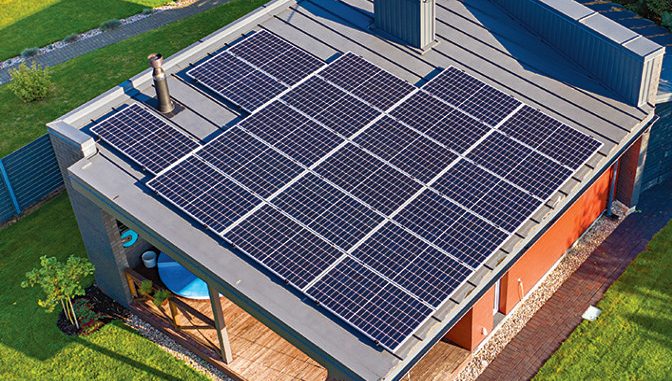
The utility-owned community solar model emerges as a promising solution. In this model, discoms deploy medium-sized solar PV systems (100-150 kW) on their substations or community land, supplying energy directly to residential feeders. This model involves no direct community engagement but provides indirect benefits to consumers by improving discoms’ financial health, reducing supply costs and enhancing power supply quality.
Leveraging community solar model
The concept of community solar addresses market barriers to serving residential households in rural and semi-urban areas, including lack of awareness, limited access to finance and inadequate roof space. It offers an opportunity for community members to participate in the energy transition by sharing the benefits of solar power. In the case of the community-owned and operated model, significant barriers include the need to educate consumers about potential benefits, the lack of upfront capital access by consumers and the necessity for regulatory changes to facilitate this model (such as introducing virtual net metering regulations, updating billing and metering mechanisms, etc.).
Given the limited success of renewable energy service company (RESCO) models in India for rooftop solar, developers are likely to have similar concerns for RESCO-based community solar models, including the risk of consumer default, policy uncertainty and the responsibility of maintaining the system for 25 years. Therefore, utility-led community solar models appear more promising in the Indian context. Discoms are well positioned to overcome challenges related to operations and maintenance, upfront costs, billing and metering, virtual net metering, etc., and can achieve scalability.
In this model, discoms benefit from the reduced electricity provision costs to sparsely distributed rural consumers. Although there is no direct community engagement, the model provides indirect benefits to consumers. Overall savings under this model improve discoms’ financial health and reduce supply costs, eventually leading to tariff rate reductions for consumers in the long run. Additionally, the co-location of the generating station closer to the feeder enhances the power supply quality to consumers.
Case study of utility-owned community solar in Bihar and Meghalaya
The initiative is endorsed by the US-India Clean Energy Finance Task Force, a collaboration between the Ministry of New and Renewable Energy (MNRE) and the US Department of State. Bihar and Meghalaya were identified as potential states for the project, aiming to evaluate the feasibility of the utility-led community solar model in targeting residential communities. In Bihar, where over 60 per cent of the energy is sold to domestic consumers, their revenue share stands at 31 per cent, creating a substantial revenue gap. A parallel trend is observed in Meghalaya, with a 26 per cent share in energy sold and a 24 per cent share in revenue. To offset the revenue gap, Bihar and Meghalaya discoms received subsidies of Rs 51.93 billion and Rs 100 million respectively. On a per unit basis, Bihar received a tariff subsidy of Rs 1.63 per kWh, and Meghalaya received Re 0.04 per kWh. These subsidies aimed to address a revenue gap exceeding Rs 4 per kWh. Consequently, both states emerged as suitable cases for implementing utility-owned community solar models, presenting an opportunity to enhance the financial health of discoms.
In the overall assessment, the return on investment proves favourable to discoms when they own and operate the model. For Bihar, the net benefits of a 100 kW community installation amount to Rs 6.2 million. Similarly, in Meghalaya, the net benefits for such an installation reach Rs 6.1 million. These findings underscore the significant role that the utility-owned community solar could play in bolstering the financial well-being of discoms in these states.
Key recommendations
While the long-term benefits of scaled community solar installations for discoms in India are evident, current barriers impede their adoption within the existing ecosystem. Overcoming challenges such as discoms’ limited access to finance, the absence of financial incentives and cumbersome tendering processes requires strategic measures. To facilitate the successful implementation and scale-up of community solar models in India, the following key recommendations are proposed:
- The MNRE’s Rooftop Solar Phase II scheme should undergo modifications to incorporate community systems. Specifically, the scheme could be adapted to include installations not on consumer premises but serving or benefiting residential consumers. This adjustment would allow utilities to access capital subsidies for aggregated community solar projects, facilitating a shift away from reliance on subsidies.
- The MNRE or individual states could introduce a dedicated scheme tailored for community solar projects. This scheme would maintain a targeted focus on catering to low-paying consumers in rural and semi-urban areas, who receive substantial electricity subsidies. The capital incentives provided by the MNRE for community installations would be explicitly covered under this specialised scheme.
- To finance the utility-led community solar model, exploration of state electricity subsidy amounts is recommended through two potential avenues. Direct lending to utilities for installations stands as one option, while creating a payment security mechanism to raise cost-effective capital represents another. Utilities could consider establishing a special purpose entity to seek finance. Additionally, concessional loans available through existing lines of credit from institutions such as the World Bank and the Asian Development Bank could be explored.
- Enhancing community solar installations with battery storage has the potential to significantly increase benefits for discoms. Community solar sites, once equipped with storage, become potential means for improving energy resilience and grid stability. The introduction of battery storage aligns with the evolving landscape of renewable energy technologies.
- A forward-looking approach involves extending the community solar model to include consumer subscriptions. Empowering consumers to actively participate in the energy transition would be achieved by introducing incentives at a later stage.
By implementing these recommendations, India can pave the way for the successful expansion of community solar installations, contributing to sustainable energy practices and advancing the country’s energy transition objectives.