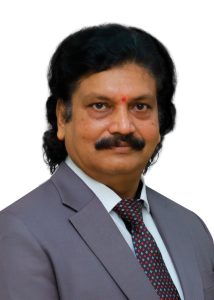
 NLC India Limited has been a key player in ensuring the country’s energy security for the past 60 years. The company has expanded its involvement in the renewable energy sector and is consistently increasing its portfolio in the clean energy domain. It aims to achieve a renewable energy capacity of 6 GW by 2030, constituting approximately 35 per cent of its total portfolio. In an interview with Renewable Watch, Prasanna Kumar Motupalli, chairman and managing director, NLC India, talks about the company’s clean energy strategies and upcoming opportunities in this space. Excerpts…
What is NLC’s current renewable power portfolio? What is the energy mix?
NLC India started 67 years back and the company has lignite- coal- and renewable-based generation. Our total installed power generation capacity is 6,071 MW, of which renewable energy constitutes 24 per cent, which is 1,431 MW of capacity and wind energy constitutes 4 per cent of the total renewable energy. By 2030, our share of renewable energy will increase to approximately 35 per cent, which is about 6 GW in 17 GW capacity.
What are the company’s recent projects and initiatives in the renewable energy space?
Currently, the company has renewable energy projects of about 2,060 MW that are under implementation in various parts of the country. We are establishing a 300 MW solar power project at Barsingsar on land available with us. The engineering, procurement and construction (EPC) contractor has been appointed and we expect to commission the project during the second quarter of 2024-25. Moreover, the company won a 600 MW solar project capacity at the Khavda Solar Park, a project being developed by Gujarat State Electricity Corporation Limited in Bhuj district, Gujarat. The letter of award has been received and procurement tenders have been floated. We expect the project to be commissioned during 2024-25.
In addition, an EPC contractor has been appointed for establishing a 200 MW solar project on a pan-Indian basis for development under the central public sector undertaking scheme. The project will also be commissioned during 2024-25. We have also won a 810 MW solar project from Rajasthan Urja Vikas Nigam Limited for development in the Pugal Solar Park, Rajasthan. For this, tenders have been floated for the appointment of the owner’s engineer. Tenders are also under finalisation for appointment of EPC contractors for the 150 MW wind-solar hybrid project won in 2022 under the Solar Energy Corporation of India’s (SECI) hybrid tender. The company will be awarding this tender in another one month’s time.
Could you tell us about your upcoming lignite-to-methanol project?
Our lignite-to-methanol plant, with 0.4 million metric tonne capacity, is at an advanced stage of award at Neyveli. This project will produce around 1,200 metric tonnes of methanol per day. This project itself has the potential of saving imports of almost Rs 10 billion worth of crude oil. The capex of this project is around Rs 43 billion. We have got assurance from the government for viability gap funding. We have already tendered this project and the technical evaluation is going on, in which three parties participated. We will be awarding the first package of lignite to gas in the current financial year.
What are your plans in the green hydrogen space?
We are initiating a pilot project of 4 MW capacity in the Neyveli area. We have already installed 4 MW of solar capacity and are in the process of procuring the electrolyser. We will be producing green hydrogen on a pilot-scale by next year. The tender for this will be released soon. We will subsequently expand our reach in this space, based on the results of this pilot project.
What, according to you, is the impact of the current global geopolitics and energy crisis on the energy transition? Have your operations been impacted by the supply chain uncertainties of the past few years?
The energy transition is actually being propelled further due to this crisis, considering the impact created by the uncertainties in supply and the need for energy security. The country’s dependence on other nations for its integral energy requirements is a risk factor.
Due to these crises, two to three years back, NLC thought of completely phasing out thermal capacity and installing renewable capacity to meet our requirements. However, with energy crises across the globe over the past two years and the current crisis, NLC realised that both must go hand in hand to meet the energy requirements of the country. Unless the country is fully prepared to meet the energy storage requirement for integrating renewables, we will have to continue to focus on thermal capacity addition.
Our operations are not impacted by global developments as our input material is domestic. Solar module imports have reduced considerably and a clear plan has been crafted for the future, with better domestic supply chains.
What are the pros and cons of some of the recent policy interventions?
The production-linked incentive (PLI) scheme for improving solar module manufacturing in the country is a hit in the renewables’ space. It is ensuring not only the domestic manufacturing of modules but also higher efficiency of modules. The renewable generation obligation notification is another important hit. The real contribution and importance of the International Solar Alliance formed by India has to be more prominent in the global renewable energy space as this will bring holistic success to the human community across the globe.
One of the major challenges to meet the target of 500 GW non-fossil-fuel-based energy capacity is the requirement of a huge quantum of land. Going forward, we should have our own equipment production units and not import from other parts of the world. There is some gap in the PLI scheme in terms of module requirement and domestic production, but once equipment manufacturing starts, these domestic manufacturers will be able to meet the country’s requirements.
What is your view on the co-firing of biomass in thermal plants and what are the company’s plans in this space?
In line with the directive of mixing at least 5 per cent of biomass pellets in all coal-fired boilers, NLC has started procuring biomass pellets for its 1,000 MW Neyveli New Thermal Power Project in Tuticorin. The blending of biomass pellets with lignite is not possible because of safety considerations. For this, we are doing a trial at our Barsingsar power project in Rajasthan.
What are the company’s targets and plans for the next five years?
Our corporate plan 2030 envisages reaching 17,171 MW of power generation capacity, including 6,061 MW of renewable energy capacity. However, we are planning to revalidate targets in the current business scenario and we expect that the share of renewables will be increased further, with the addition of other businesses such as green hydrogen and electric vehicle charging infrastructure. Based on the learnings and the outside economic factors of our pilot 4 MW project, we aim to venture into the green hydrogen space in a big way. Energy storage systems are set to play a vital role in the power sector ecosystem in the days to come. Our 8 MWh battery energy storage system in the Andamans has given us an understanding and we plan to try a pumped storage project in our mine-void area in Neyveli. We will be well positioned in the energy storage domain. Furthermore, the role of artificial intelligence (AI) in the power sector is yet to be defined clearly, but we are planning to leverage the positive benefits of AI in our operations and maintenance through predictive analysis.
India has a target to move towards 500 GW of non-fossil fuel power by 2030. But the main constraint in this is storage. There is a need to maintain a balance between conventional and renewable power generation, and balanced power generation will be the successful business model in the years to come, as experienced in the developed economies. The demand for power is set to increase multifold in the years to come. So, capacity needs to be added through non-polluting renewable energy sources. Unless there is a proper storage system at the grid level, the integration of renewables will be difficult.
Going forward, pumped storage capacity has to be developed across the country. Only then is proper renewable energy integration possible. At NLC, we are also focusing on adding storage to balance the aggressive renewables capacity addition. At the same time, we are adding coal- and lignite-based capacity. This has to continue for the next 40 to 50 years.