

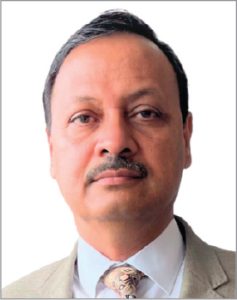
 Founded in 2002, Apraava has witnessed major transitions in the power sector as the country focuses on increasing its renewable energy portfolio. The company, which has emerged as a major renewable independent power producer, has also realigned its strategies to meet the changing market requirements. In an interview with Renewable Watch, Haziq Beg, chief operating officer, Apraava Energy, talks about the company’s key achievements and future plans…
When was the company formed and who are the key investors in this company?
Founded in 2002, Apraava Energy is a diversified power company, jointly owned by the CLP Group, one of the largest investor-owned power businesses in Asia, and Caisse de dépôt et placement du Québec (CDPQ), a global investment group. It has evolved from being a single-asset company to a forward-looking, climate-conscious organisation.
What is the current portfolio of the company?
Our diverse portfolio comprises 3,150 MW of installed capacity, which includes 924 MW of wind energy and 250 MW of solar energy projects across seven states, four power transmission assets and an advanced metering infrastructure project in Assam. We are also developing a 250 MW wind power project at Sidhpur, Gujarat, which is expected to be commissioned this year. We have set a target to significantly expand our energy portfolio over the next three to four years, and contribute to India’s target of 500 GW renewable energy by 2030. Going ahead, we will only invest in low-carbon growth areas, including renewable energy, power transmission and distribution, as well as other non-generation, customer-focused energy businesses.
What has been your experience in the Indian renewable energy market?
Apraava Energy has been a front runner in the renewable energy sector. We were among the first companies to recognise the potential of renewable energy in India, as demonstrated by our establishment of a wind farm as early as 2009. We were the first power company in Southeast Asia to issue a green bond and one of the early corporate partners of the International Solar Alliance. Currently, around 47 per cent of our total installed capacity is based on renewable energy sources spread across seven states. We are working to strengthen this further through strategic investments. As part of the Government of India’s initiative for “Flexibility in Generation and Scheduling of Thermal/Hydro Power Stations through Bundling with Renewable Energy and Storage Power”, we are diligently pursuing the development of green power capacity at our Jhajjar power plant. We are keen to grow our renewable portfolio both by implementing greenfield projects and exploring acquisition opportunities.
Could you shed some light on some of your key projects and deals?
Veltoor, a 100 MW solar project in the southern Indian state of Telangana, is one of the key projects in Apraava’s renewable energy portfolio. It was fully commissioned in the first quarter of 2018, marking an important milestone for Apraava as its first solar project. It was completed without any lost-time incidents, even though it took more than 1 million man-hours to build. The company implemented cutting-edge technology and systems at the plant. The company was awarded the world’s first-ever solar project quality certificate by DNV.
Equipped with the latest tracker technology, the solar panels align with the sun’s path through the day, maximising the energy captured by approximately 20 per cent. The plant’s automation system monitors the performance of each string of panels, helping to maximise their yield. In addition, the solar plant helps avoid 126,429 tonnes of CO2 emissions annually.
What are the key challenges faced in setting up a renewable energy project in India?
The power sector is currently undergoing a remarkable transformation globally, seeking to redefine the industry landscape. India has made significant strides in the renewable energy sector, positioning itself as a competitive player in the global renewable energy space. Ensuring an accelerated energy transition in the country is crucial for long-term energy security, price stability and national resilience. However, India faces a major challenge due to the uneven distribution of renewable energy sources across different regions. To address this, better coordination is needed in the flow of power across state-run grids, requiring substantial investments not only in renewable energy generation but also in the transmission and distribution sector to enhance and modernise the network.
Despite ongoing challenges, the Government of India is actively taking decisive measures to create a favourable and supportive ecosystem for renewable energy within the country. By implementing effective policies, India can unlock the full potential of renewable energy, and pave the way for a sustainable and resilient energy future.

