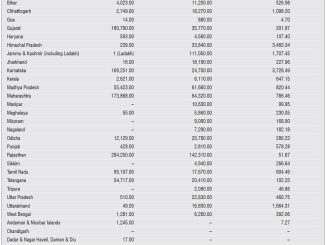
Wind power deployment began in India more than three decades back to cross 40 GW of installed capacity today. A significant chunk of this capacity is based on old wind turbine technology of low capacity. In fact, recent estimates by Idam Infrastructure Advisory Private Limited suggest that almost a quarter of this capacity has been built with smaller turbines of less than 1 MW. In contrast, modern turbines that are being currently deployed in India have capacities of up to 3 MW to capture more wind energy through larger rotors and taller hub heights.
The low-sized turbines have been mainly installed at the top wind sites of the country, in states like Tamil Nadu, Karnataka and Gujarat. Thus, the wind energy generation from these sites is quite low than what is possible using modern higher capacity turbines. This presents a strong case for repowering of existing low capacity wind turbines with higher capacity ones, especially since more than 20 GW of additional wind capacity can be deployed by replacing the outdated models of less than 1 MW capacity.
Repowering policy
Realising the immense opportunity in repowering to promote India’s wind power growth, the Ministry of New and Renewable Energy (MNRE) released the policy for repowering of wind power projects in August 2016. The policy aims to promote the optimum utilisation of wind energy resources by creating a facilitative framework for repowering.
According to the policy provisions, wind turbine generators with less than 1 MW of capacity are eligible for repowering. This can be extended to other projects by the MNRE based on the initial experience. Further, for repowering projects, the Indian Renewable Energy Development Agency (IREDA) will provide an interest rate rebate of 0.25 per cent over and above the interest rate rebates available to new wind projects being financed by IREDA for repowering. Moreover, the repowering projects will be eligible for all fiscal and financial benefits available to other new wind projects. However, no additional financial liability has been announced by the MNRE for implementing the repowering policy.
Under the policy, these repowering projects will be implemented by the respective state nodal agencies. Since land is a key issue in the implementation of wind projects, the policy aims to facilitate the acquisition of additional land required for higher capacity turbines. Further, the respective state transmission utilities will be responsible for carrying out the augmentation of the transmission system from the pooling station onwards if required.
If the state discoms are the power offtakers under an existing PPA, the average of last three years’ generation before repowering would continue to be procured by the discom on the existing PPA terms. Further, the remaining generation can either be purchased by the discoms or allowed for third-party sale. During the actual implementation of repowering at a particular project, the respective wind assets would be exempted from honouring the PPA for generation availability. If repowering is being carried out in the case of a captive power plant, the user will be allowed to purchase power from the grid, on payment of certain regulator-determined charges till the work is complete.
Key issues and likely solutions
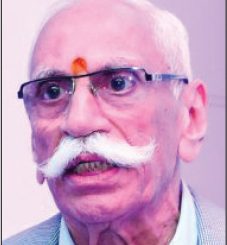
At a recent conference organised by Renewable Watch on “Repowering of Wind Turbines in India”, Dr Prabir Kumar Dash, Scientist D, MNRE, shared his insights on the repowering policy and steps to be taken to address the key issues hindering the uptake of this concept. According to him, there is a problem in the definition of repowering in the policy. The general definition of repowering is to repower the power plant. Thus, the transformer and grid capacity remain the same even if additional equipment is added to the generation capacity. For instance, the replacement of defective solar modules in solar power plants in accordance with the permissible capacity limit is repowering. In the wind power segment, there is still a lack of clarity on the interpretation of repowering as this does not fit into the conventional definition of solar power.
In the case of wind power projects, repowering of wind project sites is a more suitable definition because many rich wind power sites in the country currently have old low capacity turbines. Essentially, these sites have to be freed to make way for modern higher capacity turbines, for more efficient wind resource utilisation of the site.
According to Dr Dash, this can be done in two ways. First, intercropping can be carried out if possible, taking into consideration the micrositing of the older wind turbines. However, this is a less likely option. The other method is to regard repowering as a new greenfield project, under which all the older turbines are uninstalled and new turbines are installed at the site. An additional cost will be incurred on the decommissioning of older turbines. Further, the increased wind power capacity will create problems on the power evacuation side as transmission systems will have to be augmented to cater to the new higher wind power capacity. In a way, this becomes a new wind power project altogether.
There has been no policy or regulatory development ever since the introduction of the MNRE’s policy in 2016. Thus, urgent interventions are required to give an impetus to repowering. Wind turbines have a design life of 20 years while wind power PPAs are signed for 25 years. Thus, it is of critical importance to assess the safety and performance of these turbines. In this regard, a standard is being formulated called the Indian Wind Turbine Certification Scheme, wherein the developer must ensure the safety and performance of these machines. In case the wind turbines are unfit to work, they will be decommissioned.
There is a consensus in the industry that for repowering wind projects certain financial and other incentives should be given. The MNRE is exploring possibilities to develop wind power parks as in the case of solar parks to simplify the execution process for interested players. Like the solar park scheme, wind farm developers would be provided certain incentives for the construction of common infrastructure in the case of wind parks.
Another issue with older wind power projects is the large number of asset owners for each turbine despite their sizes being as small as 250 kW. Further, most of the earlier wind turbines were deployed for captive power consumption. Thus, all of these asset owners need to be aggregated to preserve their interests. An easy solution for these owners would be to form a joint venture and then apply for the various benefits a wind power park would offer.
Outlook
The Indian wind power segment, overall, has been lagging for the past five to six years. Annual capacity additions have continued to decline ever since the record installations of 5.5 GW in 2015-16. In 2021-22, barely 800 MW of new capacity has been added as of November 2021. For India to achieve its tall targets of 500 GW of non-fossil fuel power by 2030, the country’s wind power segment needs a strong impetus.
However, the central-level auctions conducted by SECI and other agencies will not be sufficient to scale up capacity to the required level. Instead, a multi-pronged strategy needs to be adopted for promoting growth in the wind space, which would include auctions, hybrids, repowering, offshore wind as well as MSME-owned wind turbines.
Repowering is an ideal solution to drive growth in the country’s wind segment. What is required now is the right business case to make it commercially viable and bring the country closer to its wind power target of 140 GW by 2030.