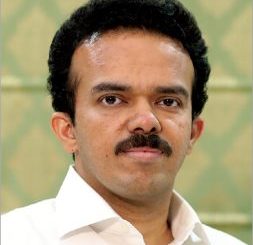
Andhra Pradesh has been actively promoting the uptake of renewable energy, and the state government has released its solar, wind and wind-solar hybrid policies. The state has a rich renewable energy portfolio, with wind and solar power occupying the largest shares with roughly 4 GW of installed capacity in each segment. In a recent interview with Renewable Watch, S. Ramana Reddy, vice chairman and managing director, New and Renewable Energy Development Corporation of Andhra Pradesh Limited, shared his views on the state’s progress in renewable energy amidst the pandemic, the current constraints, expected policy changes and future outlook for the sector…
What is being done to promote renewables growth in the state?
The Government of Andhra Pradesh has given priority to the promotion of renewable energy projects. For large-scale promotion of renewable energy power projects for export of power to other states, the state government notified the Andhra Pradesh Renewable Energy Export Policy 2020 in July 2020. A shelf of seven projects with an estimated renewable energy potential of 17.8 GW has been identified for offering to the selected developers. Considering the increased penetration of variable renewable power to meet the peak power demand in the region, the government has decided to promote pumped storage hydropower projects. Techno-commercial feasibility reports have been prepared for 29 locations with an aggregate capacity generation potential of 33,240 MW. In the first phase, projects will be taken up at seven locations, with an estimated potential of 6,600 MW. The feasibility reports were prepared and submitted to the Central Electricity Authority (CEA) for comments, and the detailed project reports are under preparation.
What are the challenges that the renewable energy sector is facing in your state?
The major constraint being faced by the renewable sector in the state is the unavailability of transmission infrastructure for evacuation of power. The Ministry of New and Renewable Energy has proposed to create transmission infrastructure for evacuating 8 GW of renewable power from the Ananthapur and Kurnool districts. The CEA has approved the plan and the Power Grid Corporation of India has finalised the transmission infrastructure for execution in the state, once the prospective developers files for long-term access. We have also planned for transmission lines and substations to evacuate another 10 GW of renewable power.
What policy changes can your state’s renewable energy sector expect in the coming months?
The state government is awaiting a policy for the promotion of energy storage in the power sector, as proposed by the Government of India. This is expected to boost investments in pumped storage plant projects.
What is the outlook for emerging opportunities such as floating solar and storage in your state?
The Government of Andhra Pradesh is actively promoting floating solar power plants on waterbodies. The Greater Visakhapatnam Municipal Corporation has already commissioned a 3 MW Floating solar power plant at Visakhapatnam. A further 2 MW capacity is under implementation. Other municipal corporations, such as those of Tirupati, Guntur and Kakinada, are also planning to implement floating solar power plants. NTPC has commissioned the largest floating solar power plant with 25 MW of capacity at its thermal power plant at Visakhapatnam. The Solar Energy Corporation of India is also planning to set up a 200 MW hybrid project comprising 140 MW of solar, 60 MW of wind, and a 150 MWh battery energy storage system, at Ramagiri, Anantapur.