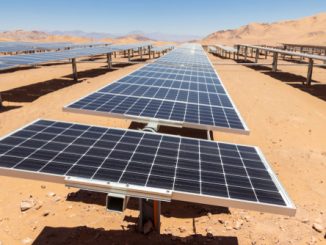
As of October 2021, India’s solar power capacity has crossed 46 GW, surpassing wind power to become the leading renewable energy resource in terms of installed capacity. This was an expected outcome, owing to the impressive progress witnessed in the solar space in the four to five years since the launch of competitive bidding. In fact, solar power capacity in India has grown the fastest amongst all renewable power sources, increasing at a CAGR of 30 per cent between 2016-17 and 2021-22 (as of October 2021). Its counterpart, wind power did not adapt to the auction regime that well and continues to be fettered by transmission and land constraints. This impressive growth in the solar power space has been a result of the creation of a highly competitive market, enabled by a favourable regulatory environment, a global decline in module prices and the entry of large investors with deep pockets and a huge risk appetite.
While growth in the solar power space has historically been driven by large utility-scale power projects, the past two years have also witnessed an increasing uptake of rooftop solar projects and non-utility ground-mounted projects enabled by attractive opex-based business models for commercial and industrial (C&I) consumers. Meanwhile, owing to land acquisition challenges and synergies between hydropower and solar power projects, many floating solar projects are also being implemented.
However, perhaps the most interesting developments are being witnessed in the solar manufacturing space, which has seen not only interventions at the policy end, but also a successful, first-of-its-kind auction. Further, in the past few months, industry giants such as Reliance Industries and ReNew Power have announced plans to venture into this space, while existing players such as Vikram Solar and Adani Solar are expanding their capacities.
An overview of the recent trends and developments in all these key subsegments of solar power, and the outlook for the future…
Tariffs and tenders in utility-scale solar projects
Utility-scale solar continued to show promising growth in 2021 owing to sustained investor and developer confidence in the space, timely regulatory interventions, and favourable cost economics. To continue attracting investments in this space and give developers relief from delays caused by the pandemic, the Ministry of Power (MoP) announced an extension of the waiver of interstate transmission system (ISTS) charges on transmission of electricity generated from solar and wind sources. Earlier available to solar and wind projects commissioned up to June 30, 2023, the date has now been extended to June 30, 2025. This measure has certainly removed the uncertainty surrounding ISTS charges for the next few years, and will help in capacity expansions. Meanwhile, states such as Gujarat, Maharashtra, Karnataka and Haryana have notified new solar policies (includes draft as well).
With these interventions from the central and state governments, the year witnessed many large, successful auctions despite the devastating second wave of the pandemic. Solar power tariffs, meanwhile, have witnessed a steep decline, from Rs 3 per kWh in February 2017 to record low tariffs of Rs 1.99 per kWh in December 2020. The tariffs declined steeply in 2017 owing to aggressive bidding by developers, but started climbing in 2018 and 2019 due to uncertainty regarding safeguard duty as well as land and transmission challenges. They started declining again in 2020 with the increased inflow of foreign equity and have since stabilised at the Rs 2.10-2.40 per kWh level.
Interestingly, the majority of these auctions were state-specific ones conducted by the relevant state agencies, with the only large central stand-alone solar auction being conducted by the Indian Renewable Energy Development Agency (IREDA) for 5 GW of capacity under the Central Public Sector Undertaking (CPSU) Scheme. In September 2021, NTPC Limited, SJVN, NHPC, NLC India, and Ircon International emerged as winners in IREDA’s CPSU auction with allocated capacities of 1,990 MW, 1,000 MW, 1,000 MW, 510 MW and 500 MW respectively. The tariff cap for this tender was Rs 2.45 per kWh.
On the state side, Madhya Pradesh auctioned the largest solar capacity amongst all states in 2021 through Rewa Ultra Mega Solar Limited. A massive 1.5 GW of capacity was auctioned, distributed across three solar parks – Agar (550 MW), Shajapur (450 MW) and Neemuch (500 MW). Avaada Energy and O2 Power won capacities of 200 MW and 350 MW at tariffs of Rs 2.459 per kWh and 2.444 per kWh, respectively, in the Agar auction. Similarly, NTPC Renewables won 105 MW at Rs 2.35 per kWh and 220 MW at Rs 2.33 per kWh, while Talettutayi Solar Projects Nine (SolarArise) won 125 MW at Rs 2.339 per kWh in the Shajapur auction. Lastly, Tata Power (TP Saurya) won capacities of 170 MW at Rs 2.14 per kWh and 160 MW at Rs 2.149 per kWh, while Al Jomaih Energy and Water Company won 170 MW at Rs 2.15 per kWh in the Neemuch auction. Interestingly, the lowest bid tariffs declined from Rs 2.44 per kWh in the Agar auction (July 2021) to Rs 2.14 per kWh in the Neemuch auction (August 2021) – a significant drop of Re 0.30 per kWh within a span of just one month in the same state.
Record low tariffs of Rs 1.99 per kWh were witnessed in Gujarat Urja Vikas Nigam Limited’s auction for 500 MW (Phase XI) of solar capacity in December 2020. Of the tendered capacity, 200 MW was allotted to NTPC Limited, 100 MW to Torrent Power Limited, 80 MW to Al Jomaih Energy and Water Company Limited and the remaining 120 MW to Aditya Renewables at the same tariff. However, another tender in Gujarat in March 2021, the first after the imposition of basic customs duty on solar imports, saw the tariffs rising to Rs 2.20 per kWh.
Another successful state tender was Maharashtra State Electricity Distribution Company Limited’s 500 MW solar (Phase VI) auction in July 2021, which saw ACME Solar and ReNew Power winning capacities of 300 MW and 200 MW at tariffs of Rs 2.42 per kWh and Rs 2.43 per kWh respectively.
An interesting trend visible from these recent auctions is the state-wise variation in tariffs depending on factors such as solar radiation, policy structure and ease of doing business. Thus, Gujarat, with its clear enabling policy regime and high solar potential, saw the lowest tariffs, while Maharashtra saw higher tariffs. Meanwhile, Madhya Pradesh, which has adopted various attractive tender provisions for developers, also saw low tariffs. Results are now anticipated for the Solar Energy Corporation of India’s tender for 1,785 MW of solar projects in Rajasthan (Tranche IV), which was oversubscribed by 9.3 GW, thus promising significantly low tariffs. However, whether the imposition of basic customs duty will impact this tariff drop, or another record in solar power auctions will be achieved, remains to be seen.
C&I solar gains traction
C&I solar has emerged as an important stand-alone business segment in recent years, with a huge untapped potential in this market. Traditionally limited to rooftop solar projects of smaller sizes, C&I projects are increasing in size and scale owing to open access and group captive arrangements. Thus, mid-sized and large specialised developers such as ReNew Power, Hero Future Energies, Amp Energy, SunSource Energy, CleanMax and Cleantech Solar are capturing large market shares owing to favourable cost economics for both buyers and sellers. For sellers, C&I consumers are preferable to discoms, owing to not only better contract prices but also assured payments.
Meanwhile, buyers, including large industries, across all segments and commercial consumers such as metro corporations, railways, airports, hotels and multinational corporations can generate substantial savings by using solar power-based captive, group captive and open access projects to meet their power requirements. While solar power prices have declined significantly over the past few years, state discoms continue to charge C&I consumers very high tariffs, increasing their operating costs. Further, companies are switching to green strategies to attract environment-conscious customers and investors.
This is evident from the recent large solar project announcements by corporates and industries. For instance, in February 2021, Hinduja Renewables developed a 75 MWp captive solar project for Ashok Leyland. In May 2021, Godawari Power & Ispat Limited announced plans to set up a 250 MW solar power plant in Raigarh, Chhattisgarh. In April 2021, telecom giant Airtel (Bharti Airtel) completed a 14 MWp captive solar plant in Uttar Pradesh, which will help the company meet the power requirements of its core and edge data centres in the state. This project was set up by the company in partnership with AMP Energy. Another big announcement came from Shree Cement, which plans to construct 106 MW of solar power projects to meet the captive power needs of its cement manufacturing facilities at various locations. Similarly, in July 2021, Mahindra & Mahindra announced that it had signed a power purchase agreement with ReNew Green Energy Solutions to procure solar power from its 43 MW open access project in Maharashtra.
The central and state governments, on their part, have promoted growth in this space through comprehensive rooftop solar frameworks with net and gross metering regulations; exemptions on captive, open access and group captive charges for solar power in many states; and a streamlined utility interconnection process. A recent intervention in this space to scale up installations was the MoP’s amendment in June 2021 to the Electricity (Rights of Consumers), 2020 Rules concerning net metering for rooftop solar installations. Under the amendment, net metering can be set up by a prosumer for loads up to 500 kW or up to the sanctioned load, whichever is lower. For loads beyond 500 kW, gross metering must be used.
Further, the year also witnessed many tenders from state agencies promoting the setting up of rooftop solar projects at government buildings, identified localities or even residences. These include Haryana’s 10.4 MW (July 2021), Madhya Pradesh’s 41 MW (April 2021), West Bengal’s 9.9 MW (February 2021) and Lucknow Smart City’s 8.5 MW (August 2021) rooftop solar tenders. Meanwhile, Tata Power has been selected by Kerala State Electricity Board to develop a total of 84 MW of solar rooftop capacity across all districts of Kerala, covering individual households (64 MW) and housing society projects (20 MW).
However, despite such measures, developers and consumers alike face many challenges at the ground level. Inconsistent solar policies across states, delayed discom approvals, a lengthy arbitration process, and uncertainty around wheeling, transmission and banking charges have created many execution challenges for developers in this space. While some state discoms do promote open access, there have been reports of many restricting such projects, and thus group captive projects are becoming more popular. These bureaucratic and regulatory hurdles need to be addressed promptly to promote the growth of the high-potential C&I solar segment. If done in a timely fashion, the favourable cost economics of the various business models in this space will greatly help the country in its capacity augmentation and decarbonisation efforts.
Floating solar becomes a viable option
Land acquisition continues to be one of the most critical issues in setting up solar power projects, in turn impacting auction and project implementation timelines. With India targeting a total of 500 GW of renewable power capacity, of which more than half is expected to come from solar, the land problem is only going to get more complicated. Thus, floating solar projects, which can be set up on waterbodies, are emerging as a popular alternative. Apart from saving land costs and avoiding acquisition delays for developers, they also promise higher efficiencies due to the cooling effect of water on module temperatures and reduced dust-based soling losses. Moreover, they are faster and easier to implement than their ground-mounted counterparts, which require complex civil works.
Floating solar projects are an especially attractive proposition for India, as the country has several waterbodies, including lakes, ponds and large reservoirs at thermal and hydro power projects. Setting up solar projects on such reservoirs also has the added advantages of optimal utilisation of the existing power evacuation and transmission systems and faster implementation due to ready transmission infrastructure.
Owing to their many benefits, several small and large floating solar projects have been announced across the country in recent months in the form of project proposals and tenders. For instance, in January 2021, the Ministry of Defence invited expressions of interest for the development of a floating solar project on a turnkey basis at the Cordite Factory in Aruvankadu, Tamil Nadu, on a designated lake with 11,700 square metres of area identified for solar capacity. In February 2021, a hybrid power project with 20 MW of hydropower and 80 MW of floating solar power was approved by the Municipal Corporation of Greater Mumbai on the Middle Vaitarna Dam. In the same month, Tumakuru Smart City Limited in Karnataka invited bids for the development of a 20 MW floating solar power project at the Bugudanahalli reservoir in the district. Further, West Bengal Power Development Corporation Limited (WBPDCL) floated a tender for developing a 5 MW grid-connected floating solar power project at the Santaldih thermal power station in Purulia in the same month. In August 2021, NHPC Limited floated a tender for engineering, procurement and construction of a 100 MW floating solar photovoltaic (PV) project in Odisha.
A few floating solar projects also reached completion this year. For instance, Ciel & Terre India commissioned a 5.4 MWp floating solar project at the Sagardighi thermal power plant in West Bengal. While Ciel & Terre India has completed the plant engineering, float supply, anchoring and mooring, and supervision of the project, which is owned by WBPDCL with BHEL being the EPC partner. Ciel & Terre India also completed the plant engineering, float supply and supervision of the 14.7 MWp floating solar project at Southern Petrochemical Industries Corporation Limited, built on its water storage pond in Thoothukudi in Tamil Nadu. More recently, BHEL completed a 25 MW floating solar project at NTPC Limited’s site in Simhadri, Andhra Pradesh.
Due to their small scale and the comparatively nascent float technology, floating solar projects are reportedly priced higher than ground-mounted projects. However, once the market matures and domestic float manufacturing gains pace with improved technology, project costs will fall, further increasing the adoption of floating solar projects.
Progress in solar manufacturing
After years of little activity, the solar manufacturing space has started showing signs of progress in 2021 owing to a slew of initiatives taken by the central government. These initiatives have been embraced by the private sector. First, the Approved List of Models and Manufacturers (ALMM) scheme was published after many delays in March 2021, to which additions have been made time and again, with the latest version being released in September 2021. Eligible models and manufacturers of solar PV cells and modules that are compliant with BIS standards are to be listed under the scheme, which is valid for two years. This registration is compulsory for all manufacturers supplying equipment to government projects. Further, India’s finance ministry has approved the proposal of charging basic customs duty of 40 per cent and 25 per cent on the import of solar modules and cells, respectively, from April 2022. The customs duties, which are considered a replacement for safeguard duties, are expected to help domestic manufacturers compete with their foreign counterparts that have captured large shares in the Indian market. Finally, the much-anticipated production-linked incentive (PLI) scheme under the National Programme on High-Efficiency Solar Photovoltaic Modules was approved with an outlay of Rs 45 billion in April 2021. The manufacturing units sanctioned under the programme would be eligible for PLI on an annual basis, on sales of high efficiency solar PV modules, for five years from late of commissioning or five years from the scheduled commissioning date, whichever is earlier.
To this end, IREDA invited bids for setting up manufacturing capacities for high efficiency solar PV modules under the PLI scheme in May 2021. The tender received bids for 54.8 GW of capacity, for manufacturing one of, or a combination of, various components including polysilicon, wafers, ingots, cells and modules. The winning bidders were announced by IREDA in November 2021, for a total capacity of 10,483 MW and a total PLI amount of Rs 44.5 billion. Jindal India Solar Energy, Shirdi Sai Electricals and Reliance New Energy Solar were awarded capacities of 4 GW, 4 GW, and 2,483 MW at PLIs of Rs 13.9 billion, Rs 18.75 billion and Rs 11.9 billion respectively.
Meanwhile, established domestic manufacturers Vikram Solar, Tata Solar, Adani Solar and Premier Energies have announced their expansion plans. Even large energy players such as ReNew Power and Azure Power have announced plans to foray into this space. All these developments bode well in the long run for India’s solar power space, which is heavily dependent on imports to meet its demand for solar cells and modules. Massive manufacturing capacity announcements by industry giants such as Adani and Reliance would create the scale required to curb imports and ensure self-sufficiency in domestic supply chains.
However, a key issue in this otherwise rosy picture is that these facilities will take a few years to be ready. Meanwhile, the basic customs duty is set to be implemented from April 2022 onwards. Thus, while India’s present domestic capacity is inadequate to meet the industry demand, this import restriction will raise project costs in the highly price-sensitive Indian market. Consequently, in some industry circles, there are concerns of slowdown in capacity addition of solar power, especially since no sunset period has been notified for the BCD. Meanwhile, the other side believes that these measures are necessary to scale up manufacturing, and that the solar industry is mature and resilient to policy changes and will bounce back strongly. The actual impact on project costs and tariffs will be more evident in the coming months, and will determine capacity uptake.
The way forward
India’s solar power segment is at an interesting juncture now. On one side, there is a focus on expanding installations to reach the country’s tall targets by 2030, supported by massive auction-led private investments as well as the rapidly growing C&I and floating solar spaces. On the other side, a strong impetus is being given to the ailing domestic manufacturing industry to make solar power a sustainable industry. While there is surely some uncertainty due to duty imposition, and existing-land, transmission- and discom-related issues, the outlook for the country’s solar segment remains strong – especially with the massive pipeline of projects in both the project development and manufacturing space, and the sustained confidence of all stakeholders.
By Khushboo Goyal