

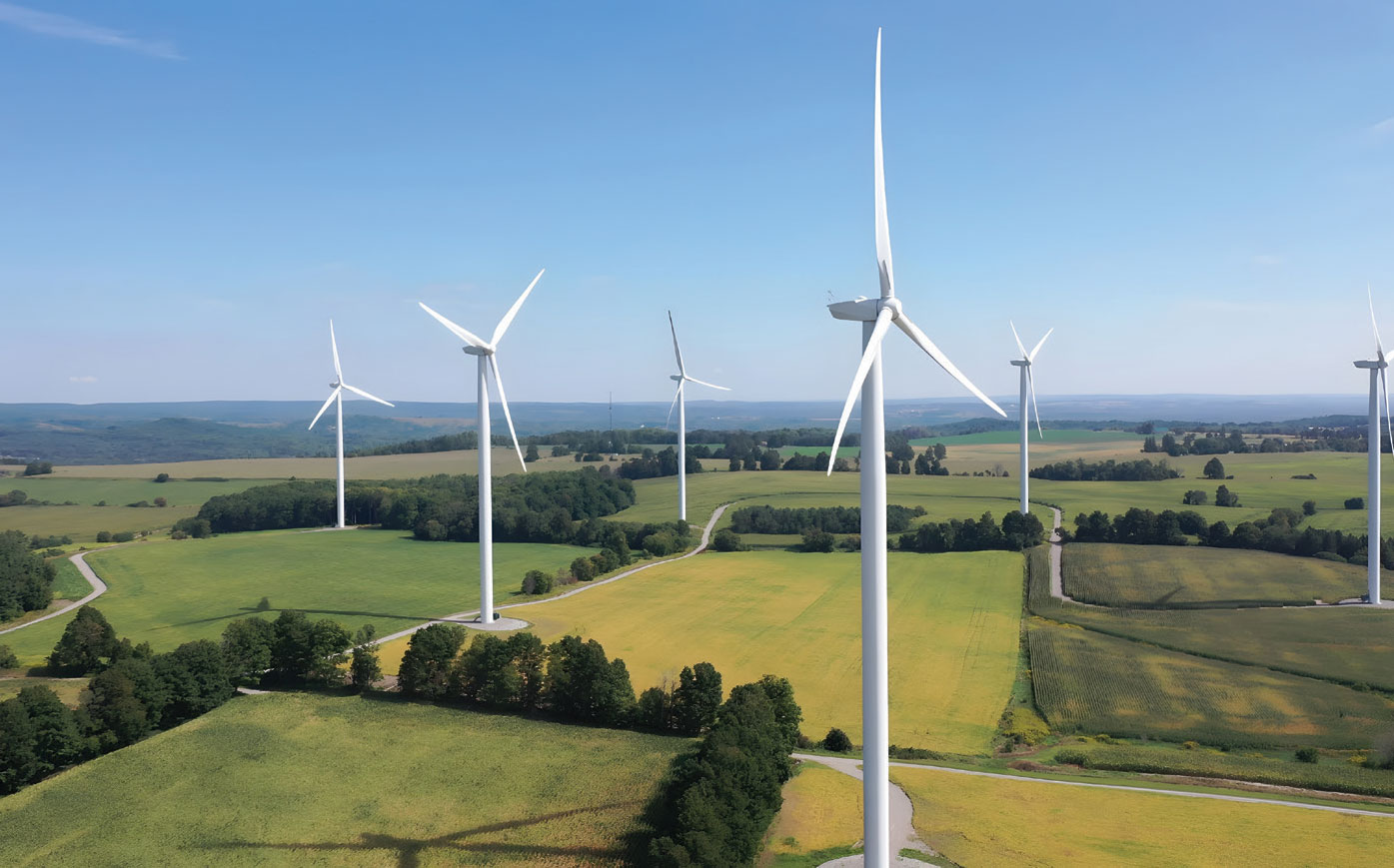
 India’s wind sector is undergoing rapid technological transformation, with manufacturers adopting larger turbines, longer blades, taller and hybrid towers, advanced gearboxes and stronger foundations, alongside the growing adoption of digital technologies. These advancements are essential for improving generation, capacity utilisation and project efficiency, but India still has considerable ground to cover in scaling advanced turbine technologies and building the supporting manufacturing ecosystem. A look at the technological advancements and innovations in onshore wind components…
Higher-capacity turbines
One of the key trends is the transition towards higher-capacity turbines with larger rotor diameters, generating more power per machine and potentially reducing the number of turbines and associated balance-of-plant costs such as foundations, roads, cabling and electrical systems.
The August 2026 ALMM-Wind list reflects India’s shift towards higher-capacity turbines. Venwind Refex Power’s GWH182-5.3 MW is currently among the largest models in the list, with a rotor diameter of 183.5 metres and hub height options of 110 metres and 130 metres. Adani New Industries’ MWL-160-5.2 MW features a 160 metre rotor with 120 metre tubular and 140 metre hybrid tower options. Senvion’s 4.2M160 has a rated capacity of 4.2 MW, a 160 metre rotor and a hub height of 140 metres, while Sany’s SI-16840 has a rated capacity of 4 MW, a rotor diameter of 166.8 metres and a hub height of 139 metres. WEG’s AGW147/4.2 has a 4.2 MW rating and a 147-metre rotor.
Larger rotors and advanced blades
A larger rotor sweeps a greater area and can capture more energy at a given wind speed. This is particularly relevant for India, where a significant portion of the untapped wind potential is concentrated in moderate wind regimes rather than traditional high-wind locations.
The August 2026 ALMM-Wind list provides several examples. Envision Energy’s EN-156/3.3 MW has a 156 metre rotor and can be deployed at hub heights ranging from 120 metres to 143 metres. Suzlon’s S144 platform has a 144 metre rotor and ratings of 3 MW and 3.15 MW, with hub heights extending to 160 metres. Meanwhile, Suzlon’s S133 platform offers 2.6 MW, 2.8 MW and 3 MW configurations with a 133 metre rotor and hub heights of up to 160 metres. These configurations demonstrate a broader industry shift towards higher rotor-to-generator ratios while improving the utilisation of existing transmission infrastructure without proportionately increasing the number of turbines.
The expansion of rotor diameters is also closely linked to advances in blade design. Longer blades increase swept area but also introduce greater structural loads, deflection and transportation challenges. Consequently, blade manufacturers are increasingly focusing on lightweight composite materials, improved aerodynamic profiles and structural reinforcement.
The ALMM-WTC framework, which provides a component-level approval mechanism, now covers wind turbine components such as blades, gearboxes, generators, bearings and towers. The February 2026 ALMM-WTC list, for example, includes Pioneer Wincon’s blade models with lengths of approximately 24 metres and 27.75 metres, along with associated turbine platforms.
At the global level, GWEC highlights advanced materials and manufacturing processes as key areas of wind technology innovation, with fibre-reinforced composites remaining central to blade construction. Recyclable resins and improved material recovery are also emerging to reduce the environmental footprint of blades.
Taller towers and hybrid designs
Another key trend is the shift towards taller towers. This is particularly relevant for inland states, where higher hub heights can provide access to stronger and more consistent wind power, thereby improving annual energy production.
The latest Indian turbine portfolio demonstrates how significant this shift has become. Suzlon’s S144 can be installed at hub heights of 105 metres, 130 metres, 140 metres and 160 metres, while its S133 platform offers hub heights of up to 160 metres. The Adani MWL-160 platform is listed at 120 metres on a tubular tower and 140 metres on a hybrid tower. Envision’s EN-156/3.3 MW offers hub heights of 120-143 metres, while Senvion’s 4.2M160 is listed at 140 metres.
Furthermore, larger rotors and taller hub heights are driving the adoption of hybrid tower designs that combine steel with lattice or concrete elements. These modular designs can ease transportation and installation constraints, particularly for projects in remote areas with road limitations. As a result, tower design is becoming an increasingly important part of turbine optimisation, rather than merely a structural support system.
The August 2026 ALMM-Wind list includes several examples. Suzlon’s S144 is available with hybrid lattice towers, including a 160 metre configuration. Its S133 platform is also listed with hybrid lattice and modular hybrid lattice tower configurations, including a 160 metre option. Adani’s MWL-160-5.2 MW is listed with a 140 metre hybrid tower.
Site-specific foundation engineering
Larger rotors and taller towers are making foundation design more demanding, as they increase aerodynamic loads and bending moments at the tower base. Foundation requirements depend on soil conditions, groundwater, seismic characteristics, wind loads and turbine configuration, making geotechnical studies increasingly important. While larger turbines can reduce the number of foundations required, each foundation may become more substantial, creating a trade-off between turbine size, foundation costs, infrastructure and energy generation.
Evolving gearbox technology standards
The gearbox is becoming increasingly important as turbine sizes grow, transferring rotational energy from the slow-moving rotor to the generator while withstanding high mechanical stresses. Larger turbines make gearbox reliability critical, as failures can lead to significant downtime and complex repairs. This is driving greater emphasis on condition monitoring, predictive maintenance and component-level certification. The February 2026 ALMM-WTC list includes a ZF Wind Power gearbox, model EF0953A, with a mechanical rated power of 3,560 kW, associated with Suzlon’s S144 3 MW/3.15 MW platform.
Outlook
India’s wind sector is entering a new phase in which scale, efficiency and localisation are becoming increasingly important. Technological improvements are extending beyond turbine size. Blade materials, gearboxes, digital controls and predictive maintenance are now important considerations for improving project performance and reducing downtime. Larger turbines can reduce the number of machines and associated balance-of-plant requirements, but they also require stronger foundations, specialised transportation, larger lifting equipment and greater manufacturing precision. The development of a domestic component manufacturing ecosystem will therefore be crucial for strengthening the supply chain.
Digitalisation is also becoming increasingly important in wind farm operations. GWEC highlights the role of artificial intelligence, big-data analytics and cloud computing in resource assessment, turbine-layout optimisation and predictive maintenance. Systems using vibration, temperature and electrical data can identify potential gearbox, bearing and blade problems at an early stage. Drone inspections, sensors, fixed cameras and other monitoring technologies can also support integrated digital operations and maintenance, which will become more relevant as wind farms expand across geographically dispersed locations.
Onshore wind development in India continues to face challenges. Land acquisition, right-of-way approvals, transmission connectivity and permitting often contribute to delays in project development. Developers also need to address road and logistics constraints for transporting larger blades and tower sections. At the same time, timely power purchase agreements and adequate evacuation infrastructure are critical to keeping project execution on schedule. These challenges can add to development timelines and costs, even as turbine technology improves.
While India’s latest approved onshore turbine models are now entering the 5 MW class, global manufacturers are developing and deploying much larger onshore platforms, particularly for low-wind and challenging sites. India’s focus is therefore shifting towards larger, reliable and site-optimised onshore turbines that are suited to domestic wind conditions, manufacturing capabilities, transport infrastructure and project economics. Domestic wind manufacturers also need to prepare for the technologies required for offshore wind, where the domestic ecosystem remains relatively underdeveloped. With a target of 100 GW of wind capacity by 2030, technology advancements, localisation and digitalisation will remain central to the sector’s next phase of growth.

