 By Nidhi Dua
Renewable Watch has consistently tracked the progress of renewable energy transition across states in its State/Union Territory Focus section, highlighting policy landscape, industry developments and outlook. Since the beginning of 2026, the section has covered Gujarat, Rajasthan, Maharashtra, Karnataka, Delhi and Punjab, each presenting a distinct renewable energy profile shaped by the state’s resource base, geography and development priorities. Building on these state-level assessments, this article compares key developments across the six states to identify emerging trends and highlight similarities and differences in their renewable energy pathways…
Distinct renewable energy portfolios across states
The renewable energy portfolios of the selected states reflect the distinct technology mixes shaped by resource availability and development priorities. Gujarat has the largest renewable energy capacity among the selected states at 50,386.41 MW, followed by Rajasthan (48,234.92 MW), Maharashtra (32,915.62 MW) and Karnataka (27,094.77 MW). Together, these states account for around 56 per cent of India’s installed renewable energy capacity. In contrast, Delhi (531.37 MW) and Punjab (3,458.18 MW) have comparatively smaller installed renewables capacities. Moreover, the composition of the state’s renewables portfolios varies considerably (Table 1).
Gujarat has developed the most diversified renewable energy portfolio, with significant contributions from both solar and wind, in addition to the highest rooftop solar capacity among the selected states. In contrast, Rajasthan’s portfolio is driven by solar power, with comparatively smaller contributions from wind, hydro and biopower. Furthermore, Maharashtra has a more balanced portfolio, supported by substantial biopower and large hydro capacities alongside solar and wind. Karnataka also exhibits a diversified portfolio, with strong contributions from wind and the highest small-hydro capacity among the six states. Punjab, meanwhile, has a relatively modest renewable energy portfolio, with biopower and large hydro accounting for a significant share of its installed capacity. Owing to land constraints, Delhi’s renewable energy capacity remains limited and is almost entirely based on rooftop solar.
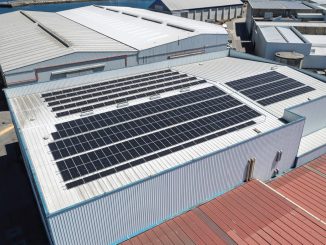
Solar power remains the largest renewable energy source across all the selected states, although its contribution to the overall renewable energy portfolio varies considerably. Rajasthan has the most solar-centric portfolio, with solar accounting for nearly 87 per cent of its total installed renewable energy capacity. The state’s renewable energy development continues to be driven primarily by utility-scale projects, with ground-mounted solar contributing over 37 GW, while rooftop and hybrid solar account for a relatively small share. Delhi also has a solar-dominated portfolio, with solar constituting about 84 per cent of its renewable energy capacity. However, unlike in Rajasthan, almost the entire solar capacity in Delhi is rooftop based.
In Gujarat, around 64 per cent of the renewable energy capacity is constituted by solar. In Maharashtra, solar accounts for about 62 per cent of the installed renewable energy capacity. Karnataka has the lowest dependence on solar among the larger renewable energy states, with a contribution of around 42 per cent in its installed renewable energy capacity, while wind accounts for a significant share of the portfolio. Punjab also has a low share of solar in the power capacity mix among the selected states, at about 46 per cent, while biopower and large hydro together form a sizeable portion.
Distribution efficiency sees improvement
For the selected states, distribution performance improved over the 2021-25 period, although progress remained uneven (Table 2). The national aggregate technical and commercial (AT&C) losses declined from 21.91 per cent in 2021 to 15.04 per cent in 2025, supported by improvements in billing efficiency from 84.17 per cent to 87.59 per cent and collection efficiency from 92.77 per cent to 97 per cent. Gujarat consistently outperformed the national average, recording the lowest AT&C losses at 8.25 per cent in 2025, along with the highest billing efficiency of 91.9 per cent and collection efficiency of 99.84 per cent. Karnataka also remained a strong performer, maintaining AT&C losses below the national average and achieving billing and collection efficiencies of 90.53 per cent and 97.3 per cent respectively. Delhi registered significant improvements, reducing AT&C losses from 24.83 per cent in 2021 to 8.36 per cent in 2025 through substantial gains in both billing and collection efficiency. Rajasthan too recorded a decline in AT&C losses over the period, narrowing the gap with the national average, although its billing efficiency continued to trail the national level.
In contrast, Maharashtra and Punjab witnessed fluctuations in performance. Maharashtra’s AT&C losses remained above the national average despite a recovery in collection efficiency, and Punjab recorded a sharp increase in AT&C losses to 19.21 per cent in 2025 due to declines in both billing and collection efficiency. Overall, Gujarat and Karnataka emerged as the best-performing states.
Energy storage gains traction
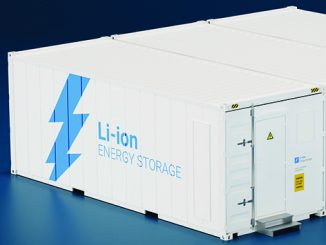
A notable trend across the six states is the growing recognition of energy storage as a reliable round-the-clock (RTC) power supply option. As renewable energy capacity continues to expand, states are increasingly complementing solar and wind deployment with investments in battery energy storage systems (BESSs) and pumped storage projects (PSPs). Karnataka is expected to lead storage deployment, with the Central Electricity Authority (CEA) estimating the state’s installed energy storage capacity to reach 15,752 MW by 2034-35. Karnataka has a pumped storage potential of 7,600 MW, of which 3,600 MW is under construction. It is simultaneously expanding presence in the BESS segment through project deployment, manufacturing and grid-scale implementation.
Gujarat too has an attractive policy environment for energy storage. The CEA estimates the state’s installed energy storage capacity to touch 13,532 MW by 2034-35, while its PSP potential stands at 11,930 MW. Further, under the Gujarat PSP Policy 2025, the state aims to establish 75 PSPs by 2035, attracting around Rs 750 billion in investment, with the target increasing to 100 PSPs by 2047. Rajasthan is expected to have an installed storage capacity of 11,323 MW by 2034-35. While it has a pumped storage potential of 12,560 MW, most identified PSPs are at the survey, investigation, or detailed project report stages. Maharashtra possesses the largest PSP potential among the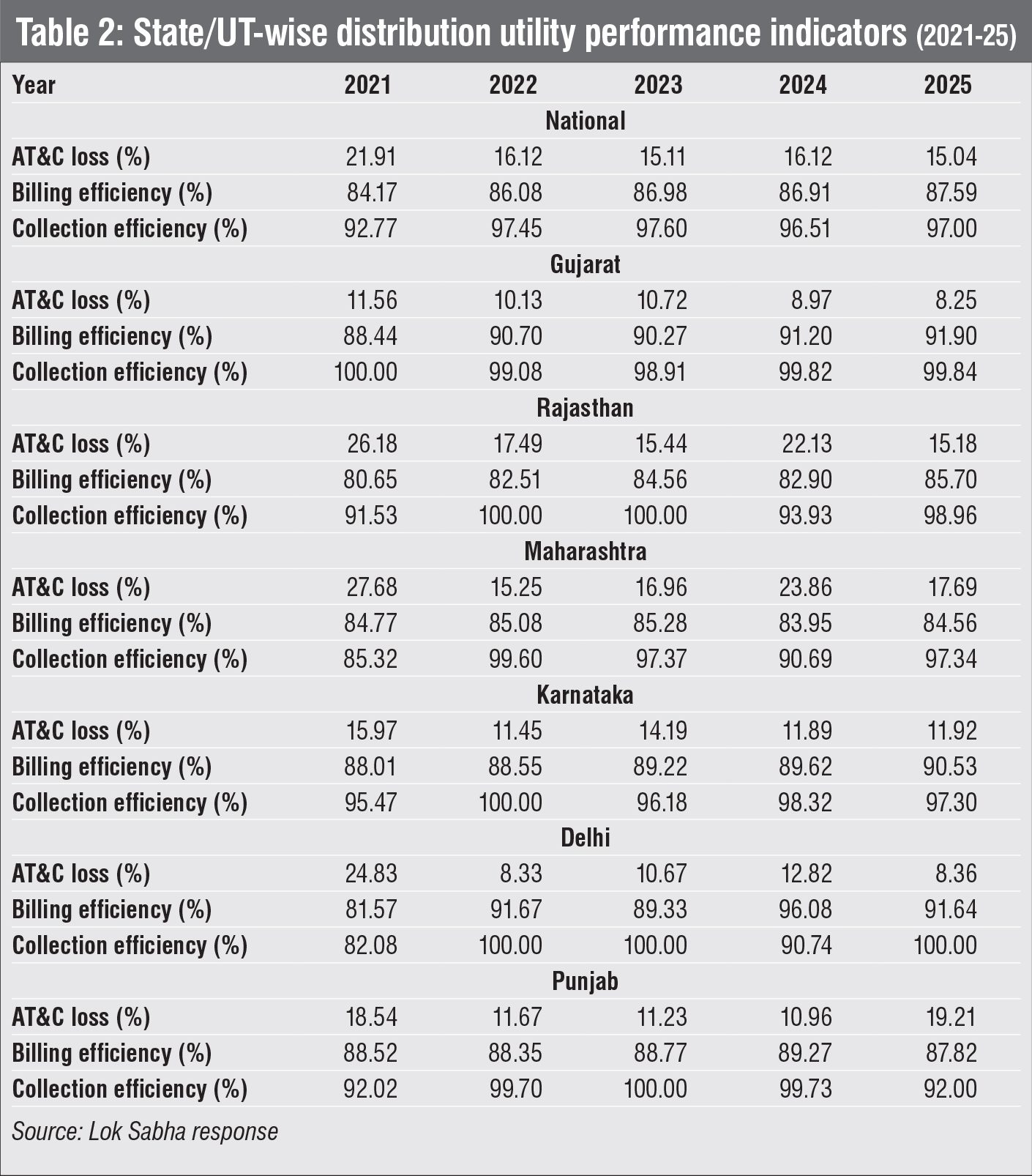 six states at 56,355 MW, but only 400 MW is currently operational. This gap indicates substantial scope for future development, despite ongoing investments in both PSPs and BESSs. Meanwhile, Punjab is gradually scaling its battery storage capacity, with 1,500 MW/3,000 MWh of stand-alone BESS tenders issued during January-March 2026. Delhi is also ramping up efforts to deploy energy storage systems – the most notable achievement being the commissioning of the standalone utility-scale 20 MW/40 MWh BESS at Kilokri.
Evolving policy priorities across states
Among the selected states, Gujarat’s Integrated Renewable Energy Policy 2025 targets over 100 GW of renewable energy capacity by 2030. Through pilot projects, the policy promotes emerging technologies such as ocean energy, geothermal energy, concentrated solar thermal, agrivoltaics, building-integrated photovoltaics (PV) and rail- and road-integrated PV. It also places a strong emphasis on repowering ageing wind power projects and promoting rooftop wind systems. Rajasthan’s Integrated Clean Energy Policy 2024 sets technology-specific capacity targets, targeting to add 125 GW of renewable energy capacity by 2029-30, comprising 90 GW of solar, 25 GW of wind and hybrid projects, and 10 GW of hydro, PSPs and BESSs. The policy extends beyond power generation and promotes renewable energy-based electric vehicle charging infrastructure.
Maharashtra’s recent renewable energy and energy storage policy gives equal importance to renewable energy and storage, with parallel targets of 100 GW of renewable energy capacity and 100 GWh of energy storage capacity by 2035-36. Further, according to the policy, all new solar and wind projects are required to include co-located energy storage equivalent to at least 50 per cent of the project capacity, with a minimum storage duration of two hours. Meanwhile, Karnataka focuses on facilitating 10 GW of additional renewable energy capacity alongside promoting energy storage systems, rooftop solar and 1 GW of wind repowering projects by 2030.In contrast, Delhi’s Solar Energy Policy, 2023 remains centred on distributed solar generation, targeting 4,500 MW of installed solar capacity by 2026-27, including 750 MW of rooftop solar within the city. Punjab, meanwhile, continues to support renewable energy through individual initiatives and storage tenders.
Upcoming capacity additions
The under-construction renewable energy pipeline provides an indication of how the renewable energy mix of the selected states is likely to evolve over the coming years. As per the CEA (March 2026), Rajasthan has the largest pipeline, led by 42,387 MW of solar capacity under construction. Solar continues to account for the majority of its upcoming additions, while wind (2,642 MW) and hybrid projects (3,703.5 MW) constitute a smaller share.
Gujarat, in contrast, has a more diversified pipeline, comprising 17,923 MW of solar, 10,234 MW of hybrid and 5,663 MW of wind energy projects. Karnataka is witnessing a balanced expansion, with 5,046 MW of hybrid capacity, 4,994 MW of wind and 1,873 MW of solar projects under development, reflecting a distinct shift towards wind and hybrid technologies over solar. Maharashtra’s upcoming capacity additions are similarly well distributed, with 3,686 MW of solar, 3,329 MW of wind and 2,132 MW of hybrid projects under construction, with no single technology dominating the pipeline.In comparison, project activity remains limited in Punjab, with only 118 MW of solar capacity under construction and no reported wind or hybrid projects. However, the state is witnessing growing investments in the bioenergy segment. According to the GOBARdhan portal, it had 93 registered compressed biogas (CBG)/bio-compressed natural gas plants as of May 2026. Of these, 11 plants have been commissioned, 12 are under construction and 70 are yet to begin construction. Additionally, portal data shows the state has 27 registered biogas plants, of which 24 are operational, two are under construction and one is yet to commence construction.
The way forward
Despite strong progress in renewable energy deployment, each selected state faces a distinct set of challenges. In Gujarat and Rajasthan, the main hurdle lies in balancing renewable energy expansion with ecological conservation while ensuring power transmission. Restrictions related to the conservation of the Great Indian Bustard (GIB) have affected transmission planning and green energy corridor development, requiring several transmission lines to be undergrounded, rerouted, or insulated, thereby delaying project execution.
In Gujarat, a critical challenge was the grid disturbance at the Khavda Renewable Energy Complex in May 2026, which caused a complete outage of over 8 GW of project generation. In Maharashtra, C&I developers have raised concerns over changing banking regulations. These rules now limit energy banking to the same time slot instead of allowing the time-shifting of generation. Meanwhile, Karnataka has achieved its renewable energy policy targets ahead of schedule, yet a significant share of its solar and wind resource potential remains untapped. Moving forward, strengthening the transmission grid, accelerating project approvals, and improving land and evacuation planning will be vital to sustaining future growth.
For Delhi, improving air quality remains a key priority. Consequently, expanding rooftop solar and strengthening waste-to-energy projects will remain vital components of the city’s clean energy strategy. Punjab, meanwhile, grapples with challenges tied to its biomass-based transition. While bioenergy and CBG offer significant opportunities, efficient feedstock aggregation, storage and year-round availability remain critical constraints for scaling these segments.
A comparison of resource potential and installed capacity indicates that substantial opportunities remain across all the selected states. Rajasthan and Gujarat have already developed large renewable energy portfolios, yet they continue to possess substantial untapped solar and wind potential, including Gujarat’s completely unexploited offshore wind resource. Maharashtra and Karnataka have also utilised only a fraction of their available renewable resources. At the same time, Punjab has considerable scope for expanding both solar and biopower capacity, and Delhi holds further growth potential in rooftop solar. Going forward, the focus for all states must shift towards effectively harnessing these resources through timely project execution, transmission expansion, energy storage deployment and stronger grid integration.