

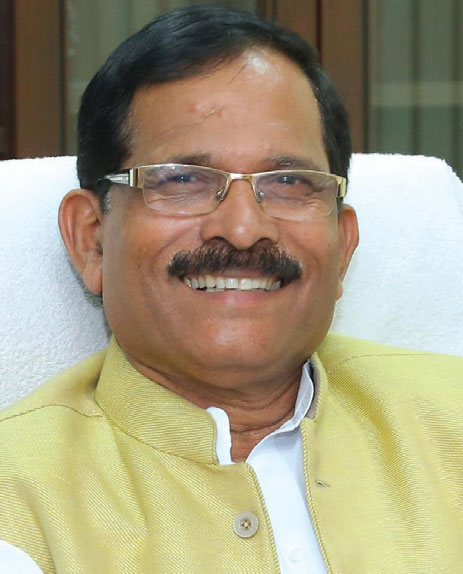
 India’s energy transition is at a defining moment. This transition has been reinforced by a series of targeted policy interventions and programme-level roll-outs, reflecting a coordinated and execution-focused approach by the government. Flagship missions and schemes are moving beyond announcements to measurable outcomes, with progress visible across production, deployment, and demand creation. Against this backdrop, Renewable Watch has collated the information shared by Shripad Yesso Naik, Union Minister of State for Power and New and Renewable Energy in written replies to the Rajya Sabha. It covers the status of the National Green Hydrogen Mission (NGHM), PM Surya Ghar: Muft Bijli Yojana (PMSGMBY) and the geothermal energy segment. Edited excerpts…
Progress under NGHM
The NGHM is being executed to position India as a global hub for the production, use and export of green hydrogen and its derivatives. Under the mission, 3,000 MW per annum of electrolyser manufacturing capacity and 862,000 tpa of green hydrogen production capacity have been awarded. The green ammonia market saw significant momentum as the Solar Energy Corporation of India discovered prices for the production and supply of 724,000 mtpa of green ammonia to thirteen fertiliser units across the country.
The Furthermore, the mission has played a key role in accelerating the adoption of green hydrogen across high-emitting sectors. Under the mission, 20,000 tpa of green hydrogen production and supply capacity has been awarded for offtake by major public sector oil marketing companies, including Indian Oil Corporation Limited, Bharat Petroleum Corporation Limited and Hindustan Petroleum Corporation Limited. The mission is also advancing sector-specific applications, with five pilot projects sanctioned for the use of hydrogen in the steel sector. In the maritime segment, the V.O. Chidambaranar Port Authority has awarded a project for developing bunkering and refuelling facilities for green methanol at the port. On the mobility front, five pilot projects have been approved for deploying 37 hydrogen-fuelled vehicles supported by nine hydrogen refuelling stations across 10 routes in different parts of India.
In parallel, four projects have been awarded to be developed as Hydrogen Valley Innovation Clusters these are: Jodhpur hydrogen valley, Odisha hydrogen valley, Pune hydrogen valley, and Kerala hydrogen valley. To strengthen the domestic innovation base, 23 projects have been sanctioned under the research and development scheme of the mission, while five projects have been approved for establishing testing facilities, underscoring the government’s focus on building a comprehensive green hydrogen value chain.
The Ministry of New and Renewable Energy (MNRE) has also advised states to incorporate green hydrogen-specific provisions within their policy frameworks to support faster adoption at the sub-national level. Several states have responded proactively to this guidance. Maharashtra, Uttar Pradesh, West Bengal and now Gujarat have notified dedicated green hydrogen policies, signalling a clear intent to build focused hydrogen ecosystems. Meanwhile, states such as Andhra Pradesh, Bihar, Himachal Pradesh, Madhya Pradesh, Odisha, Telangana, Rajasthan and Chhattisgarh have embedded facilitative provisions for green hydrogen within their existing renewable energy, energy or industrial policies, reflecting a growing alignment between central objectives and state-level implementation.
The mission document also underscores a whole-of-government approach, under which multiple ministries and departments are encouraged to align their mandates with the objectives of the NGHM. While the MNRE has been designated as the nodal agency for overall coordination and implementation, other ministries have been assigned clearly defined roles to support the development of a comprehensive green hydrogen ecosystem. These include the Ministry of Power, for ensuring the availability of low-cost renewable energy; the Ministry of Petroleum and Natural Gas, for enabling hydrogen uptake in refineries and city gas distribution; and the Ministry of Chemicals and Fertilisers, for promoting the use of indigenous green ammonia-based fertilisers to reduce import dependence.
In addition, sector-specific ministries such as the Ministry of Road Transport and Highways; the Ministry of Steel; and the Ministry of Ports, Shipping and Waterways have been tasked with driving the adoption of green hydrogen and its derivatives across transport, steelmaking and maritime applications, including the development of refuelling and bunkering infrastructure. The Ministry of Finance and the Ministry of Commerce and Industry are expected to support the mission through suitable fiscal frameworks, investment facilitation and ease-of-doing-business measures. Scientific and research institutions across departments have been brought together to build a goal-oriented research and innovation programme, while the Ministry of External Affairs is facilitating international partnerships. The Ministry of Skill Development and Entrepreneurship, along with state governments and agencies, has also been assigned a critical role in building workforce capabilities and enabling project development, reinforcing the mission’s coordinated, multi-ministerial implementation strategy.
Progress under PMSGMBY
The Indian government is steadily advancing the implementation of the PMSGMBY, which aims to cover 10 million households with rooftop solar systems by financial year (FY) 2026-27. As of December 2025, rooftop solar systems have been installed across 2,396,497 households, representing about 23.96 per cent of the overall target. The scheme, which is demand-driven in nature, is open to all residential consumers with grid-connected electricity supplied by local discoms, who can apply through the scheme’s national portal.
Progress under the scheme has gathered momentum, with 5,354,099 applications received on the portal so far and 1,917,698 rooftop solar systems installed nationwide as of December 3, 2025. For FY2025-26, the government has set a target of covering 3.5 million households and has introduced a series of measures to accelerate deployment. These include a fully online process from registration to direct subsidy disbursal into consumers’ bank accounts, the availability of collateral-free loans from nationalised banks at a concessional interest rate of the repo rate plus 50 basis points, and regulatory simplifications such as waiving technical feasibility requirements and enabling automatic load enhancement up to 10 kW.
To further ease adoption, the scheme has incorporated RESCO and utility-led aggregation models, integrated net metering agreements within the national portal and simplified vendor registration to ensure adequate availability of qualified installers. In parallel, capacity-building and training programmes are being conducted to develop skilled manpower, while extensive awareness campaigns are being rolled out through print, television, radio and regional media channels. Regular monitoring through state-level reviews and regional meetings, along with an established grievance redressal mechanism supported by a multilingual call centre operating through helpline number 15555, has helped strengthen on-ground implementation and consumer confidence in the scheme.
Focus on geothermal energy
The MNRE is also venturing into new areas of clean energy development, with a renewed focus on tapping India’s geothermal potential. In this context, the recently notified National Policy on Geothermal Energy, issued on September 15, 2025, seeks to create an enabling ecosystem by encouraging bilateral and multilateral technology partnerships, knowledge transfer, and joint research and development to leverage global expertise and proven geothermal technologies suited to Indian conditions. As part of this effort, the MNRE has established cooperation mechanisms with Australia, Iceland, Saudi Arabia and the US in the geothermal energy sector.
Resource assessments underpinning the policy indicate significant untapped potential. Based on the Geothermal Atlas (2022) released by the Geological Survey of India (GSI), India’s estimated theoretical geothermal resource potential stands at around 10,600 MW. The GSI has mapped and documented 381 hot springs across the country, and 42 geothermal manifestations have been identified as promising for power generation and direct heat applications. These 42 sites have been explicitly recognised in the National Policy on Geothermal Energy as priority locations for further exploration and development.
Notably, the policy also highlights innovative pathways for accelerating deployment, including the repurposing of abandoned oil and gas wells for geothermal energy recovery. It provides for technical guidance, pilot demonstrations and regulatory facilitation to enable the conversion of suitable wells into geothermal production assets. As part of this pilot-led approach, an R&D project has been sanctioned to IIT Madras to explore the feasibility of harnessing geothermal energy from abandoned oil wells, signalling a pragmatic push to integrate geothermal solutions into India’s broader clean energy transition.
