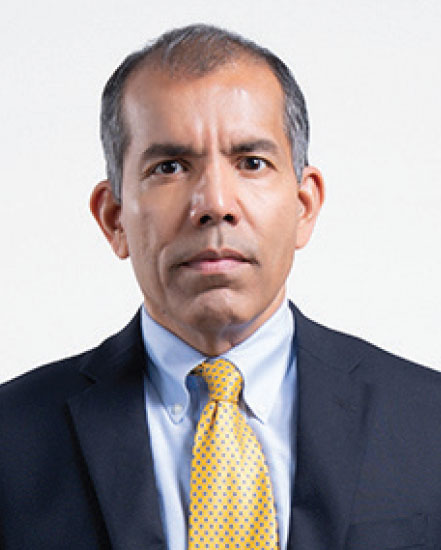
 India’s renewable energy landscape is evolving rapidly, as the sector moves beyond standalone solar and wind plants to storage-based hybrids, round-the-clock (RTC) renewables, and firm and despatchable renewable energy (FDRE) projects that can address intermittency issues and deliver firm, reliable renewable power. In Season 1 of the Renewable Watch Podcast, Sarthak Takyar, Associate Director, and Mohammed Ali Siddiqui, Research Analyst, Renewable Watch, interacted with Dr Srivatsan Iyer, Global Chief Executive Officer, Hero Future Energies (HFE), to discuss the future of the RTC and FDRE markets, the economics driving hybrid projects, HFE’s strategic plans and the emerging trends shaping India’s next phase of clean energy growth. Edited excerpts…
How has Hero Future Energies diversified its business operations over the past few years, and how are you catering to evolving sector demands?
HFE is now 13 years old. We began with wind and entered solar soon after. In 2017, we were among the first to commission a wind-solar hybrid project, recognising early that combining technologies could deliver power for longer hours. Since 2022, we have participated actively in complex bids involving solar, wind and battery storage. The ability to integrate these technologies has become central to our strategy, given the growing need to make renewables more despatchable.
About a year ago, we commissioned our first green hydrogen plant, which can blend green hydrogen with LPG or natural gas at an industrial site. We have also expanded internationally, with operational projects in Ukraine and Vietnam, and a project in the UK expected to break ground this year. Overall, our growth is based on diversifying technologies, business models and geographies while continually investing in solutions that address intermittency issues and improve despatchability.
India has been expanding its renewable capacity for decades, but as the share of intermittent energy rises, the strain on the grid increases. Transmission infrastructure built for renewables is not utilised 24 hours a day, creating inefficiencies. To truly decarbonise the grid, renewables must become despatchable and reliable.
RTC and FDRE projects support this transition by delivering power over more hours, improving grid stability and spreading transmission investment over a larger number of units. As standalone storage projects expand and ancillary service markets evolve, batteries will also support inertia, voltage and frequency regulation. These developments will reduce hidden system-level costs.
How have tariffs and cost economics evolved for hybrid, RTC and FDRE projects?
Over the past two years, tariffs have declined consistently. The primary reason is the significant drop in battery storage costs. In parallel, developers have become far more efficient in optimising the mix of solar, wind and storage to meet hourly requirements. Better project optimisation and falling battery prices have together led to lower tariffs.
Which factors within battery storage have contributed the most to the price reduction?
Two drivers stand out: rapid technological improvement in lithium-ion batteries and the emergence of large-scale manufacturing, particularly in China. Dozens of multi-GW factories have created strong competitive pressure, accelerating cost reduction. Although stationary storage is still a young industry, the pace of innovation remains extremely high.
From a lender’s perspective, how risky are RTC projects today? Has lender perception changed?
Lenders are increasingly comfortable financing RTC projects. They understand the technology better, as well as the optimisation needed to meet hourly requirements while ensuring viable returns. Given that RTC is likely to become the new normal, lenders recognise it as a natural progression of the sector rather than a niche segment.
Are lenders concerned about the rising number of unsigned PPAs? Will this affect RTC projects more than standalone renewable projects?
Most of the roughly 45 GW of unsigned PPAs are likely plain vanilla solar or wind, not complex hybrid or RTC projects. In earlier cycles too, PPA signing delays would occur. The sharp increase in tender volumes – from around 10-20 GW annually to 40-50 GW – has created a temporary backlog. It appears cyclical rather than structural.
What is HFE’s strategy regarding co-located versus non-co-located RTC projects?
Co-location offers infrastructure-sharing benefits, but the overriding priority is high quality wind and solar resources. Generation economics outweigh savings from co-location. If good wind and solar resources are found together, co-location works. If not, placing assets in resource-rich regions– even separately – delivers better results.
Developers often allude to the complexity and stringent requirements in RTC and FDRE bids. What has been your experience?
The tender structures themselves are relatively straightforward. However, the complexity lies in meeting the hourly or 15-minute compliance requirements. Developers must model hourly solar and wind generation for an entire year using historical data, project it over 25 years, and design the optimal mix of solar, wind and storage at the lowest cost. This is a complex optimisation exercise rather than a tender structure issue.
How challenging is forecasting and scheduling for RTC projects, given the deviation settlement mechanism (DSM) penalties and monsoon variability?
We incorporate both compliance penalties and DSM penalties into our optimisation models. DSM bands have narrowed significantly over the years. Hybrid projects with storage provide an advantage: stored energy can be used to reduce deviations. Forecasting accuracy remains similar to standalone solar or wind, but integrated technologies give us more tools to manage variability.
How do you manage DSM penalties for stand-alone solar or wind projects where storage, as of now, cannot be added economically?
Today, adding storage solely for DSM compliance is not financially viable. As storage costs decline further, this may become attractive. For now, we rely on continuous improvements in forecasting and scheduling.
Are you planning RTC solutions for commercial and industrial (C&I) customers?
Yes, C&I demand patterns and net zero commitments are evolving rapidly. Earlier, customers sought solar for eight hours; then wind-solar hybrid for 16 hours. Now many request for 24×7 supply. Solutions differ across states due to varying banking regulations. In some states, banking from peak to off-peak is allowed; others permit only like-to-like banking. Additionally, some consumers have captive plants whose output must be factored in. RTC renewables for C&I customers is a growing opportunity, but requires state-specific strategies.
There is a growing debate about energy banking leading to greenwashing. How do you view this?
Banking regulations are evolving. If developers bank power during high-renewable hours and withdraw during high-thermal hours, there is a mismatch that can be interpreted as greenwashing. Discoms also face challenges when excess power is injected during the day but must be supplied back during peak periods from thermal sources. Many states are, therefore, shifting to like-to-like banking. If implemented uniformly, it will make wind-solar-battery solutions more relevant and eliminate greenwashing concerns.
Are transmission delays the biggest non-financial risk for the renewable energy sector? What improvements are needed?
Transmission projects are large scale and naturally involve longer gestation periods than renewable projects. The issue is often a timing mismatch, not structural inadequacy. Increasingly, the focus is on maximising the utilisation of existing lines – for example, enabling night-time evacuation where capacity already exists. India needs both: more transmission and better utilisation of what is already built.
HFE recently signed a Rs 300 billion MoU with the Andhra Pradesh government. Could you elaborate on this?
We are developing multiple projects in Andhra Pradesh and evaluating more. The state has strong wind resources and planned CTU expansions for substations and evacuation corridors. This combination makes it attractive for future FDRE and RTC development.
Are there innovations in RTC or FDRE that India has not yet explored but should?
The biggest future innovations will likely come from new storage technologies that are not yet commercially available. A few years ago, two-hour batteries were the norm. As technologies mature and new chemistries emerge, the landscape for RTC project design will evolve significantly. Much depends on how storage technologies advance over the next few years.
Tune in to the full podcast on YouTube, Spotify and Apple Podcasts…