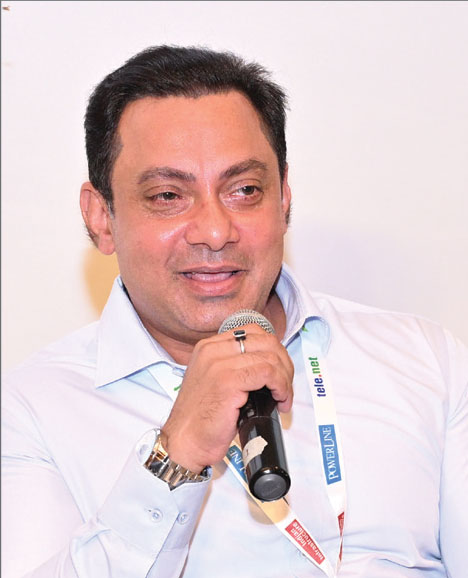
 As India moves closer to its ambitious renewable energy targets, the need for a trained workforce across solar, wind, green hydrogen, storage and other allied sectors has never been greater. The Skill Council for Green Jobs (SCGJ), established in 2015 under the Ministry of Skill Development and Entrepreneurship with support from the Ministry of New and Renewable Energy, has been at the forefront of addressing these challenges. In an interview with Renewable Watch, Arpit Sharma, Chief Executive Officer, SCGJ, discussed the council’s initiatives, skill gaps and employment potential across the renewables sector, the need for gender inclusivity and future plans. Edited excerpts…
To begin with, could you give us an overview of the SCGJ and its initiatives?
The SCGJ was established in 2015 by the Ministry of Skill Development and Entrepreneurship, with support from the Ministry of New and Renewable Energy. Our mandate is to build a skilled workforce not only in the renewable energy sector but also in areas such as sustainable development, environment, forest and climate change.
We have conducted about 15 skill gap studies, including a recent one on the entire green hydrogen value chain, drawing international references from countries such as the UK, Canada, Australia, Saudi Arabia and Germany. Similar studies have been carried out in the waste management, solar, wind and hybrid energy sectors. Based on these studies and industry consultations, various job roles are identified, developed into national occupational standards and submitted to the National Council for Vocational Education and Training. These then form the basis of training programmes in green technologies.
Specifically for wind power, what key skill gaps were identified?
Around seven years ago, we conducted a research study with the National Institute of Wind Energy. Based on occupational mapping, several job roles were identified, such as wind resource assessor and site surveyor, operations and maintenance (O&M) mechanical technician, construction technician, O&M electrical and instrumentation technician, and content management system engineer.
Once these job roles were created, training programmes were rolled out through a network of affiliated training institutions, including engineering colleges, and private and government universities. So far, more than 20,000 people have been trained in the wind energy sector.
What is the estimated potential for employment in the wind energy sector?
As per a study conducted in collaboration with the Council on Energy, Environment and Water and the National Research Development Corporation, using the full-time equivalent coefficient for manpower requirements, the overall employment potential is estimated at around 127,000 jobs across the entire wind value chain by 2030. This estimate does not yet include new areas such as artificial intelligence, where research on employment potential is still under way.
How much of this employment will be in skilled versus semi-skilled labour?
Wind is a highly specialised sector, and it is difficult to accommodate unskilled workers. For instance, when Vestas set up a blade manufacturing unit in Gujarat around six to seven years ago, they faced challenges in finding suitable technicians. We designed a three-month customised training programme to upskill solar technicians into wind technicians, and 280 people were successfully employed at Vestas. This shows that tailored programmes for the skilled workforce are often needed to meet industry requirements.
Are the training programmes developed in consultation with the industry?
All job roles undergo strong industry validation and consultation. Around 30 companies, including turbine manufacturers, blade manufacturers and ancillary suppliers, were consulted before finalising the job roles. Industry feedback is integral to the approval process.
Given that many renewable energy projects are in remote areas, are courses also available in regional languages?
Yes, it is mandatory for every course in the renewable energy sector to have participant handbooks and trainer guides in vernacular languages. For example, the Surya Mitra programme was developed in multiple languages, including Tamil and Gujarati.
Which renewable energy sector has the highest potential for employment?
The solar sector has the highest employment potential, given its simpler technology, lower training costs and the large share it holds in India’s 2030 renewable energy target of 500 GW. The green hydrogen sector also has significant employment potential, with around 600,000 jobs expected across its value chain by 2030.
Do you think these job creation targets will be met?
Yes, industry players such as Reliance and Adani constantly highlight manpower shortages. However, there are challenges – candidates’ salary expectations are often higher than what the industry offers, and migration remains an issue, with workers hesitant to relocate. Our approach is to train local manpower near project sites through affiliated colleges or industrial training institutes to address this challenge.

How is gender inclusivity being promoted in renewable energy skilling?
We focus on both gender-based projects and broader inclusion. For example, in partnership with ReNew and the United Nations Environment Programme, we trained nearly 1,000 women salt pan workers from the Self-Employed Women’s Association. Around 40 per cent of them were employed in solar companies. We also work with initiatives such as the World Bank’s WePower chapter and ensure quarterly reporting on gender inclusion.
Are there collaborations with universities and engineering colleges to introduce students early to this field?
We have over 1,000 affiliated training partners across the country, including engineering colleges and universities such as GD Goenka University, Amity University and IIT Mandi. We also certify vocational education courses and have supported the development of BSc and MSc programmes in renewable energy.
Are you planning courses in offshore wind as well?
Yes, we recently received a letter of support from the Embassy of Denmark to conduct a skill gap study on offshore wind, starting with Tamil Nadu. The work will begin shortly, and we expect to complete the analysis within a year.
Beyond wind, what other sectors are you working in?
Our coverage includes solar, wind, small hydro, biomass, biofuels, waste management (including biomedical and e-waste) and energy storage. We are also working actively in green hydrogen, with over 40 workshops held on related technologies. In addition, we have initiatives in the environment, forest and climate change sectors, with courses on carbon sinks, parataxonomists, soil conservation, etc.
How do you measure the success of these skilling programmes?
Employment and entrepreneurship are the primary success indicators. There are instances where trained candidates choose not to take up jobs due to working conditions, but placement remains the main metric. Another measure of success is participation in WorldSkills, known as the “Olympics of Skills”, where India recently won a bronze medal in renewable energy.
What advice would you give to young professionals entering the renewable energy sector?
Young professionals should choose institutions that emphasise both theoretical and hands-on training. For instance, the Pandit Deendayal Energy University and UPES, Dehradun, follows this model. Practical exposure is key to employability. Unfortunately, many engineers graduate without ever having worked with actual renewable energy systems.
Finally, what are the SCGJ’s targets for the coming year?
Our focus is on expanding training, exploring new areas and strengthening capacity building in underserved sectors. We also aim to transition from government funding to corporate social responsibility and private sector-led models to ensure sustainable growth over the next five years.