In an interview with Renewable Watch, Richa Varshney, Director and Business Head – Renewable Energy, Tembo Global Industries Limited, discusses recent solar engineering, procurement and construction (EPC) cost trends, including the cost breakdown of projects and margins for solar EPC companies, as well as key execution challenges. Edited excerpts…
What are the recent cost trends in solar EPC projects across the utility-scale, rooftop, off-grid and floating solar segments?
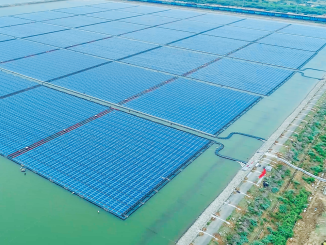
Recent trends in solar EPC costs vary across segments. Utility-scale projects have seen EPC costs decline to around Rs 34 million-Rs 38 million per MW, driven by competitive bidding and economies of scale, with tariffs averaging Rs 2.56 per kWh. Rooftop solar, especially in the commercial and industrial segments, is priced higher at Rs 40-Rs 55 per Wp owing to import duties and advanced technologies such as mono-PERC and bifacial modules. Off-grid systems, particularly those with battery storage, remain cost-intensive, averaging Rs 90- Rs 96 per Wp due to the inclusion of energy storage components. Floating solar carries a cost premium over ground-mounted systems, with EPC costs in India ranging from Rs 60 million to Rs 72 million per MW. Across all segments, government policies, tariff mechanisms and technological advancements continue to shape the cost dynamics.
What is the cost breakdown of a typical solar EPC project?
In a typical utility-scale solar EPC project, modules account for 55-60 per cent of the total cost, inverters 8-10 per cent, and balance-of-system components such as mounting structures, cables and junction boxes 15-18 per cent. Civil and electrical construction makes up 7-10 per cent, while land acquisition and approvals contribute 3-5 per cent. The remaining cost covers engineering, logistics and contingency provisions. This cost distribution can vary slightly based on project location, scale and technology used.
What is the O&M cost breakdown for a solar EPC project?
Within the O&M cost structure of a solar project, manpower typically accounts for 35-40 per cent, machines and equipment for 20-25 per cent, and digital tools including supervisory control and data acquisition and remote monitoring systems 15-20 per cent. Artificial intelligence (AI)-based diagnostics and predictive maintenance tools are gaining uptake, contributing 10-12 per cent, while the remaining 5-10 per cent goes towards consumables, spares and administrative overheads. The shift towards automation and AI is gradually optimising long-term Operations and Maintenance (O&M) efficiency.
What are the typical margin ranges for solar EPC contractors currently?
Currently, solar EPC contractor margins are in the range of 8-12 per cent, but intense competition and aggressive bidding have compressed them in recent years. With input costs fluctuating and quality expectations rising, maintaining profitability demands operational efficiency and value-driven execution. At Tembo Global, we focus on engineering excellence and end-to-end integration to protect margins without compromising quality.
How has the solar EPC cost structure changed with the introduction, suspension and reintroduction of the ALMM mandate?
The fluctuating status of the Approved List of Models and Manufacturers (ALMM) mandate has directly impacted solar EPC cost structures. Its initial implementation raised module prices due to limited approved suppliers, thereby increasing overall project costs. The suspension temporarily eased procurement, reducing costs and enabling faster execution. However, its reintroduction has again tightened supply and elevated pricing pressures.
What are the key challenges faced by solar EPC companies?
Solar EPC companies face execution challenges such as land acquisition clearances, supply chain disruptions, delays in discom approvals and shortages of skilled labour. To ease these bottlenecks, policy support is needed in the form of faster clearances, stable import regulations, streamlined grid connectivity and incentives for local manufacturing. A predictable policy environment will drive smoother, faster project roll-outs. We appreciate and welcome the initiatives taken by the government to address the challenges faced by EPC companies. For instance, Maharashtra State Electricity Distribution Company Limited has created a single sign-in portal to streamline this process for developers and EPC players. Also, a task force has been formed at the ground level to resolve local issues and facilitate faster project approvals. This initiative is particularly helpful for our current 120 MW project in Maharashtra.