By Sarita Brara
The remote Pangi valley in Himachal Pradesh’s Chamba district has one of the toughest terrains in the state, with steep slopes, shrinking gorges and rugged mountainous areas. The altitude averages 11,000 feet, varying from 7,000 feet to over 20,000 feet in some places. Pangi is not connected to the national grid and has isolated grids, each covering two to three panchayats. The power generation from four small-hydro projects in Pangi is only 1.4 MW, whereas the power demand is more than twice that. This hydropower is also badly affected during winter due to the freezing of water. Further, heavy snowfall often damages electric poles and transmission lines, making it challenging to take up repair work for several days. Thus, people have to go without power for that period, which can be for more than a week or 10 days. Even otherwise, due to limited power supply, load shedding for four to five hours a day is normal during winters.
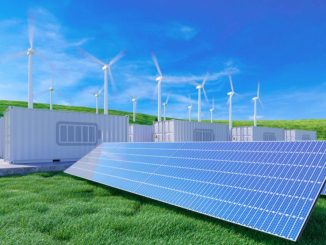
Currently, work is ongoing on a war footing to construct the 1 MW solar power plant in Dhanwas in the snow-bound Pangi valley before winter sets in. The foundation stone for the solar plant was laid in April this year. Since then, forest clearance and other permits have been obtained, land developed, and the structure for the solar panels, as well as other materials required for the project, have reached the site. The power from the solar plant will be fed to a substation in Pangi’s headquarter, Killar, for distribution across the 19 panchayats. Once commissioned, the solar plant, which will also include a 500 kWh battery energy storage system (BESS), is expected to provide reliable power to all these panchayats. The Rs 105 million project, spread over 2.2 hectares of land, will have 2,400 solar panels to generate clean power.
In addition to the 1 MW solar plant at Dhanwas, two more solar projects of 400 kW each at Hillour and Dharwas in Pangi are targeted to be completed before winter this year. The two projects are being constructed at a cost of Rs 100 million and will have BESS. These projects will cover six panchayat with nearly 300 households. One hectare of land for each of these projects was allotted to Himurja, the nodal agency for renewable energy programmes in Himachal Pradesh, which is responsible for implementing both projects.
According to Shashikant Dogra, Project Officer, Himurja, over 2,200 off-grid solar systems are currently in place, including 2,162 plants of 250 W each and around 50 of them 1 kW each. All these have been funded under the tribal sub-plan in the state.
Ramnath from Luz Tikri village, one of the beneficiaries, said that before the 250 W solar plant was installed he was dependent on wood for both warmth and light in the cold, dark winters, as they could not afford kerosene. “Now, whenever the supply is affected, I have no worries, I can charge my mobile and other battery-run lamps. One has to properly and judiciously use the solar power to use it for longer periods,” he says.
Himurja’s office in Pangi also has a 1 kW solar system. However, not many people in the Pangi valley have individual solar plants and depend on the polluting kerosene when power is unstable. Hopefully, with the completion of the 1 MW solar plant at Dhanwas and two plants of 400 kW each in place before this winter, the people of this remote region will be able to bank on solar power from these projects and not have to live through the nightmare of frequent and prolonged power outages in this snow-bound region.
Tribal belts in Kaza and Keylong in the Lahaul and Spiti districts, as well as Bharmour in Chamba district, face similar difficulties during winter when power is cut off due to snowfall, though not as severe as in the Pangi valley. Off-grid solar plants catering to individual households have also been set up in these snow-bound tribal regions under the tribal sub-plan. In Keylong, 683 off-grid solar systems (ranging from 250 W to 1 kW) have been installed so far. In Kaza, 820 households below the poverty line have solar systems to light up their homes. A 2 MW solar plant also became operational in Kaza a few months ago, which eased the power situation there. In the Bharmour tribal belt in Chamba, 151 solar systems of 250 W each are in place.
Ajit Singh, a teacher and one of the beneficiaries in Hinsa village of Keylong, said they no longer have the fear of power cuts caused by load shedding or disruptions in electric supply due to damaged transmission lines. He noted, “Thankfully, there are no more blackouts, and we can charge our mobiles and use them for entertainment and communication. Except for the meter rent, our electricity bill is now zero. Earlier, we used to pay hefty power bills of up to Rs 5,000-Rs 6,000 a year.” These small solar plants, which cater to individual households, are crucial for people who endure significant hardship during the four to six winter months each year.