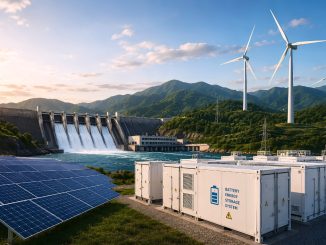
Hydropower and pumped storage projects (PSPs) have become critical to India’s transition to sustainable energy, playing a critical role in ensuring energy security and balancing the variability of other renewable sources such as solar and wind. Several states in India, including Uttarakhand and Maharashtra, are looking to tap their hydropower potential.
Uttarakhand, with 4,269.17 MW of installed hydro capacity as of December 31, 2024, has leveraged its mountainous terrain and abundant water resources. It has prioritised conventional hydropower development and is now exploring PSPs. Meanwhile, Maharashtra, with 3,431.38 MW of installed hydro capacity as of December 31, 2024, is leveraging the Western Ghats to focus extensively on PSPs to manage intermittent generation. Both states recognise the crucial role of hydro-based storage systems in integrating renewables and ensuring energy security, setting benchmarks for state-led initiatives in the sector.
Uttarakhand Jal Vidyut Nigam Limited (UJVNL) and Maharashtra State Power Generating Company Limited (MAHAGENCO) have been at the forefront of driving hydropower uptake in their respective states. At Renewable Watch’s 22nd Annual Conference on Hydro Power in India, senior executives from these PSUs discussed their initiatives, the current status of projects and future plans. They also talked about the key challenges in the sector and the future outlook. Edited excerpts…
UJNVL’s initiatives
Hydropower development in Uttarakhand has been a key driver of the state’s economy, second only to tourism in its contribution to GDP. The state’s identified hydropower potential exceeds 20,000 MW, but only 4,269.17 MW has been operationalised so far, including 1,441 MW from UJVNL, 1,860 MW from central PSUs and 962.5 MW from independent power producers (IPPs). An additional 2,369 MW of projects are under construction, with UJVNL contributing 300 MW, CPSUs 1,964 MW and IPPs 105 MW, leaving over 13,000 MW of untapped potential.
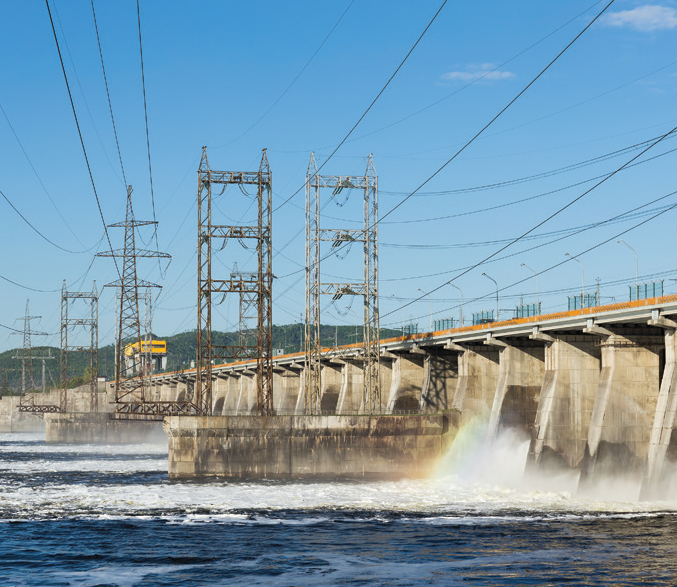
Over the years, UJVNL has expanded its installed capacity from 992 MW in 2001 to 1,441 MW, generating more than 5,400 million units annually at an average cost of Rs 2.25 per unit. The organisation has achieved significant success in renovating, modernising and upgrading projects, enhancing output by over 20 per cent in certain cases. For instance, generation at the Tiloth Power House has
increased by 19.64 per cent while the Khatima Power House saw a 45.82 per cent improvement.
Despite this progress, Uttarakhand’s hydropower sector faces several challenges. The state’s rugged terrain, snow-clad mountains and forest cover — over 65 per cent of its area — complicate project development. Natural calamities such as cloudbursts, flash floods and earthquakes frequently disrupt timelines and damage infrastructure. Notable examples include the Tapovan Vishnugad project (520 MW), which remains delayed, and the Rambara (76 MW) and Rishiganga (13.2 MW) projects, which were abandoned due to repeated damages. Long gestation periods and high capital costs, compounded by stringent requirements for hydrological, geological and environmental studies, further challenge project implementation. Interstate disputes over river systems, as in the case of the Kishau multipurpose project (660 MW), further complicate development. Additionally, environmental concerns, including the submergence of eco-sensitive zones, degradation of catchment areas and disaster risks, have stalled 44 projects totalling 4,800 MW.
Uttarakhand has also announced the PSP Policy, 2023, alongside the notification of LADF guidelines and the preparation of a master plan for power evacuation. The state is actively promoting renewable energy through five PSPs with a combined capacity of 2,650 MW. These are Lakhwar Vyasi (300 MW), Vyasi Katapathar (150 MW), Ichari (600 MW), Kalagarh (1,200 MW), and Maneri Bhali (400 MW). Battery energy storage systems are also being developed, with three projects totalling 60 MW/150 MWh at Tiloth, Khatima, and Dhakrani requiring an estimated investment of Rs 473 million. UJVNL is further advancing hydrokinetic turbine technology in collaboration with IIT Roorkee.
Under the One-Time Amnesty Scheme, approvals have been granted for eight hydro projects with a combined capacity of 160 MW. Further, the Uttarakhand government has allotted six small-hydro projects (SHPs) with a total capacity of approximately 121 MW, targeted for commissioning by 2031. Additionally, a proposal has been submitted to the state government for approval to bid for 14 SHPs with a cumulative capacity of 165 MW.
By 2031-32, Uttarakhand aims to achieve a total installed hydropower capacity of 8,924 MW, with 3,155 MW from UJVNL, 4,242 MW from CPSUs and 1,248 MW from IPPs. The state’s focus on storage-based projects, including five PSPs with a combined capacity of 2,650 MW, aligns with national renewable energy targets.
MAHAGENCO’s initiatives
MAHAGENCO operates a diverse energy portfolio, with an installed capacity of 13,220.22 MW, including 9,540 MW from thermal, 672 MW from gas, 2,580.2 MW from hydro, and 428.02 MW from solar. MAHAGENCO’s hydro capacity across 34 HEPs accounts for around 75 per cent of Maharashtra’s installed hydro capacity of 3,431.48 MW (as of December 31, 2024).
The major hydro projects under MAHAGENCO are Koyna (1,956 MW), Parli (750 MW), Bhusawal (1,210 MW) and Nasik (630 MW). In addition, the state has smaller hydroelectric stations with a combined capacity of 624 MW, including the Ghatghar PSP (250 MW), Bhira (2×40 MW) and Tilari (66 MW).
PSPs are particularly important for Maharashtra due to the state’s high renewable energy penetration and the need for grid balancing. Maharashtra’s Sahyadri and Western Ghat ranges offer significant elevation differences ideal for PSP development. The state’s Resource Adequacy Plan projects that nearly 26.69 GW of PSP capacity will be required by 2031-32 to integrate the anticipated renewable energy penetration. The rising demand for flexible grid management underscores the need for PSPs, as they offer rapid ramping capabilities. By 2030, Maharashtra’s projected one-hour ramping capacity is expected to rise from 16 GW (7 per cent of daily peak load) to 68 GW (19 per cent), while three-hour ramping needs will increase from 18 per cent to 40 per cent of peak load.
MAHAGENCO has been a pioneer in PSP development since 2007, with the Ghatghar PSP (2×125 MW) operating successfully. Other small PSPs such as Ujani and Paithan (12 MW each) have been in operation since 1994 and 1984, respectively. The Government of Maharashtra has identified a total PSP potential of 30,235 MW across 28 sites, comprising 21 on-river PSPs (21,285 MW) and seven off-river PSPs (8,950 MW). To accelerate PSP development, it issued a policy in December 2023, in line with the Government of India’s policies for PSP development. The policy aims to attract private sector investment, promote co-located hydro-solar hybrid projects, and facilitate inter-basin water transfer projects.
Additionally, MAHAGENCO, along with its subsidiary Mahagenco Renewable Energy Limited, is advancing PSP development through joint ventures with the Water Resource Department (WRD), SJVN Limited, and THDC India Limited. WRD and the GoM has identified 12 PSP sites for development to MAHAGENCO. Of this, currently eight PSP sites with a total capacity of 5,725 MW are under consideration, requiring an estimated investment of Rs 458 billion. Preliminary feasibility reports and detailed project reports for four sites are in progress.
Despite these advancements, PSP development in Maharashtra faces several challenges. These include regulatory and market hurdles, delays in environmental and forest clearances, constraints in eco-sensitive zones, and social opposition related to land acquisition and rehabilitation. Additional challenges include inadequate infrastructure, geological uncertainties, power evacuation constraints, and the lack of differential generation tariffs for PSPs. The cost of pumping power from open access markets and the selection of suitable technology and skilled manpower further complicate project execution. Addressing these challenges requires policy support, technological innovation, and strategic collaborations with public and private stakeholders.
MAHAGENCO is actively addressing these challenges by leveraging policy incentives and strategic collaborations. The integration of PSPs with renewable energy sources is expected to significantly enhance Maharashtra’s grid stability and energy security. By capitalising on its hydro potential, the state is positioning itself as a leader in sustainable power generation, setting benchmarks for large-scale pumped storage deployment in India.
Conclusion
UJVNL and MAHAGENCO play a crucial role in shaping India’s hydropower landscape. However, the future of hydropower development is expected to be influenced by several common challenges. Climate change-induced hydrological variations could impact river flows and reservoir levels, impacting project feasibility and generation capacity. Increasing scrutiny over environmental and social impacts may lead to stricter regulatory requirements, causing delays in project execution. Financing remains a key challenge as the capital-intensive nature of hydro projects necessitates long-term investment support and innovative financial mechanisms. Additionally, advancements in battery storage technologies could shift the energy storage landscape, impacting the economic viability of PSPs.
Looking ahead, UJVNL and MAHAGENCO must adopt adaptive strategies to sustain and expand their energy transition initiatives. These include strengthening inter-agency collaboration, expediting clearance processes and leveraging international financing institutions. Moreover, integrating hydropower with other renewable energy sources, such as solar and wind, could enhance the overall efficiency and reliability of the energy mix. By successfully deploying large-scale hydro projects, these state agencies can serve as models for other states, accelerating the broader adoption of hydropower and storage solutions across India. Through sustained innovation, policy alignment and technological advancements, UJVNL and MAHAGENCO are poised to drive the next phase of India’s renewable energy journey, reinforcing hydropower’s role as a backbone of the country’s clean energy transition.
This article is based on presentations by Abhay Harne, Director (Projects), MAHAGENCO, and Pankaj Kulshrestha, Executive Director (O&M), UJVNL, at Renewable Watch’s 22nd Annual Conference on Hydro Power in India