 The offshore wind energy segment is witnessing rapid technological advancements and significant developments. As countries strive to achieve their renewable energy targets, offshore wind has emerged as a key segment, with innovations in turbine design, foundation technologies and cost structures. While Europe remains a leader in the field, emerging markets such as India also have ambitious plans, positioning offshore wind as a key enabler of grid decarbonisation. The National Renewable Energy Laboratory recently published a report titled “Offshore Wind Market Report: 2024 Edition”, which highlights key offshore wind technology and cost trends. This article presents an extract from the report, exploring the latest global trends in offshore wind technologies, project siting, evolving cost dynamics and the challenges ahead…
Project siting and installation
The offshore wind industry continues to expand into increasingly challenging environments, with projects being developed in deeper waters and farther from shore. For example, while Asian projects have traditionally been located closer to shore, within 30 km, European projects have pushed the boundaries, such as the UK’s Hornsea I project situated nearly 115 km offshore.
Water depth plays a critical role in project development. The Seagreen project in Scotland holds the record for the deepest operational fixed-bottom turbine at 58.6 metres, utilising a jacket substructure. Projections indicate fixed-bottom projects could soon reach depths of 65 metres. Meanwhile, Asian projects are trending towards global average depth of 38 metres, signalling a convergence in siting practices by 2027.
Foundation technologies
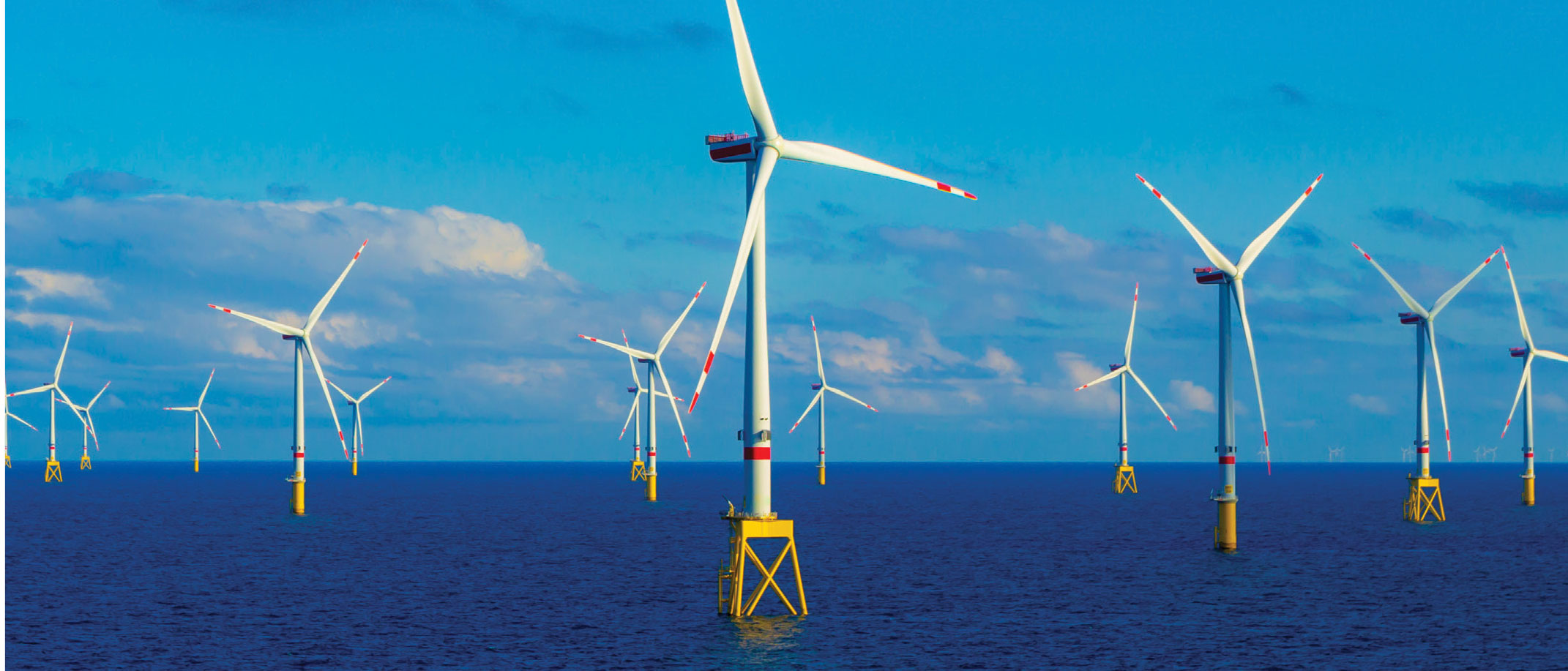
According to the report, fixed-bottom foundations dominate the offshore wind market, with monopiles accounting for 55.6 per cent of operational projects globally. Their simple design, industrialised manufacturing, and cost competitiveness make them a preferred choice. However, challenges such as increasing water depths, larger turbines and vessel constraints could limit their future dominance. Soil conditions, noise restrictions and local content requirements further complicate deployment. To addres these challenges, alternative fixed-bottom designs are gaining traction. Jackets represent 13.4 per cent of operational projects, while pile caps, gravity-base and tripod foundations account for smaller shares. The innovative monobucket foundation, which employs suction technology, is emerging as a quieter, more environmentally friendly option.
Floating wind technology represents a breakthrough for projects in deeper waters. With multiple demonstration projects already in operation, floating platforms such as semi-submersibles are expected to capture 14.2 per cent of the future substructure market. Semisubmersibles offer stability and ease of port assembly without requiring heavy-lift vessels, making them particularly attractive for developers. Floating wind technology encompasses various designs, including spars, tension-leg platforms and barges. Semisubmersibles have emerged as the preferred choice due to their shallow draught and stability after turbine installation, solidifying their role in enabling deeper-water projects.
Offshore wind turbine market
The report highlights the remarkable growth in offshore wind turbines in terms of size and capacity. In 2023, the average turbine rating reached 9.7 MW, with rotor diameters extending to 183.4 metres and hub heights rising to 124 metres. Western manufacturers such as GE Vernova and Vestas are focusing on standardising 15 MW platforms, while Asian manufacturers, particularly in China, have plans for turbines up to 22 MW. The transition from prototype to commercial installation typically spans three years. Recent milestones include 13 MW turbines at Dogger Bank in the UK and Vineyard Wind 1 in the US, as well as 14 MW Siemens Gamesa turbines in Scotland. The global turbine market remains concentrated, with Siemens Gamesa, Vestas and Mingyang leading in market share.
 Offshore wind technology cost trends
The offshore wind sector has faced cost fluctuations in recent years, influenced by rising interest rates, supply chain constraints and higher commodity prices. In 2023, the unsubsidised levellised cost of energy (LCOE) for a typical US offshore wind project averaged $125 per MWh, a 45 per cent increase over previous estimates. Despite short-term cost pressures, the industry has achieved long-term cost reductions, with global LCOE declining by more than 50 per cent since 2013.
Fixed-bottom offshore wind LCOE is projected to decrease to $76 per MWh by 2035 and further to $50 per MWh by 2050, supported by advancements in technology and supply chain efficiencies. However, recent contract awards highlight short-term cost increases. For instance, in New York, projects such as Empire Wind 1 and Sunrise Wind saw contract price hikes of 36 per cent and 27 per cent compared to earlier agreements.
Meanwhile, the cost trajectory of floating offshore wind technology reflects the market’s nascent stage. By 2030, LCOE for this market is expected to range from $123 per MWh to $278 per MWh, declining to $92-$180 per MWh by 2035. While these estimates vary based on assumptions about pre-commercial versus commercial projects, technological advancements and increased deployment are expected to drive future cost reductions.
Capital expenditures (capex) constitute the largest life cycle cost for offshore wind projects. In 2023, the global five-year rolling average was approximately $3,400 per kW. While Europe and the US exhibit higher costs of $3,900 per kW, Asia averages around $3,000 per kW. These markets are gradually converging, with global capex expected to stabilise or slightly decline by the late 2020s.
Technology trends in India
India has witnessed significant advancements in wind turbine technology, characterised by larger turbine sizes and rotor diameters, and taller hub heights. The wind speeds in India average around 5-6 metres per second – lower than those in Europe or the US – and the latest domestic turbines are engineered to harness wind at heights exceeding 100 metres. As per the Ministry of New and Renewable Energy’s August 2024 update to the Revised List of Models and Manufacturers of Wind Turbines, newer models feature rotor diameters and hub heights of up to 160 metres. The rated capacities of these turbines range from 225 kW to 5.2 MW.
With land availability becoming increasingly constrained in India’s rapidly urbanising landscape, enhancing turbine efficiency to generate more energy per unit can help minimise the number of turbines required at a site. This reduces not just transportation and installation expenses but also long-term operations and maintenance costs. Moreover, India is actively exploring offshore wind energy, which could pave the way for larger turbines with capacities exceeding 10 MW. These advancements present opportunities to enhance drivetrain efficiency and increase tower heights, maximising energy generation from larger offshore installations.
Challenges and the future outlook
The offshore wind sector faces several challenges, including supply chain constraints, technical reliability concerns and infrastructure limitations. Port facilities and installation vessels must also evolve to accommodate larger components. Despite these hurdles, the sector’s momentum remains strong. Globally, floating wind technology is emerging as a solution for deeper water sites, while fixed-bottom foundation designs continue to evolve. The balance between innovation and standardisation will be crucial for sustainable growth and cost-effective energy production.
Net, net, technological developments in the offshore wind power segment are expected to contribute to its growth, playing a key role in meeting global climate commitments.