

 Solar trackers, especially when used with bifacial solar modules, can achieve a significant increase in energy generation, thereby improving cost viability in the long run. While these technologies were once considered expensive, cost reductions are now being achieved through technological innovations, optimised supply chains and increased procurement of cost-effective domestic content. One such solar tracker company is Nextracker, with global tracker shipments exceeding 100 GW. In a recent interview with Renewable Watch, Rajeev Kashyap, senior vice-president and general manager, Nextracker – Middle East, Africa and India (MENA), talks about the company’s key developments, financial performance and future plans. He also shares insights on innovations in solar trackers and their cost trends. Edited excerpts…
What have been Nextracker’s key achievements in the past few years? What has been the company’s recent financial performance?
In recent years, Nextracker has achieved significant milestones aimed at enhancing our capabilities and expanding our market presence. We have focused on product innovation, expanded our global revenue and supply chain and more than doubled our adjusted earnings before interest, taxes, depreciation and amortisation from the previous year. We recently celebrated 100 GW of global tracker shipments, cementing our position as a global leader in solar trackers.
The 2024 fiscal was a year of strong execution and significant growth for Nextracker. We reached a record backlog of over $4 billion, which more than tripled in two years. Nextracker posted $2.5 billion in revenue in financial year 2024, up 31 per cent year on year, as announced during our last earnings call on May 14, 2024.
What are the key emerging PV technologies? What is the outlook for these technologies?
The decline in the cost of PV cells over the last two decades has significantly boosted PV electricity production. Among several emerging technologies in the PV industry, bifacial technology and N-Type Topcon, HJT modules stand out. These innovations, combined with single-axis tracker systems, have a substantial impact on PV economics. With Topcon technology and HJT, tracker gains are 20-26 per cent in those areas of the MENA region where sunlight is abundant (2,000-3,200 kWh per square metre) compared to the fixed structure monofacial module design. Increased tracker gains drive towards lower AC/DC ratio and capital expenditure.
What are the current cost trends of these emerging PV technologies and what are their efficiency levels?
Cost trends show a decrease in the prices of PV modules and other balance of components, including solar tracker systems, as module wattages increase. The lowest recorded power purchase agreement rate is 1.35 cents per Wp and the design life expectancy extends beyond 30 years. Currently, the PV module efficiency levels are increasing with the new HJT and N-Type Topcon technologies, reaching 24.16 per cent and 22.5 per cent respectively. Increased efficiency reduces the balance of system costs, thereby improving the internal rate of return (IRR) and lowering the levellised cost of energy (LCOE).
What are the ongoing innovations in the solar tracker space aligning with these emerging PV technologies?
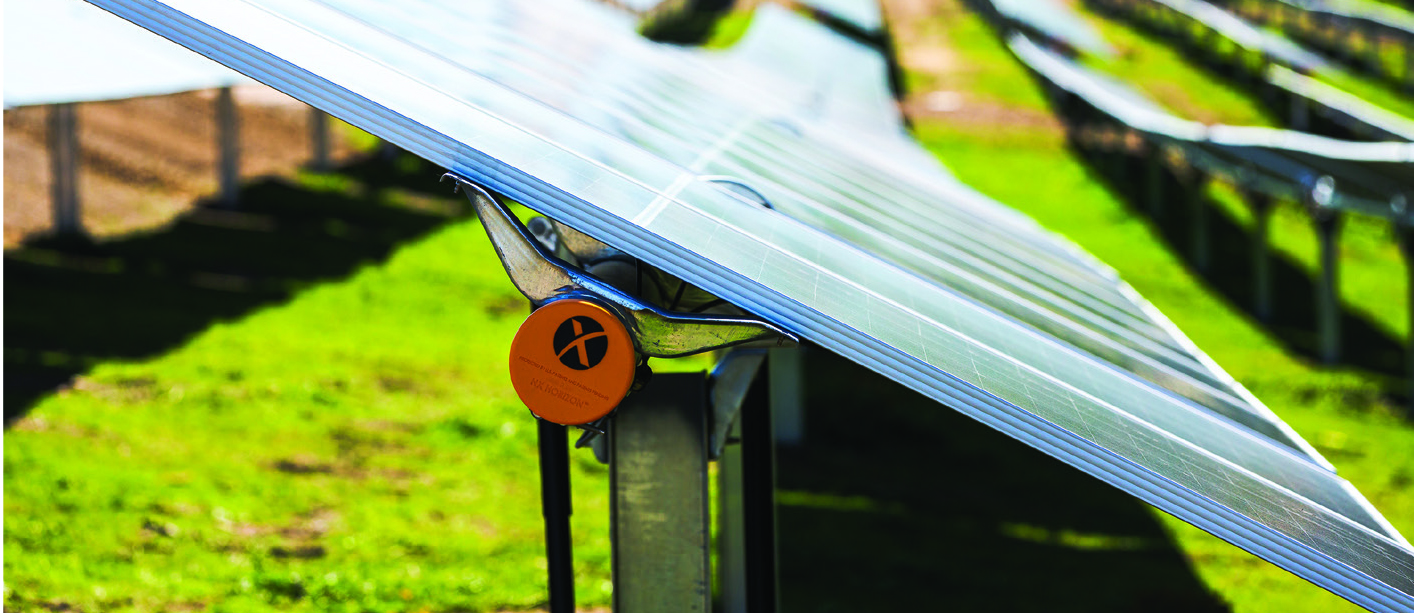
Nextracker’s NX Horizon incorporates unique bifacial-enhancing features that reduce structure shading and increase bifacial gains approximately 1.02 per cent to 1.67 per cent relative to a generic 1P single-axis tracker.
The company’s TrueCapture solution combines advanced sensors, weather forecasting and machine learning technologies to maximise energy generation for new and existing solar power plants, and enhance bifacial gains. This provides greater advantages when NX Horizon trackers are used compared to generic 1P trackers.
In addition, Nextracker’s solution can now accommodate four strings in a single tracker row with large frame modules, resulting in fewer tracker per MWp and more PV capacity installation per row.
NX Navigator software provides utility-scale PV plant owners another layer of monitoring and control beyond TrueCapture, increasing the production yield and enabling reliable operation across a wide range of severe weather conditions. With all the above innovations, NX Horizon gives higher bifacial output compared to fixed tilt systems. Solar tracker systems achieve further energy boosts with increased bifaciality. Accurate modelling and measurement of bifacial performance are crucial, but overall, solar trackers maximise the energy output from PV systems, thereby optimising the IRR and minimising the LCOE.
What are the current cost trends in the solar tracker space and how much additional solar generation can they achieve?
The cost of solar trackers has decreased recently due to extensive optimisations and rigorous testing. Efforts to de-risk the supply chain and emphasise domestic content have also contributed to cost reductions. Projects utilising solar trackers can achieve 20-25 per cent higher energy output when paired with bifacial solar modules.
What is the current state of domestic manufacturing of these emerging solar PV technologies and solar trackers in India?
In India, several policy initiatives have been announced to promote domestic manufacturing. As of December 2023, the cumulative solar module manufacturing capacity stands at 64.5 GW, with a total solar cell capacity of 5.8 GW. Nextracker manufactures over 80 per cent of its components locally. This is where Nextracker again differentiates from other module manufacturers by supporting the Make in India initiative.
What are the company’s plans and targets going forward?
Nextracker is committed to continuing its focus on research and development to drive down the LCOE and enhance its product offerings. We are expanding our partnerships with local manufacturers to ensure lower costs and minimise the logistics impact by getting our products closer to market and projects. In India, we have 12 manufacturing partners producing over 80 per cent domestic content for utility-scale power generation projects. Localising manufacturing capacity is key to the company’s business.
We acquired the solar foundation company Ojjo, aimed at providing comprehensive foundation technology solutions for utility-scale solar projects. The combination of technologies will enable engineering, procurement and construction companies and solar power plant developers to benefit from a more complete, integrated solution for various soil conditions when developing, designing and installing their projects.
We recently introduced the industry’s first low-carbon solar tracker solution with life cycle assessment documentation, evaluating the environmental impact of our products throughout the entire life cycle. With verified methodology and locally sourced clean steel, our NX Horizon™ Low Carbon tracker solution offers up to 35 per cent reduced carbon footprint, helping our customers meet their ESG business goals for their solar
power plants.
What is the outlook for India’s solar sector? What are your projections for the uptake of tracker solutions going forward?
I envision a promising future for solar power generation in India, deeply rooted in its vast potential and sustainability. India stands at the cusp of a renewable energy revolution, with the capacity to generate an astounding 750 GW of solar energy. The immense potential lays the foundation for a dynamic and flourishing solar energy sector, ready to make a significant contribution to India’s energy requirements and environmental goals.
The cornerstone of this vision is the promotion of local content manufacturing. This approach ensures the high quality of solar components, and catalyses economic growth in the region. By sourcing materials and expertise locally, we not only enhance the domestic manufacturing ecosystem but also create job opportunities and contribute to the overall economic well-being of India.
Nextracker’s focus on innovation and technological advancements positions it well to support the rapid growth of solar energy in India. The country’s aggressive expansion of solar capacity aligns with Nextracker’s mission to provide efficient and reliable solar solutions. As the demand for cost-effective and high-performance solar technologies increases, the adoption of tracker solutions is projected to rise, driven by their ability to maximise energy output and reduce costs. Our annual manufacturing capacity of 10 GW, in partnership with our manufacturing alliances in India, aligns well with the country’s 2030 goals.

