The uptake of solar power is necessary for the energy transition. However, the low efficiency of solar photovoltaic (PV) modules is a key hindrance. To this end, utilising emerging PV technologies with improved efficiencies can boost energy production and provide better economic benefits. However, the high cost of these innovative technologies often poses a barrier to their uptake.
Currently, the most commonly used solar technology is crystalline silicon (c-Si). These cells can be categorised into polycrystalline and monocrystalline varieties. According to Fraunhofer, the highest recorded laboratory cell efficiencies are 26.8 per cent for monocrystalline silicon wafer-based technology, and 24.4 per cent for polycrystalline.
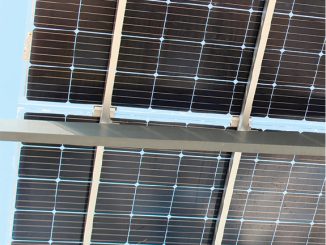
Furthermore, passivated emitter and rear cell (PERC) technology has gained widespread global use. PERC cells can be classified into n-type and p-type, based on the number of electrons. TOPCon cell technology is a further evolution of PERC technology. Meanwhile, bifacial modules, which are also slowly gaining traction in India, can produce electricity from either side by capturing sunlight reflected off the ground onto their rear surfaces. Therefore, they have an enhanced energy output compared to monofacial modules. Several other innovative solar PV technologies are available, which may be explored by industry stakeholders going forward.
Renewable Watch provides an extract from the report, “Emerging technologies in Solar PV: identifying and cultivating potential winners”, by Arthur D. Little, which mentions these technologies…
Emerging PV technologies
As the PV industry continues its rapid growth, driven by the declining costs of silicon-based solar cells, a new generation of emerging PV technologies looks poised to disrupt the dominant c-Si technology. These technologies have the ability to outcompete c-Si by achieving lower costs per watt. However, this transition will not be easy, as the steady decline in the cost of c-Si has made it challenging for other PV technologies to remain competitive in the market.
Perovskite
Perovskite solar cells, named after the calcium titanate mineral with a similar crystal structure, have shown remarkable progress in improving their efficiency in harnessing solar energy. From modest beginnings of only around 3.8 per cent efficiency in 2009, perovskites have rapidly increased to over 20 per cent efficiency in lab conditions. This has led to optimism that perovskites could prove to be a revolutionary technology, with the potential to achieve mono-crystalline silicon cell efficiencies of around 25 per cent. However, several challenges exist. Perovskites suffer from instability issues due to their composition, and their long-term durability is unclear. Moreover, unlike silicon, perovskites do not yet benefit from an established base of manufacturing economies of scale.
Organic PV
Organic PV (OPV) uses organic polymer semiconductor components. It is environmentally friendly due to its minimal material usage, absence of heavy metals and low-temperature manufacturing processes, resulting in energy payback periods of just a few months. Additionally, OPV cells are lightweight and highly flexible, enabling the creation of solar cells in almost any shape. Although active research on OPV has been ongoing, there are significant obstacles to its viability. The technology’s prospects for utility-scale PV projects remain bleak due to their consistently higher cost per watt of electricity production.
Concentrated PV
Concentrated PV (CPV) systems utilise lenses and curved mirrors to concentrate sunlight onto small, highly efficient solar cells. To fully exploit the capabilities of CPV technology, unconventional multi-junction (MJ) solar cells must be employed. By concentrating sunlight onto the surface area of an MJ solar cell in a CPV system, very high cell efficiencies can be realised. However, there are cost-related drawbacks, and the technology has never achieved mass commercial deployment, despite some early attempts.
Quantum dot
Quantum dot solar cells are made of tiny nanometer-sized semiconductor particles deposited on a substrate using methods such as spraying, spin-coating or roll-to-roll printers. Quantum dot solar cells show promising potential due to their tuneable bandgap, which allows for more efficient capture of solar energy across a wider portion of the spectrum through the use of varying quantum dot sizes. This unique tuning capability makes quantum dots highly complementary to other emerging PV technologies. However, quantum dot PV currently lags in efficiency compared to conventional silicon PV.
Outlook
Going forward, emerging technologies such as perovskite, quantum dot and CPV offer exciting possibilities. Ultimately, for these technologies to truly live up to their promising efficiency potential, stable designs, supply chains, funding and industrial-scale production capabilities will need to be developed. As research and development continues to overcome current limitations, the widespread adoption of these advanced solar technologies will be crucial in addressing global energy challenges. The Indian solar industry should also explore the deployment of these technologies, at least at a pilot scale, to benefit from the possibility of better solar efficiencies in the long run.