

 As global efforts for the promotion of intermittent renewable energy intensify, the significance of energy storage systems (ESSs) has surged. India is taking key steps to achieve the energy transition. The government has set several targets in this space – to set up 500 GW of non-fossil fuel capacity and meet 50 per cent of the country’s electricity demand through non-fossil fuel sources by 2030. To achieve these targets, the uptake of ESS will be essential as it helps balance supply and demand, enhances grid stability, and enables the seamless integration of renewable energy sources into the existing energy infrastructure.
Key government initiatives to promote ESS
The government has implemented various ESS policies to promote their uptake. In August 2023, the Ministry of Power (MoP) announced the national framework for promoting ESS, consolidating all government policies related to the ESS market. One of the key policy initiatives has been the notification of guidelines for the procurement and utilisation of battery energy storage systems (BESSs). In March 2022, the MoP issued detailed guidelines for the procurement and utilisation of BESS as part of generation, transmission and distribution assets, along with ancillary services. The aim of the guidelines was to facilitate the growth of the battery storage sector and help establish a uniform framework for all stakeholders.
Another key policy initiative was the introduction of the energy storage obligation (ESO). In July 2022, the MoP announced ESO as a separate component from renewable purchase obligation. The policy mandates a gradual increase in ESO requirements for all obligated entities, starting from 1 per cent in financial year 2023-24 and escalating to 4 per cent in financial year 2029-30. Apart from these, other key initiatives include exemptions for transmission related to ESS projects, production-linked incentives (PLIs) for advanced chemistry cells, financial assistance for pumped storage projects (PSPs), concessional green finance for ESS projects, and the introduction of a PLI scheme targeting BESS.
BESS: In the Union Budget 2023, the government unveiled intentions to support BESS with a cumulative capacity of 4,000 MWh. Following this, in September 2023, the government approved the viability gap funding scheme to support the development of BESS with an initial outlay of Rs 94 billion, including budgetary support of Rs 37.6 billion. The scheme aims to develop at least 4 GWh of BESS capacity in India by 2030, with the objective of achieving a levellised cost of storage ranging from Rs 5.50 per kWh to Rs 6.60 per kWh. This would make stored renewable energy a viable option for managing peak power demand across the country.
PSPs: There has been a notable shift in the industry’s attention towards PSPs, as it is slowly being recognised as the cheapest energy storage option in the long run. In April 2023, the MoP released a detailed policy specifically addressing the PSP segment, recognising PSP as a crucial ESS technology offering cost-effective, long-duration storage capabilities exceeding six hours. The policy outlines a framework for bidding and allocating PSP sites to developers, along with incentives such as the relaxation of land stamp duty and registration fees. The waiver of ISTS charges will be extended to all those PSPs where construction work is awarded by June 30, 2025. Graded ISTS charges will be levied on PSPs for which construction work is awarded after June 30, 2025.
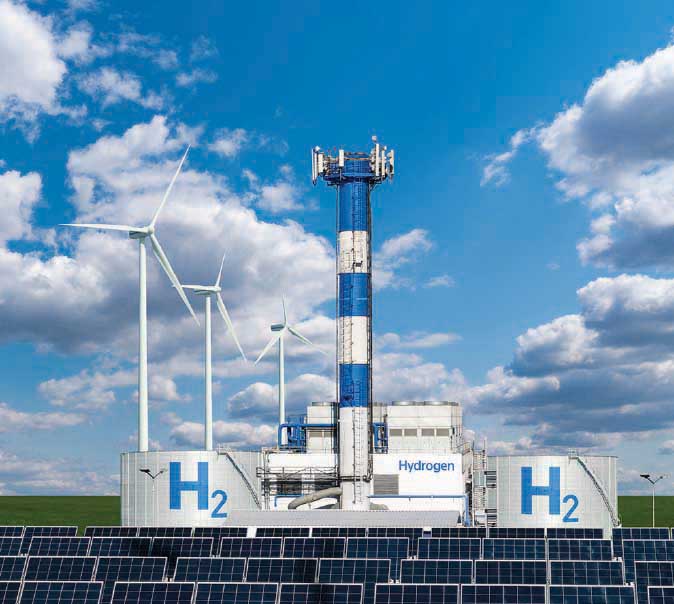
Green hydrogen: Green hydrogen is also emerging as a viable storage option to utilise excess renewable energy. Apart from the release of the National Green Hydrogen Mission, auction of tenders for green hydrogen production and electrolyser manufacturing, the government has also released guidelines for conducting pilot initiatives aimed at implementing green hydrogen in the shipping, steel and mobility sectors. In addition, incentives have also been announced for the production of green hydrogen and green ammonia.
Firm and despatchable renewable energy: Given the issues with standalone renewable energy, the discoms are looking to procure firm and despatchable renewable energy (FDRE). To promote FDRE, the MoP issued guidelines for competitive bidding of firm and despatchable power from grid-connected renewable energy projects with ESS in June 2023. According to the guidelines, FDRE tenders aim to ensure the availability of guaranteed peak power and round-the-clock (RTC) power at any given hour as requested by the distribution company.
Key recent auctions
Recent auctions highlight the critical role of standalone energy storage tenders in driving renewable energy integration. The first such large auction was launched in August 2022. JSW Renew Energy Five won the Solar Energy Corporation of India’s (SECI) auction to set up a 500 MW/1,000 MWh standalone BESS project. The company won the entire capacity by quoting Rs 1.08 million per MW per month. Then, in December 2022, NTPC Renewable Energy Limited (NTPC REL) held an auction for 3,000 MWh of ESS connected to the ISTS system. Greenko Energies won the auction with a final price of Rs 2.79 million per MWh per year. Later, in March 2023, JSW Neo Energy Limited and Greenko KA 01 IREP won a Power Company of Karnataka Limited auction to deliver 1 GW of energy for eight hours daily from pumped hydro storage projects with continuous four-hour discharge. JSW Neo Energy secured 300 MW at Rs 14.75 million, while Greenko secured 700 MW at Rs 14.76 million under the bucket-filling method. Further, in October 2023, IndiGrid secured a 20 MW/40 MWh BESS project in Delhi, receiving a letter of award from BSES Rajdhani Power for design, supply, testing, installation, commissioning, and operations and maintenance.
The tendering process has evolved in the renewable energy sector from traditional solar or wind tenders to hybrid and RTC tenders, wherein the role of energy storage has become significant. These tenders have the option to incorporate some ESS components to meet the annual minimum capacity utilisation factor requirements.
Several significant tender developments have taken place at the central and state levels for RTC renewables and hybrid projects. The key initiatives undertaken by central agencies is discussed here. Prior to the RTC-1 and RTC-2 auctions, SECI had issued a 1.2 GW tender for renewable-plus-storage projects with an assured peak power supply. The auction was conducted in January 2020, with Greenko and ReNew Power winning 900 MW and 300 MW at a peak tariff of Rs 6.12 per kWh and Rs 6.85 per kWh respectively, and an off-peak tariff of Rs 2.88 per kWh.
In December 2022, Maharashtra State Electricity Distribution Company Limited conducted an auction for 250 MW of renewable power with energy storage. The successful bidders were Ayana Renewable Power Private Limited (ARPPL) and NTPC Renewable Energy Limited, securing a tariff of Rs 9 per unit. ARPPL won 150 MW, while NTPC secured 100 MW.
SECI issued another tender in April 2023 with an assured peak power supply (1,200 MW solar-wind hybrid with energy storage, Tranche VI). The tariffs ranged between Rs 4.64 per kWh and Rs 4.73 per kWh in this auction.
In the same month, Railway Energy Management Company Limited (REMCL) issued a tender for the delivery of 1 GW of RTC renewables with or without storage, in which an L1 tariff of Rs 3.99 per kWh was discovered. REMCL also auctioned 750 MW of RTC renewable projects, with or without storage, early this year, in which an L1 tariff of Rs 4.25 per kWh was achieved. Meanwhile, in November 2023, SJVN Limited launched its tender for 1.5 GW of power from ISTS connected renewable energy with energy storage projects, which had a winning tariff of Rs 4.38 per kWh.
In February 2024, the results for NHPC’s auction to develop 1,500 MW of FDRE from ISTS-connected projects, along with ESS, were announced. The tender was issued in October 2023. The projects will be set up anywhere in India. BN Hybrid Power (BrightNight) was allocated 120 MW by quoting a tariff of Rs 4.55 per kWh whereas Hero Solar Energy (Hero Future Energies) and Solarcraft Power India (Blupine Energy) won 100 MW and 50 MW respectively by quoting Rs 4.63 per kWh. Other companies secured the following capacities: Juniper Green Energy secured 200 MW, ReNew Solar Power (ReNew) 250 MW and ACME Cleantech Solutions 680 MW by quoting a tariff of Rs 4.64 per kWh.
Outlook
By 2026-27, the Central Electricity Authority projects a demand for 16.13 GW of ESS capacity, comprising 7.45 GW of PSPs with a storage capacity of 47.65 GWh and 8.68 GW/34.72 GWh of BESS. The demand for storage capacity is expected to increase to 73.93 GW (26.69 GW of PSPs and 47.24 GW BESS) with a storage capacity of 411.4 GWh (175.18 GWh of PSPs and 236.22 GWh of BESS) by 2031-32. This growth is necessary to accommodate the integration of additional renewable energy capacity, with significant expansion anticipated in subsequent years. The government’s commitment to advancing energy storage technology is reflected in the substantial funding demand for PSPs and BESSs for the period 2022-27, amounting to Rs 542.03 billion and Rs 566.47 billion respectively. It is projected that by 2047 India will need 320 GW of energy storage, comprising 90 GW of PSP and 230 GW of BESS capacity, with a total storage capacity of 2,380 GWh.
In an important development, in February 2024, SECI successfully operationalised a 40 MW/120 MWh BESS project linked with a 100 MW solar power project situated in Rajnandgaon, Chhattisgarh. Going forward, it will be crucial to learn from the operational challenges that the project faces and also from the best practices that can be adopted by other developers.
For power generation planning, several factors need to be considered, such as sustainable development, operational flexibility and reliability, efficient resource utilisation, and fuel availability constraints. In these scenarios, BESSs and PSPs are expected to play a critical role in managing the intermittency of renewables and ensuring grid stability in the coming years.
Going forward, the sector is likely to witness increased investments, with a focus not only on BESS but also on mature technologies such as PSPs. Additionally, a shift towards exploring more affordable and readily available components across the energy storage supply chain will significantly contribute to enhancing self-sufficiency and security within India’s energy sector.
By Anusshka Duggal


