

Distribution companies are often considered the loose end of the power supply chain, given their weak financial performance and high inefficiencies. Their large pending dues are also impacting the viability of the sector. Moreover, the discoms often discourage the uptake of open access and rooftop solar projects. Power sector experts discuss discom performance trends, offer solutions to improve their financial health, and suggest ways for discoms to integrate more renewable energy. Edited excerpts…
What has been the trend in the reduction of the pending dues for generators, AT&C losses, and ACC-ARR gap of discoms?

Somit Dasgupta
As far as pending dues of the generators are concerned, there has definitely been an improvement with the enactment of the Electricity (Late Payment Surcharge and Related Matters) Rules, June 2022. The pending dues of generators, which were about Rs 1.4 trillion in June 2022, came down to about Rs 500 billion by January 2024. According to the Ministry of Power’s Praapti portal, the current dues as of March 11, 2024, were about Rs 540 billion.
On the issue of reduction in aggregate technical and commercial (AT&C) losses, the provisional figure for 2022-23 was about 15.4 per cent, which was only slightly better than the figure for 2021-22, which was 16.42 per cent. The government’s contention that the huge drop in AT&C losses (from about 25 per cent in 2015 to about 15 per cent in 2023) was due to the Revamped Distribution Sector Scheme is misplaced, since the projects under this scheme are still under implementation and yet to be operational. If anything, the massive reduction in AT&C losses in 2021-22 was due to the end of the pandemic, during which a substantial amount of pending dues were collected. Whether discoms will be able to sustain this reduction in AT&C losses further, only time will tell. At least, the reduction in 2022-23 is not impressive as it represents only a reduction of about 1 per cent vis-à-vis the figure of 2021-22.
The gap between the average cost of supply and average revenue realised (ACC-ARR) on the basis of energy sold (excluding regulatory income and revenue grant under UDAY) has been fluctuating and there is no marked trend. While it was
Re 0.30 for 2021-22, the corresponding figures for 2020-21 and 2019-20 were Re 0.63 and Re 0.55 respectively. Here again, the steep decline in the gap in 2021-22 was on account of the fact that revenue collection improved post-pandemic.
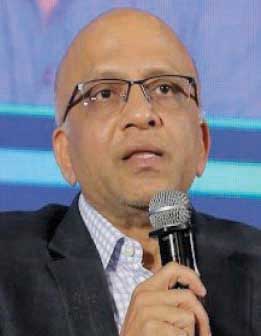
Nitin Zamre
The recent rating report of the utilities shows that over the past two financial years, the AT&C losses improved to 15.4 per cent from 16.42 per cent, billing efficiency improved to 87 per cent from 85.94 per cent and collection efficiency remained high at 97.3 per cent. In financial year (FY) 2022-23, days payable (pending dues to generators) reduced from 163 days to 126 days and days receivable also reduced from 142 days to 119 days.
The ACC–ARR gap has been steady at around Re 0.25–Rs 0.3 per kWh. In FY2022-23, the average power purchase cost increased by Re 0.71 per kWh due to more expensive coal imports during summers, and this cost was not passed on fully to consumers. The gap thus increased to Re 0.55 per kWh in FY 2022-23.
Overall, this is a continuation of the trend in financial performance improvement that was seen during the past few years. So, a lot of initiatives undertaken by the utilities and the central and state governments seem to be working well and in the right direction, even if not at the desired level.
What are the key solutions to improve the financial health of discoms? How can the renewable energy sector assist in reducing the subsidy burden of discoms?
Somit Dasgupta
Improvement in the financial health of discoms has to be a multi-pronged process. First and foremost, the tariffs set by regulatory commissions should be remunerative. The loss levels assumed by the regulatory commissions while determining the retail tariffs should be realistic and not unduly stringent. Second is the managerial issue of how the discom manages its loss levels. It is not just a matter of having meters and other infrastructure but also having the will to reduce loss levels. Whether the discom is a private utility or a public utility has a direct bearing, since there is more accountability in a private utility. Third, the government should proactively pay all its dues, including the subsidies announced under Section 65 of the Electricity Act, 2003. As far as renewable energy is concerned, they can help reduce the power purchase cost through solar rooftop installation, which would not only curtail demand but also enhance supply by injecting it into the grid.
Nitin Zamre
There have been efforts on multiple fronts. Improvements in metering, billing and collection (MBC) practices seem to be the biggest contributor. If one looks at the past 10 years, the utilities have come a long way on these indicators. The large-scale smart meter programme will continue to improve metering and reduce leakages further. Practices such as late payment surcharges drove down the payables. Additionally, the higher disbursement of subsidies by the state governments also helped.
Electricity from renewable sources, especially solar and wind, allows utilities to mitigate the uncertainty and volatility in the power purchase costs. That is extremely useful for multiyear planning.
Are rooftop solar projects a boon or a bane for the discoms? How can the discoms take advantage of this segment to improve their financials?
 Somit Dasgupta
Going strictly by the book, in a cost-plus scenario, solar rooftop projects should not affect the profitability of discoms. They are provided a certain return on their equity after accounting for all legitimate expenses. If many solar rooftop owners inject solar power into the grid, discoms can lower their power purchase costs. However, the actual beneficiaries will be consumers, who would see a reduction in their retail tariffs. Discoms usually prefer to have gross metering instead of net metering since revenue collection is higher in gross metering. However, a higher revenue collection would mean that the aggregate revenue requirement as estimated by the regulatory commission should be lower. So, it finally boils down to how active the commission is in tracking the revenue collection of discoms. In most cases, regulatory commissions are poorly staffed and not adequately equipped to monitor the activities of discoms, leading to what is popularly known as regulatory capture.
Nitin Zamre
Rooftop solar projects are a boon for the discoms, provided they are structured properly. Rooftop solar offers multiple benefits. They can help utilities reduce transmission and distribution (T&D) losses for those supplying to consumers, thereby strengthening the grid and improving its reliability. They can also reduce investments needed in T&D networks and almost eliminate recurring subsidies, as the cost of procuring solar at the end of the distribution grid is much lower than the cost of supply to the same customer. However, due to the availability of subsidised and/or free power to consumers in many states, there is no sufficient incentive to invest in rooftop solar. If the provision of subsidised/free power is removed for those who opt for rooftop solar under the PM Surya Ghar Yojana, it is likely to have a positive impact on implementation. Large-scale deployment of rooftop solar projects will help discoms in reducing MBC efforts, subsidies T&D losses, and T&D investments.
What can discoms do to integrate more renewable energy and comply with the renewable purchase obligations?
Somit Dasgupta
As of now, discoms are able to integrate their renewable energy into the grid by ramping up or ramping down their thermal generation. This could become difficult beyond a point because thermal generators will have to go below their technical minimum during daylight hours to accommodate renewable power, which is not sustainable. There are studies indicating that once renewable generation is 60 per cent or more of the total generation, grid integration could become a problem unless one is able to store energy in batteries. Today, the cost of storing energy in batteries is high, about Rs 11 per unit. So, unless storage cost comes down, integrating renewable energy beyond a point will be a problem. Additionally, one cannot ignore the fact that most discoms have tied up more energy than they actually need, and hence if they switch to renewable sources, they will still have to incur the fixed cost in addition to the generation cost of the renewable source. This leads to a higher power purchase cost for discoms.
Nitin Zamre
The commercial case for renewable energy is already proven. So, discoms should focus on improving the mix of renewable energy in their future procurement. While it is understood that coal-based generation will continue to dominate grid supply, it is crucial to make conscious efforts to further reduce its share in new capacity. Discoms will have to ensure that the grid can handle a high share of renewable energy to ensure adequate investments. Rooftop solar can be a game changer if structured properly and targeted at the right consumers.
(The views of Somit Dasgupta presented above are his personal views.)
