India’s clean energy sector is expanding by leaps and bounds with 152 GW of installations (including hydro) till date, as the country races towards achieving 500 GW of capacity by 2030. Along with the deployment of project capacity, the focus of policymakers and the industry is now on blending and hybrid power models, investing in new technologies, especially green hydrogen and advanced batteries, promoting domestic manufacturing capabilities, and creating quality assets. The government, on its part, has been at the forefront of the country’s clean energy revolution, aiding development through timely policy interventions such as the recent launch of the green hydrogen policy and the production-linked incentive scheme. Prime Minister Narendra Modi has talked about India’s climate action policies and renewable energy achievements at various recent events. Edited excerpts…
On climate action policies
We have heard people call our planet fragile. However, it is not the planet that is fragile. Instead, our commitments to the planet, to nature, have been fragile. A lot has been said over the last 50 years, since the 1972 Stockholm Conference, and very little has been done. However, in India, we have walked the talk.
Our LED bulb distribution scheme has been running for over seven years. It has helped save more than 220 billion units of electricity and 180 billion tonnes of carbon dioxide emissions per year. We have announced the setting up of the National Hydrogen Mission. It aims to tap into green hydrogen, an exciting technology to power our future.
Although climate change affects every inhabitant of the world, it affects most of the people who are at the last rung of society, who lack resources and who work hard to climb up the ladder of development. Many of these people acc-ount for our small farmers. And 80-85 per cent of the farmers in India are small farmers. The issue of climate change is a huge problem for our small farmers. Therefore, India has urged the world to pay special attention to dealing with the climate challenge. Taking forward the efforts of the past few years, climate action has been given a lot of priority in this year’s budget. This budget encourages India’s commitments to a green future at every level and in every sector.
We firmly believe in fulfilling all our commitments made under the UNFCCC. We also raised our ambitions during COP26 at Glasgow. Environmental sustainability can only be achieved through climate justice. The energy requirements of the people of India are expected to nearly double in the next 20 years. Denying this energy would be denying life itself to millions. However, successful climate actions also need adequate financing. For this, developed countries need to fulfil their commitments on finance and technology transfer. Sustainability requires coordinated action for the global commons. Our efforts have recognised this interdependence.
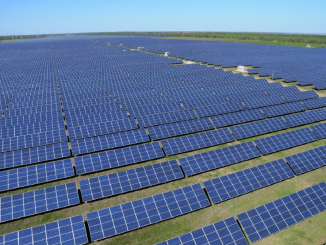
We have initiated the 8 MW Solar PV Farm project, which will help mitigate the climate challenges that Mauritius faces as an island country. As we launch the 8 MW Solar PV Farm, I recall the One Sun One World One Grid initiative, which was launched on the sidelines of the COP26 meeting in Glasgow last year. It is an idea that I had put forth at the First Assembly of the International Solar Alliance in October 2018. This initiative will not only reduce the carbon footprint and energy costs, but also open a new avenue for cooperation between different countries and regions. I hope that India and Mauritius can together create a shining example of such cooperation in solar energy.
On clean energy development
Today India is drafting policies, taking decisions about the present as well as the goals for the next 25 years. For this period, India has set targets of high growth and saturation of welfare and wellness. This period of growth will also be green, it will also be clean, it will also be sustainable, it will also be reliable. Continuing the tradition of making big commitments and living up to them for the global good, we have also set a target of net zero by 2070. India, with 17 per cent of the world’s population, may contribute 5 per cent, only 5 per cent, to global carbon emissions, but our commitment to tackling climate challenge is 100 per cent. Initiatives such as the International Solar Alliance and Coalition for Disaster-Resilient Infrastructure for Climate Adaptation are proof of this. As a result of the efforts of the past years, today 40 per cent of our energy mix is coming from non-fossil fuel sources. We have already achieved the commitments made by India in Paris, nine years before their target.
Equitable energy access for the poor has been the cornerstone of our environmental policy. Through the Ujjwala Yojana, more than 90 million households have been provided access to clean cooking fuel. India is running a massive campaign to turn farmers from food donors to energy donors. Under the Pradhan Mantri Kusum Scheme, help is also being extended to farmers so that they can generate solar energy by installing solar panels alongside their fields. Millions of farmers have also been given solar pumps by the government. It is also saving money and protecting the environment. We are encouraging farmers to set up solar panels, use them and sell surplus power to the grid. Stand-alone solar pumps as well as efforts to solarise existing pumps are being scaled up.
India spends Rs 5 trillion-Rs 7 trillion every year on the import of crude oil for petrol and diesel. We are trying to reduce the import of crude oil by emphasising ethanol and biofuel. This area of Purvanchal is the stronghold of sugarcane farmers. Ethanol is turning out to be a much better source of income for sugarcane farmers than sugar. Several factories are being set up in Uttar Pradesh itself to make biofuel. Initially, only 200 million litres of ethanol from Uttar Pradesh was supplied to oil companies. Today, the farmers of Uttar Pradesh alone are supplying almost 1,000 million litres of ethanol to oil companies. Earlier, oil used to come from the Gulf countries; now it is being produced from (sugarcane) crops.
On the inauguration of hydro projects in Himachal Pradesh
The foundation stones for four mega hydroelectric projects, costing Rs 110,000 million, have been laid or even inaugurated here [Himachal Pradesh]. This will increase the revenue of Himachal Pradesh and create thousands of employment opportunities. Whether it is the Sawra-Kuddu project, the Luhri project, the Dhaulasidh project or the Renukaji project, these are going to meet both the aspirations of Himachal and the needs of the country. The Sawra-Kuddu Dam is the first such dam in Asia in the shape of a piano. Himachal will earn around Rs 1,500 million every year through electricity generated from this dam. When the Shri Renukaji Dam project, being constructed on the Giri river, is complete, a large area will directly benefit from it. A large part of the income from this project will be spent on development here.
Electricity has an important role to play in ensuring ease of living. No one can live without electricity, whether it is for reading, household chores, power industries or now even for charging mobile phones. The ground-breaking and unveiling of hydropower projects here are also strong steps towards a climate-friendly India.
Today, the entire world is praising India for accelerating development while protecting the environment. From solar power to hydropower, from wind energy to green hydrogen, our country is constantly working to make full use of every resource of renewable energy. The purpose is to meet the energy needs of the citizens of the country and to protect the environment. The growing installed electricity capacity of the country is also an example of how India is achieving its goals.
In 2016, India had set a target to meet 40 per cent of its installed electricity capacity from non-fossil energy sources by 2030. It has achieved this goal in November 2021 itself. That is, India has achieved the target meant for 2030 in 2021 itself.