

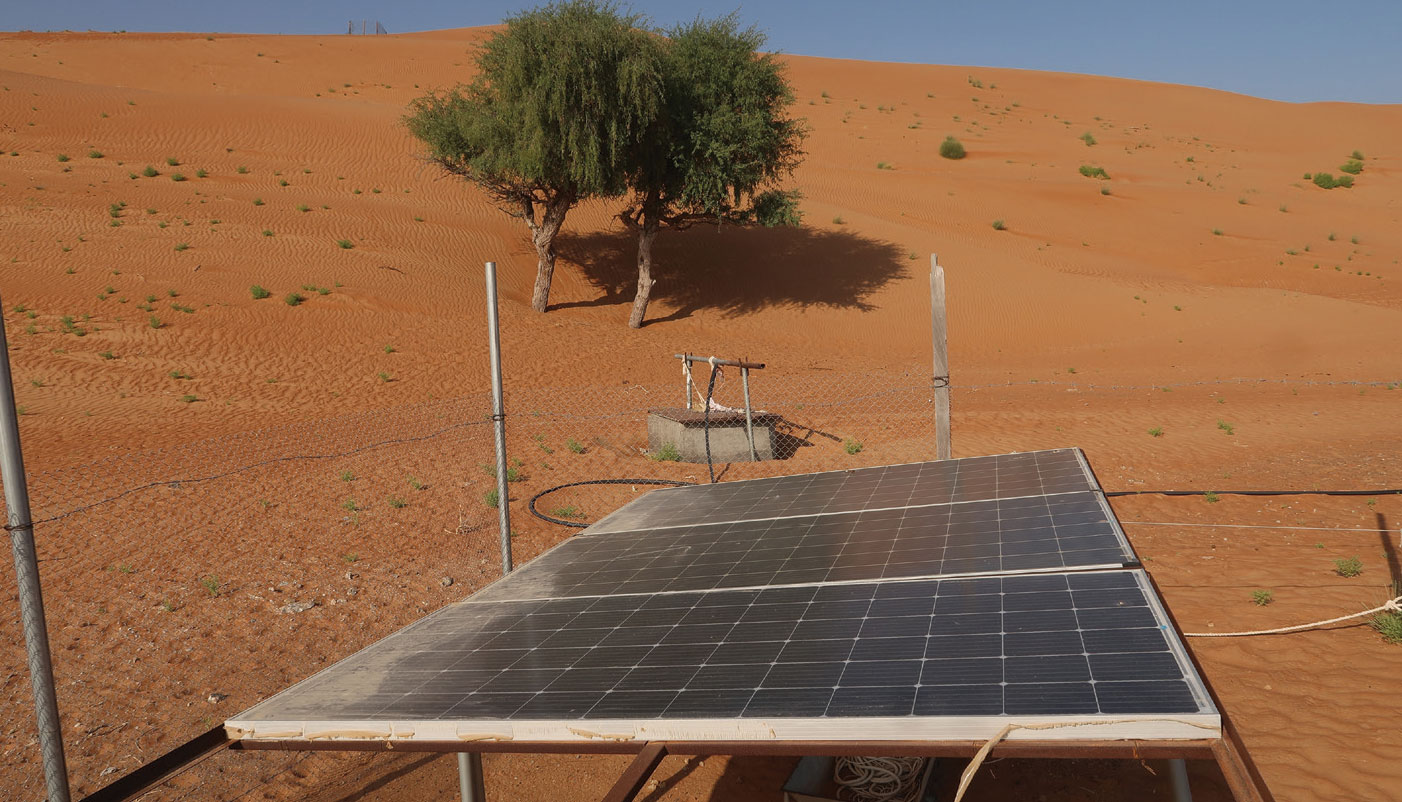
 Oman has entered an execution-focused phase of its energy transition. While its long-term goals remain unchanged – achieving net zero emissions by 2050, diversifying the economy under Oman Vision 2040 and developing a globally competitive green hydrogen industry – the government is now laying greater emphasis on implementation through updated policies and clearer milestones. In May 2026, the Ministry of Energy and Minerals updated the National Net Zero Strategy, introduced a regulatory framework for carbon markets and set a target to reduce greenhouse gas emissions by 33 per cent by 2035. It also outlined a clearer pathway for the power sector, targeting a 30-40 per cent renewable electricity share in the national mix by 2030, 60-70 per cent by 2040 and 90-100 per cent by 2050. While these plans are ambitious, early performance shows that accelerated efforts can deliver results. In 2025, renewable energy contribution increased to 9.46 per cent from 4.26 per cent in 2024. Meanwhile, renewable electricity generation exceeded 4 TWh during the year.
The Oman Electricity Transmission Company (OETC), which is majority-owned by the Oman government through Nama Holding, with the balance held by China’s State Grid International Development Limited, is leading the country’s transmission network expansion to support Oman’s evolving low-carbon power system. OETC’s latest Five-Year Annual Transmission Capability Statement (FYATCS) (2026-30) outlines significantly expanded investment to support rising electricity demand, while enabling green hydrogen development, wider electrification, and the integration of renewable energy, battery energy storage systems and new interconnections. Approved by the Authority for Public Services Regulation (APSR) in June 2026, the plan covers the Main Interconnected Transmission System (MITS), the Dhofar Transmission System (DTS) and the Musandam Transmission System (MTS). It sets out the transmission capacity needed to meet the demand and generation forecasts submitted by Nama Power and Water Procurement Company (NPWP), Nama Electricity Distribution Company (NEDC) and Nama Dhofar Services (NDS).
OETC’s latest FYATCS introduces new projects, updates implementation schedules and places greater emphasis on grid flexibility, energy storage and system resilience. The plan outlines 70 transmission projects (37 per cent higher compared to 51 projects in the previous FYATCS 2025-29), with gross peak demand across the progressively interconnected systems projected to increase by about 48 per cent, from 9,431.9 MW in 2026 to 13,967.4 MW in 2030. To support this growth, OETC plans to expand its network from 117 to 157 grid stations (GSs) by 2030 and increase capital expenditure to around OMR 1,285 million, up from OMR 977 million in the previous 2025-29 plan. According to Fitch Ratings, much of the increase is driven by around OMR 376 million allocated to battery energy storage system (BESS) projects, reflecting the growing role of storage in Oman’s evolving power system. The plan also advances a unified national grid through the North-South Interconnection (RABT) and the Musandam-Main Interconnected System (MIS) links.
Future plans
Generation
The FYATCS 2026-30 builds on the previous road map by supporting a broader pipeline of renewable energy projects. It plans to connect over 8,750 MW (compared to 7,874 MW previously) of new contracted and planned generation capacity to MIS and Dhofar during the period. This includes 5,680 MW (65 per cent) of solar photovoltaic, 2,070 MW (24 per cent) of wind and 1,000 MW of hybrid round-the-clock (RTC) capacity, combining solar, wind and BESS at Duqm Industrial. As a result, OETC expects the share of renewables in installed generation capacity to rise from 13.6 per cent in 2026 to 45 per cent by 2030.
The pipeline includes four GW-scale solar independent power producer (IPP) projects – Adam Solar (2028), Al Kamil Solar II (2029), Mahadah Solar (2030) in MIS and Dhofar Solar (2030) – alongside the under-construction 500 MW Ibri Solar-III project, which is being connected via the new 400 kV Al Sebekhi switching station. In the wind segment, OETC is integrating JBB Ali (2026) and Harweel/Dhofar-II (2026), followed by Ras Madrakah (Duqm II), Sadah and the new 400/33 kV Sarab GS serving the Mahout wind farm in 2027, and the Duqm III, Shaleem and Al Jazzier wind farms in 2028-29.
BESSs are a distinguishing feature of this plan. NPWP’s programme includes 1,000 MW/2,000 MWh of BESS in MIS (Q2 2026), 500 MW/2,000 MWh in MIS (Q2 2027), 250 MW/1,000 MWh in Dhofar (Q2 2026-Q2 2027) and 30 MW/120 MWh in Musandam (Q2 2028), intended primarily for peak shaving and to provide fast frequency response and reserve support as variable renewable penetration rises. Their rapid response capability will also reduce the need for thermal generation to provide balancing services. FYATCS also includes a 1,000 MW waste-to-energy IPP connecting to MIS by 2029 through new 220 kV gas-insulated switchgear (GIS) infrastructure, adding firm, despatchable capacity alongside the RTC project.
A major change in the updated plan is the removal of 2,480 MW of planned combined cycle gas turbine capacity, reflecting a shift in generation planning towards renewable energy and BESSs.
Higher renewable penetration will require enhanced spinning reserves and reserve capacity to manage variability, greater despatch flexibility from thermal generation, improved reactive power compensation and lower operational costs to improve the overall system economics.
Transmission
OETC’s strategic approach remains unchanged in principle – the 400 kV network as the national backbone for power evacuation, the 220 kV network as the main transmission system and 132 kV as the sub-transmission layer. What has changed is the scale and geographic reach of the build-out. The flagship RABT Phase 2 – extending the 400 kV backbone from Duqm Industrial to Shaleem and on to a new 400/132 kV Dhofar GS through 550 km of overhead transmission lines (OHTLs), with major reactive compensation works at all three sites – is on track for completion in Q4 2026, finally linking MIS with the isolated 132 kV Dhofar system. Phase I, which comprised 670 km of the 400 kV Nahadah-Barik-Suwaihat-Duqm-Mahout OHTL and was fully commissioned in Q4 2023, already linked the MIS with Petroleum Development Oman (PDO), NDS/NEDC systems, replacing diesel-based generation in Duqm, Mahout and surrounding areas.
New in this plan is the Musandam-MIS interconnection, targeted for completion by 2030. The project will electrically link the previously isolated 132 kV Musandam system to MIS through new 220/132 kV GSs at Shinas and Dibba, connected by roughly 141 km of 220 kV submarine cable plus associated OHTL and land cable sections, supported by 4×300 MVAr shunt reactors and two +200/-200 MW static var compensator (SVC) or static synchronous compensator units for voltage stability across the long subsea link. Once completed in 2030, all three of OETC’s systems – MIS, Dhofar and Musandam – will operate as a single interconnected national grid for the first time.
Regionally, the Gulf Cooperation Council Interconnection Authority (GCCIA), in coordination with OETC, is developing a new dedicated 528 km, 400 kV line between OETC’s Ibri IPP and GCCIA’s Silaa grid station in Abu Dhabi, UAE, scheduled for completion in Q3 2027. This will raise the total transfer capacity between Oman and the GCCIA network to 1,700 MW.
Domestically, a large cluster of projects continues to connect rural and remote communities – including Masirah, Khuwaimah, Al Mazyunah and several other rural areas – to the transmission network between late 2026 and mid-2029, displacing diesel-based local generation. In the north, major new 400 kV GSs at Wadi Latham (supplying Oxy Oman – a major oil and gas unit of the US-based Occidental Petroleum Company, and integrating with Safah), Al Khuwair, Majan and Mobella Industrial are being built to accommodate load growth around Muscat and to evacuate power from the Misfah IPP and forthcoming solar plants.
FYATCS 2026-30 notes a marked improvement in short-circuit performance following the introduction of fault current limiters. Only three GSs (Rustaq, Al Filaj and Madinat Sultan Qaboos are expected to exceed 132 kV busbar fault-level limits between 2026 and 2028, down from eleven a year earlier. However, OETC still plans short-term operational mitigations such as selective line opening and busbar splitting at those sites.
The way forward
OETC’s FYATCS 2026-30 marks a shift from incremental network expansion to a more structural transformation of Oman’s transmission system. By 2030, the MITS, DTS and MTS are expected to operate as a single interconnected national grid for the first time, supporting a much larger share of renewable energy in the generation mix. The scale of planned solar and wind capacity, the growing role of BESSs and the higher level of transmission investment reflect the changing requirements of Oman’s power system.
Delivering this vision will depend on the timely execution of several major projects, including the Musandam-MIS subsea interconnection, the new GCCIA link and multiple gigawatt-scale solar connections planned towards the end of the decade. In parallel, OETC is preparing for the longer term through its 2025-40 Electricity Transmission Master Plan and initiatives to strengthen ancillary services.
Net, net, as renewable energy penetration increases, OETC’s plan lays the foundation for a more flexible, interconnected and resilient electricity system capable of supporting the country’s long-term energy transition and economic diversification objectives.
