

The growing uptake of intermittent renewable energy in India’s power mix has created the need for accurate forecasting and scheduling. This has become a key component of renewable operations and maintenance services.
In a panel discussion on “AI for Forecasting and Scheduling” at Renewable Watch’s AI in Renewables conference, panellists highlighted the role of artificial intelligence (AI), advanced analytics and evolving regulatory frameworks in forecasting and scheduling, while also outlining the challenges in achieving accurate forecasts, minimising penalties and ensuring grid stability in an increasingly variable energy landscape.
 The panellists included Ankush Agarwal, Chief Manager, Digital Initiatives, Serentica Renewables; Ajay Dhamania, General Manager, Engineering, NTPC Green Energy Limited; and Vishal Saxena, Assistant General Manager, Regulatory, ENGIE. Key takeaways from the session…
Forecasting challenge
At the heart of renewable energy operations lies the inherent variability of resources such as solar and wind. Weather forecasting, even in the short term, remains highly complex. Predicting weather conditions is difficult due to rapidly changing environmental factors.
Solar generation is influenced by factors like atmospheric pollution and cloud cover, while wind generation depends heavily on pressure gradients and temperature differences. These variables are not only dynamic but also highly localised, making centralised forecasting models insufficient in many cases. Even turbines located just 20-30 metres apart can experience significantly different wind conditions, resulting in varied generation outputs.
Similarly, solar plants face micro-level disruptions such as transient cloud cover and short-duration rainfall, which can sharply reduce generation within minutes. These localised fluctuations are often not captured accurately by broader meteorological models or satellite data, highlighting the need for site-specific intelligence.
Furthermore, the increasing frequency of extreme weather events adds another layer of complexity to renewable energy operations. Phenomena such as sudden storms and high wind speeds lead to turbine shutdowns, and dust storms affecting solar panels are becoming more common.
AI and data integration
To address these challenges, developers are increasingly adopting AI-driven solutions. AI is being deployed to integrate multiple data streams, including satellite inputs, weather models such as Weather Research and Forecasting, and on-site instrumentation data to generate more accurate power forecasts.
However, simply layering models on top of each other does not guarantee improved outcomes. Early approaches that relied on combining multiple forecast outputs often yielded limited improvements in accuracy. Instead, the focus has shifted towards enhancing the quality and granularity of input data, particularly through site-level instrumentation and analytics.
Developers are now investing in data science teams to refine forecasting models by incorporating historical data, temperature variations and real-time measurements. AI systems continuously learn from past deviations, enabling gradual improvements in predictive accuracy. This iterative learning capability is one of AI’s most significant advantages.
Importance of high quality site data
High quality, site-specific data is critical for improving forecasting accuracy. Accurate forecasting depends not only on advanced algorithms but also on the reliability of input data from instruments such as weather monitoring stations.
Large solar installations require multiple instruments distributed across the site to capture variations in solar radiation. A large plant may require multiple measurement points to effectively track cloud movement and irradiance changes across hundreds of acres.
Despite these efforts, challenges remain. Even with extensive instrumentation, capturing ultra-short-term variations such as sudden cloud cover continues to be difficult. Improving instrumentation standards and ensuring data accuracy are essential steps towards reducing forecasting errors.
Regulatory pressures and DSM tightening
The regulatory environment has become stringent, particularly with respect to deviation settlement mechanisms (DSMs). Previously, allowable error bands for solar and wind generation were wider, but these have now been tightened.
This tightening has significantly increased pressure on developers, as deviations beyond permissible limits result in financial penalties. From a grid management perspective, accurate forecasting is essential for balancing supply and demand, and stricter norms help improve overall grid reliability.
However, the reduced error margins also highlight the limitations of current forecasting capabilities. Achieving very low deviation levels remains a formidable task, particularly in the face of unpredictable weather conditions.
AI applications in scheduling and market optimisation
Beyond forecasting, AI is also being leveraged for scheduling and market optimisation. Developers are building applications that can dynamically allocate power across different customers or markets based on forecast accuracy and demand patterns.
These systems aim to minimise penalties by optimising despatch decisions in real time. If forecast uncertainty is high, AI tools can determine the most suitable market or customer segment for power allocation, thereby reducing financial risks. Such applications are particularly valuable in the context of short-term power markets, where efficient scheduling can enhance revenue realisation and improve grid integration.
In-house capabilities versus third-party solutions
There is a clear shift towards developing in-house forecasting and scheduling capabilities. While third-party providers and forecasting tools remain important, many developers are building their own AI-driven systems tailored to their specific assets and operating conditions.
This approach enables better integration of proprietary data, improved model customisation and more effective responses to site-specific challenges. Partnerships with start-ups and technology providers are also emerging to accelerate innovation.
Role of energy storage and hybrid systems
The integration of battery energy storage systems is emerging as a key enabler for managing renewable variability. Storage allows developers to shift generation from periods of surplus to peak demand hours, improving both grid stability and economic returns.
AI plays a crucial role in optimising storage operations by determining when to charge, when to discharge and how to balance multiple energy sources. This becomes increasingly important as the industry moves towards round-the-clock renewable energy and hybrid projects combining solar, wind and storage.
Interplay with thermal power and system integration
The relationship between renewable and thermal power is evolving. As renewable penetration increases, thermal plants are increasingly required to operate as backup sources. Operating thermal plants below certain load levels can lead to inefficiencies and equipment stress.
Energy storage systems help mitigate this by storing excess renewable energy and enabling thermal plants to operate at optimal levels. An integrated approach combining renewables, storage and thermal backup is essential for ensuring a stable and reliable power system.
Regulatory gaps and the way forward
 Despite promising technology trends, several regulatory gaps remain. There is a need for greater clarity and flexibility in forecasting requirements, particularly during extreme weather events. Improved data sharing and transparency can support better planning and scheduling decisions. Providing more granular information on grid availability and resource potential would further enhance forecast decisions.
Smaller developers continue to face challenges in adopting advanced AI solutions due to resource constraints. Addressing this gap will remain key to ensuring balanced industry growth.
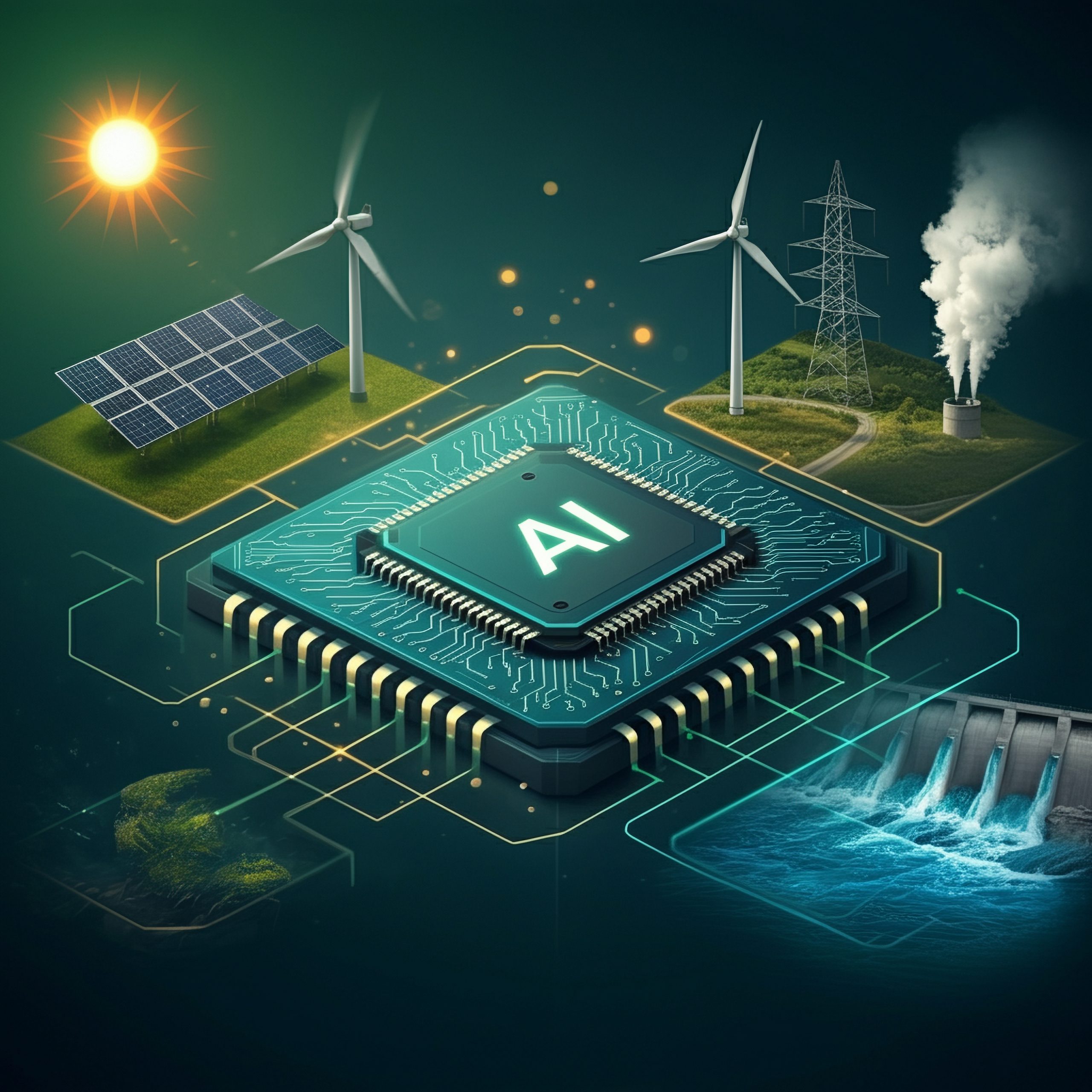
Overall, AI is rapidly transforming renewable energy forecasting and scheduling, but significant challenges remain. Weather variability, data limitations and tightening regulatory requirements continue to test operational resilience. Nevertheless, the adoption of AI, improved instrumentation, integration of energy storage and development of in-house capabilities are collectively enhancing forecasting accuracy and operational efficiency.
As renewable energy capacity expands, AI will play an increasingly central role not only in forecasting generation but also in managing a complex ecosystem of assets, markets and grid dynamics going forward.
