Spain, already one of Europe’s leading renewable energy markets with over 55.5 per cent of electricity generation from renewables, is accelerating solar and wind deployment to reach 81 per cent by 2030. At the same time, rising electrification across industry, transport and heating, alongside the expansion of data centres and the scaling of green hydrogen production, is driving new, often concentrated and inflexible demand.
These parallel shifts in supply and demand have significant implications for the transmission network. A system historically designed for centralised, predictable generation must now accommodate geographically dispersed, variable renewable output while managing increasingly complex load patterns. This calls for greater system capacity, flexibility and digitalisation, as well as stronger cross-border integration.
Spain’s energy transition is increasingly a transmission challenge. Without a significant acceleration in grid expansion and modernisation, renewable growth risks being constrained by congestion, system instability and rising curtailment of clean energy. This urgency is reflected in Spain’s evolving transmission strategy. It marks a shift from incremental reinforcement to systemic redesign, with the proposed Euro 13.1 billion investment programme for 2025-30, positioning the grid as a central enabler of the country’s next phase of the energy transition. The critical importance of this investment is further highlighted by recent system stress events, most notably the April 2025 Iberian blackout affecting Spain and Portugal, which exposed vulnerabilities linked to insufficient grid capacity and investment.
Scale and allocation of investment
In October 2025, Spain’s Ministry for Ecological Transition launched the public consultation for the Electricity Planning Proposal 2025-30, outlining approximately Euro 13.1 billion in transmission investments by the end of the decade. This marks a significant scaling up compared to previous plans. For context, Spanish transmission system operator (TSO) Red Eléctrica, a subsidiary of the Redeia Group, invested Euro 4.4 billion against the targeted Euro 3.3 billion during 2021-25.
The allocation of planned investment reveals the strategic priorities of Spain’s grid development. About 25 per cent of the proposed investment is for reinforcement to accommodate renewable integration and electrification-driven power flows. Another 23 per cent is for interconnection between systems, and 15 per cent for international interconnections. A significant 16 per cent is proposed for supporting distribution networks and new load connections.
This distribution of proposed investment highlights a dual focus: expanding physical capacity while enhancing system intelligence and flexibility.
Network capacity expansion and upgrade
The plan includes substantial upgrades to Spain’s transmission infrastructure, focusing both on new capacity and optimisation of existing assets.
Key network elements in the plan include:
- Approximately 6,800 km of new lines and cables
- Around 2,000 km of international interconnections (going beyond 2030)
- 9,500 km of lines to be upgraded (around 21 per cent of the current network)
- Nearly 6,000 km of circuits to be repowered
- 1,470 km of conductors to be replaced
- Approximately 1,800 km of lines to undergo renewal
- Deployment of dynamic line rating (DLR) systems on selected corridors.
These measures indicate a clear emphasis on capacity enhancement without proportional expansion of physical footprint. It may be noted that during 2025, Red Eléctrica commissioned 212 bays and 456 ckt km of lines, bringing the transmission grid to 46,155 ckt km by the end of 2025. The TSO plans to add around 6,800 km of new lines through domestic projects. Some of the key projects include 400 kV projects such as the 245 km Machorra-Argos line, the 144 km Platea-Requena line and the 103 km Baza REE-Antas line, as well as 220 kV lines such as the 404 km Fadrell-San Martín Baleares line.
Key domestic transmission reinforcements include:
- Southern and central corridors linking Andalusia, Castilla-La Mancha and Madrid
- West-South connections between Andalusia and Extremadura
- Strengthening of metropolitan grid rings in Madrid, Zaragoza and Asturias.
- These corridors are critical for transporting renewable energy from high-generation regions (south and west) to demand centres.
Cross-border interconnections
In addition to investments in domestic grid strengthening, enhancing interconnection capacities is vital not only for the development of renewable power in Spain but also for Europe’s energy security.
The 2025-30 plan allocates significant investment to interconnections, including:
- The Bay of Biscay high voltage direct current link with France
- Reinforcement of interconnections with Portugal
- A third interconnection cable with Morocco.
These projects are particularly capital-intensive due to the use of submarine cables, but they provide high strategic value in terms of system flexibility and supply security.
Recent upgrades, such as the Hernani-Argia line with France, demonstrate a preference for capacity enhancement of existing infrastructure where feasible, reducing environmental impact and deployment timelines.
Integration of islands and isolated systems
Spain’s island systems (Balearic and the Canary Islands) require specialised grid solutions due to their isolation. The transmission plan includes:
- Strengthening links between the mainland and the Balearic Islands
- Additional inter-island connections (for example, Ibiza-Formentera, Mallorca-Menorca)
- Reinforcement of networks within the Canary Islands.
These investments are essential for reducing reliance on fossil generation in island systems and enabling renewable integration.
 Technologies for increasing grid flexibility and intelligence
Given the limitations of traditional grid expansion, Spain is increasingly deploying advanced technologies to enhance transmission capacity and operational flexibility.
DLR: DLR systems allow real-time adjustment of transmission capacity based on weather conditions. By leveraging ambient temperature, wind speed and solar radiation data, DLR systems can significantly increase line utilisation without new construction.
Power electronics and voltage control: Technologies such as static synchronous compensators and synchronous compensators are being deployed to stabilise voltage, improve system inertia and enhance fault response. These are particularly critical in systems with high shares of inverter-based renewable generation.
Digitalisation and monitoring: Tools such as PdEye (for monitoring partial discharges) enable continuous monitoring of asset health, supporting predictive maintenance and reducing outage risks. The integration of industrial internet of things and cloud-based analytics is improving operational decision-making.
Real-time grid services from renewables: A key regulatory innovation has been the introduction of real-time voltage control services, allowing renewable generators to provide grid support. This marks a shift towards treating renewables as active participants in system stability rather than passive energy sources.
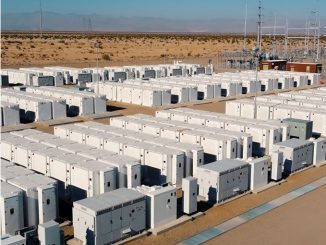
Grid-integrated energy storage: Energy storage is becoming a central component of Spain’s grid strategy. Grid-integrated storage helps to smooth renewable intermittency, reduce congestion, defer transmission upgrades in some cases, and provide ancillary services
Spain targets over 22.5 GW of storage capacity, including pumped hydro and battery systems. Projects such as pumped storage in Gran Canaria and battery deployments in island systems illustrate the integration of storage into transmission planning.
Conclusion
Spain’s rapid growth in renewable energy demands more than just new grid infrastructure – it needs a smarter, more flexible grid that can handle complex and decentralised energy flows.
The Euro 13.1 billion transmission plan for 2025-30 represents a critical step in this direction. Its emphasis on optimisation, interconnection, advanced technologies and storage reflects a mature understanding of the challenges that lie ahead.
However, success depends on timely execution. Delays in grid development could hold back Spain’s renewable targets, while effective implementation could position the country as a model for integrating high shares of renewable energy at scale. Ultimately, the transmission network must evolve from being a potential bottleneck to becoming the the backbone of Spain’s clean energy future.