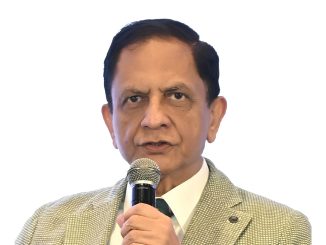
Dr Akanksha Jain, Research Consultant, and Dr Debajit Palit, Centre Head, Centre for Climate Change and Energy Transition, Chintan Research Foundation
 Compressed biogas (CBG), essentially a mixture of hydrocarbons, with methane concentrations comparable to natural gas, sits at the intersection of India’s energy security, waste management and rural economy objectives. Produced through the anaerobic digestion of organic wastes and purified to remove carbon dioxide, hydrogen sulphide and moisture, CBG is chemically similar to fossil compressed natural gas (CNG) and can be injected into gas grids or used directly as transport fuel. Recognising this multisectoral potential, the government has placed biogas at the core of its emerging bioeconomy strategy through programmes such as the Sustainable Alternative Towards Affordable Transportation (SATAT) initiative, Galvanising Organic Bio-Agro Resources Dhan (GOBARdhan), the National Bioenergy Programme, and municipal waste-to-energy programmes.
Policy ambition has grown accordingly. India has announced a phased CBG blending obligation (CBO), targeting 5 per cent blending in city gas networks by 2028-29, with expectations of further scale-up thereafter. If achieved, this would reduce liquefied natural gas (LNG) imports, create rural income streams from agricultural and other forms of waste, lower open burning of residues, and mitigate methane emissions from unmanaged organic waste. Against this backdrop, Union Budget 2026-27’s provision to exempt the biogas component of blended CNG from central excise duty has been widely welcomed. By correcting what industry players have long flagged as double taxation, the measure is expected to lower the effective price of CBG and incentivise higher blending by city gas distribution (CGD) companies. The intent is directionally sound. In 2024, India imported LNG worth nearly $15 billion, close to 50 per cent of its domestic gas demand. Replacing even a fraction of this with domestically produced biogas improves energy security, cuts life cycle methane emissions, and aligns with India’s net zero 2070 commitment. Yet the policy leaves an uncomfortable question unanswered: Does India have enough biogas to blend in the first place?
While India has committed to a phased CBO targeting 5 per cent blending by 2028-29, in practice, the blending levels remain well below 1 per cent across most CGD networks. As of early 2025, only around 150 CBG plants were operational nationwide, compared to the 5,000 plants envisaged under the SATAT scheme. Installed CBG capacity remains modest relative to potential demand from CGD networks alone, even before accounting for industrial fuel switching and transport sector use. Excise relief improves the economics of consuming biogas; it does little to resolve the harder problem of producing it at scale.
Feedstock is the bottleneck: Why biogas production struggles to scale
Biogas is not constrained by technology. Anaerobic digestion, biogas upgrading and compression systems are mature and commercially available. The primary constraint in the value chain is feedstock. To produce biogas, biomass must be continuously assembled from agricultural residues, cattle dung, municipal solid waste (MSW), sewage sludge and industrial effluents. This feedstock supply chain is inherently fragmented, seasonal, logistics-intensive and governance-heavy. For instance, the availability of agricultural residues varies greatly by crop cycle, region and weather, and competing uses such as fodder, bedding or in situ soil incorporation. Their low bulk density and high transport costs quickly erode project viability beyond short collection radii. Contracting arrangements between farmers, aggregators and CBG developers remain informal, short term and price-volatile, offering little security to either side, forcing plants either to oversize storage or operate below capacity.
On the other hand, MSW, despite its scale, suffers from chronic problems of poor segregation, inconsistent organic content, contamination with plastics and uncertain long-term access. Sewage treatment plant (STP) sludge offers a more continuous urban feedstock, but regulatory ambiguity around digestate use owing to pathogen and heavy metal content, and quality constraints limit its wider deployment.
Across feedstock types, successful digestion requires consistent quantity, predictable composition and balanced carbon-to-nitrogen ratios – conditions rarely met outside controlled environments. The variability reduces gas yields, increases operational costs and shortens equipment life. Many projects, therefore, underperform or stall not because gas cannot be sold, but because feedstock cannot be reliably secured. Excise exemptions at the point of sale do nothing to address this upstream fragility.
From price signals to systems design: Building a feedstock-first biogas ecosystem
A feedstock-first approach would require both technical and institutional interventions. On the technical side, pre-processing infrastructure such as decentralised sorting, shredding, drying and slurry preparation can stabilise feedstock quality before it reaches digesters. Co-digestion strategies combining multiple waste streams can smooth seasonal fluctuations and optimise methane yield. Digital traceability systems could improve accountability in aggregation chains, while storage innovations, such as ensiling of crop residues, can extend availability across seasons.
Policy solutions are equally critical. Municipalities could be mandated to provide long-term, bankable waste supply contracts indexed to quantity and quality, similar to power purchase agreements in the electricity sector. Agricultural feedstock markets could be formalised through cooperatives or farmer-producer organisations, ensuring minimum support prices for residues delivered to energy projects. Integration with existing fertiliser and soil health programmes could create stable markets for digestate, turning a disposal challenge into a revenue stream.
Equally important is the infrastructure for transporting biomethane after production. Unlike fossil gas, biogas production is geographically dispersed. Dedicated “biogas grids” or virtual pipeline systems using cascades of compressed gas transported by trucks can connect decentralised plants to demand centres. In the longer term, selective pipeline injection near feedstock-rich clusters may be more efficient than forcing plants to align with existing gas infrastructure.
The “right to inject” model: What France’s biomethane expansion teaches us
International experience underscores the importance of such systemic design. France, for instance, has rapidly expanded biomethane production by introducing a “right to inject” framework that obliges gas network operators to connect qualifying plants and recover associated costs through regulated tariffs. Guaranteed grid access, standardised technical specifications, and long-term price support reduced the market uncertainties and unlocked private investment. Crucially, these measures were complemented by strong agricultural feedstock policies and digestate regulation, creating an integrated ecosystem rather than an isolated incentive.
Additionally, India’s biogas ecosystem is fragmented across multiple ministries: the Ministry of Petroleum and Natural Gas (MoPNG) focuses on blending and transport fuels; the Ministry of New and Renewable Energy (MNRE) on capacity addition; the Ministry of Housing and Urban Affairs on waste management; the Ministry of Jal Shakti on sewage and sanitation; the Ministry of Agriculture and Farmers’ Welfare on residues and fertilisers; and the Ministry of Environment, Forest and Climate Change on emissions and mitigation. Even CBG plant installations are dealt with by different ministries under different schemes: SATAT by the MoPNG, GOBARDhan by Jal Shakti, and waste-to-energy and biogas by the MNRE. Each intervenes with a different objective, often through different subsidy mechanisms, implementation guidelines and timelines. The outcome is predictable: offtake assurances without feedstock security, capital subsidies without long-term waste contracts, and blending mandates divorced from production realism.
There are, however, pockets where India is quietly getting it right. Urban clusters such as Indore, Pune and Surat demonstrate that when waste segregation, long-term municipal contracts, decentralised preprocessing and assured local offtake are aligned, CBG plants can operate reliably. Surat’s integration of biomethanation with sewage treatment infrastructure provides a year-round, logistics-efficient feedstock model. Indore’s zero-landfill approach shows that sustained governance capacity, not fiscal incentives alone, underpins biogas viability. In rural India, decentralised models anchored around gaushalas, dairy clusters and panchayat-level aggregation, described as “gram urja” or biogas grid systems, reveal another lesson: biogas works best when plants are designed around feedstock availability, not retrofitted to pipeline geography.
Closing the loop: From excise exemptions to production ecosystems
What the budget misses, therefore, is not intent but sequencing. The excise exemption assumes that lowering downstream prices will pull supply into existence. Biogas does not behave like oil or gas markets; it behaves more like agriculture or waste management, which is deeply local, labour-intensive and infrastructure-heavy. Price signals alone cannot overcome fragmented feedstock systems. What is needed is a feedstock-first policy architecture. This includes long-term minimum guaranteed quantity contracts for municipal and agricultural waste; spatial clustering of biogas plants around feedstock-dense regions such as dairies, mandis, gaushalas and STPs; standardisation and market development for digestate linked to soil health and fertiliser policy; and clear institutional accountability for feedstock aggregation, quality risk and supply failure.
For India, biogas is not only an energy security molecule but also a climate co-benefit, and the policy logic must deliver on this intent. Excise exemptions announced by the Ministry of Finance are, therefore, a necessary but incomplete step. They improve downstream affordability but do not resolve upstream constraints. Completing the policy story will require coordinated action to build a robust feedstock ecosystem, integrated infrastructure and institutional clarity. Without fixing the engine of production, cheaper blending will not translate into higher injection of biogas into the gas grid.