

Oman is pursuing an ambitious clean energy transition to achieve net zero emissions by 2050, while ensuring energy security, competitiveness and growth. The country is looking to diversify its energy resources and increase the contribution of renewable energy to the grid as part of its Vision 2040 document as well as decarbonisation targets for 2050. Besides moving away from hydrocarbons, it aims to become a global exporter of green hydrogen. By 2030, it aims to source 30 per cent of its electricity from renewables, primarily solar and wind. To achieve these targets and reshape its economic and environmental landscape by mid-century, Oman is planning significant investments in renewable energy projects, grid modernisation, energy efficiency initiatives, carbon capture technologies, and other sustainable measures.
In the medium term, the country is projected to post high economic growth rates of around 3 per cent in 2025 and about 4 per cent during 2026-30, compared to less than 2 per cent in 2023 and 2024. This is expected to drive up electricity demand. Over the next five years, Oman’s electricity peak demand in the Main Interconnected System (MIS) (which covers the majority of the country) is expected to grow at CAGR of 4.48 per cent to reach 11,162 MW by 2029. To meet this growing demand as well as its transition targets, it plans to add a total of 7,874 MW of new generation capacity between 2025 and 2029, with renewable energy accounting for approximately 68 per cent of this expansion.
To support this growth, the Oman Electricity Transmission Company (OETC), which is jointly owned by the Oman government (51 per cent stake) and State Grid International Development Limited (49 per cent stake), a subsidiary of China’s state-owned State Grid Corporation of China, in its latest Five-Year Annual Transmission Capability Statement (2025-29), has planned 51 major transmission projects to increase system capacity, connect new renewable energy and conventional power generation projects, expand supply to rural areas and improve grid reliability. OETC’s plan focuses on developing a 400 kV network as the national backbone to enable efficient power evacuation from centralised plants and future renewable energy projects, as well as taking initiatives to maintain high levels of grid reliability as the share of renewable energy increases in the total energy mix.
To build a robust interconnected national grid, OETC has been developing its flagship North-South Interconnection (RABT) project, which aims to link the northern MIS with the Dhofar system in the south. The first phase of the project connecting MIS to Duqm was completed in 2023. Phase II of the project, which will further extend the grid till Dhofar, is expected to be completed by the end of 2026. It will add hundreds of km of 400 kV overhead lines (OHLs) and new grid stations, forming the Oman national grid, and dramatically improving grid flexibility. This enhanced connectivity will be crucial, as it will enable large-scale renewable energy generated in resource-rich but remote regions such as Al Wusta and Dhofar to be reliably despatched to the rest of the country.
In addition to developing the national grid, major projects to connect rural areas, such as Masirah, Khuwaimah, Al Mazyunah, Al Jazir, Uwayfiyah, Shaleem and Shuwaymiyyah, to the transmission network will be completed during this period. These vital interconnections will improve energy efficiency by replacing existing diesel-based generation with more reliable and cost-effective power sources.
To enhance grid reliability and performance, OETC plans to deploy reactors and compensators at strategic locations to mitigate short-circuit issues. Further, it is working towards introducing ancillary services, to provide key grid support functions such as frequency control, voltage control, system stability and black-start capability. The government-established Ancillary Services Working Group conducted several studies and recommended the Ancillary Services Strategy and Roadmap covering the short, medium and long terms.
In addition to enhancing domestic grid resilience, Oman is strengthening its links within the Gulf Cooperation Council (GCC) regional network. A new 528 km, 400 kV interconnector will connect OETC’s Ibri IPP substation with a GCC Interconnection Authority (GCCIA) substation in Abu Dhabi, United Arab Emirates (UAE), by 2026, thereby improving regional energy trade and reliability, and opening up more opportunities for renewable energy trade.
In the long term, Oman’s transition will significantly impact the power grid, requiring additional investments and comprehensive planning. OETC has already started tapping alternative sustainable financing sources. In a landmark move, in October 2025, OETC issued its first OMR 288.5 million five-year green sukuk (Islamic green bond), making it the country’s first company to issue green bonds. The issue was oversubscribed by 2.8 times, indicating investor confidence in OETC’s strategy to build a sustainable grid, integrating renewables, and improving transmission efficiency.
OETC is currently updating the electricity transmission master plan for 2025-40 to ensure a resilient, reliable and efficient grid that can adapt to future energy needs. The updated plan will cover load forecasting, renewable and green hydrogen integration, transmission expansion, ancillary services, economic and environmental assessments, and potential cross-border interconnections.
Existing power infrastructure
Oman’s installed electricity generation capacity has reached 11,813 MW as of March 2025, increasing modestly from 11,092 MW in March 2021, mainly due to the planned retirement of old oil- and gas-based units in line with its low-carbon strategy. While thermal power has remained the dominant source, contributing 10,204 MW or 86.4 per cent of the total capacity, renewable energy capacity has recorded a remarkable growth from just 50 MW in 2021 to over 1,600 GW in 2025. The acceleration began with the 560 MW Ibri solar IPP, MIS’s first major renewable energy project that was commissioned in 2021 and connected via the 220 kV network. Then, the inauguration of the 1,000 MW Manah Solar I and II plants, the country’s largest solar complex, in January 2025 further boosted renewable energy capacity and marked a major step in Oman’s clean energy push.
Future plans on the generation side
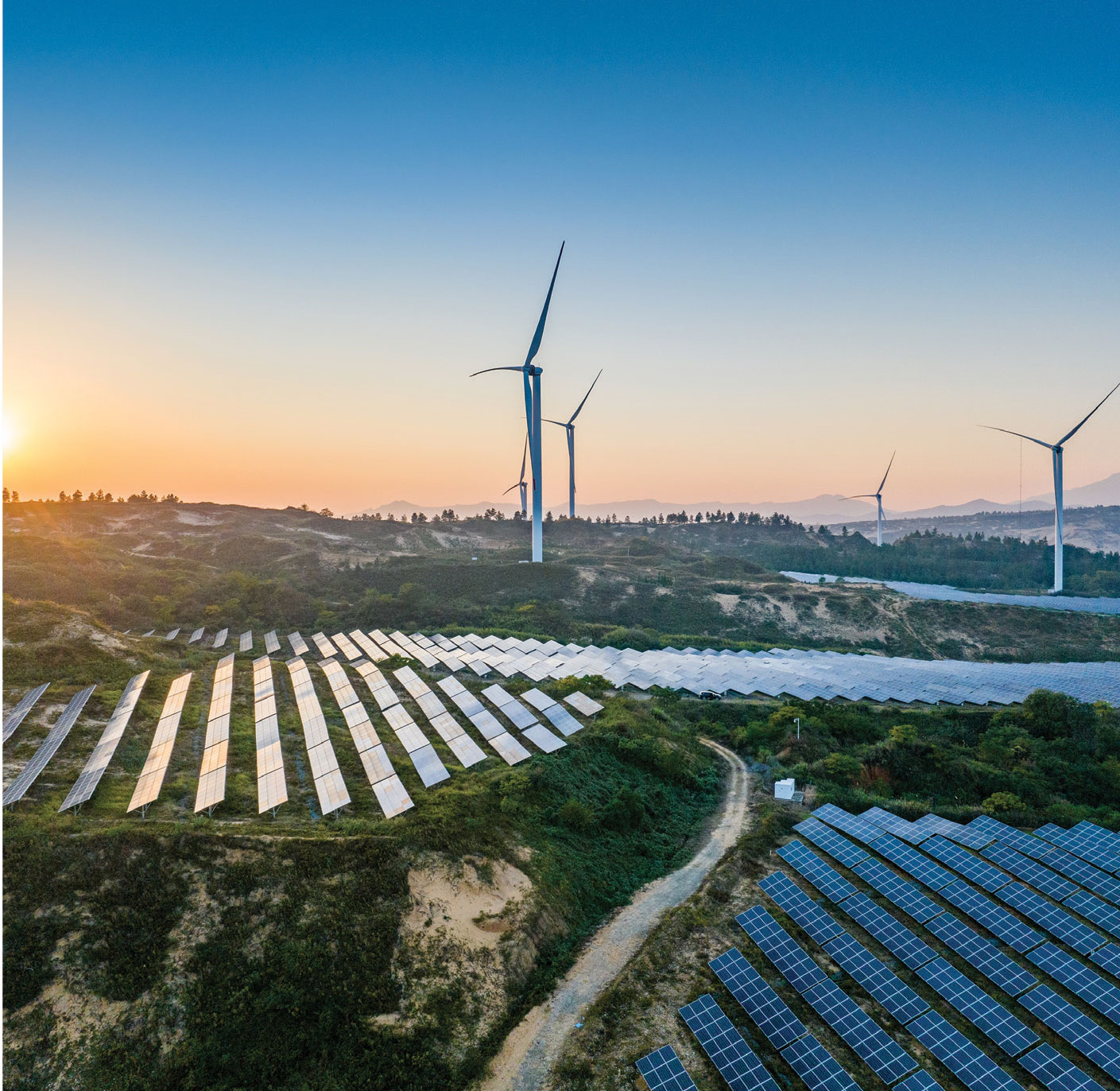 Oman’s electricity demand is projected to rise steadily in the medium term, driven by ongoing economic activity, expansion of industrial loads and new infrastructure developments.
To meet this demand, OETC’s latest Five-Year Annual Transmission Capability Statement (2025-29) projects an addition of 7,874 MW of new capacity up to 2029, with contracted or under-tendering solar (2 GW) and wind (1.46 GW) contributing 44 per cent. Conventional power generation addition remains part of the near-term strategy, with plans to add 2.4 GW of combined cycle gas turbine (CCGT) power plants, primarily to provide firm capacity that can balance increasing shares of variable renewables. An 80 MW capacity from diesel engines is also expected to be added to support peaking and backup needs in select areas. Another 1,934 MW of future capacity (mostly renewable energy) is proposed to be added in 2028 (434 MW) and 2029 (1,500 MW), but the details of this are not available, as it is yet to be tendered. Accounting for this would take the share of renewables in the planned capacity addition to over two-thirds.
The state-owned Nama Power and Water Procurement (PWP), the country’s single buyer of power and water for all IPPs and independent water and power plants, is actively undertaking the tendering process for several power projects, including the planned CCGT projects (2.4 GW Misfah and Duqm), the Barka waste-to-energy project (up to 100 MW), and the Al Kamil solar IPP (280 MW) in addition to about 1 GW of wind IPPs at Duqm, Sadah, Mahout and Jaalan Bani Bu Ali. It recently signed two power contracts, for the 500 MW Ibri-III solar IPP (which includes 100 MWh of battery storage) and the 125 MW Dhofar-II wind IPP.
The way forward
Oman’s power sector is evolving rapidly, marked by substantial renewable energy deployment, large-scale transmission upgrades and a clear strategic vision underpinned by the Vision 2040 document. The country’s forthcoming solar and wind power projects, combined with the extensive grid reinforcements planned by OETC, including the landmark RABT interconnector, will enable Oman to integrate GWs of new clean capacity, strengthen nationwide system reliability, unlock resource-rich regions, and meet growing demand across industrial and urban centres. The country’s efforts are further supported by innovative financing tools and regional interconnection projects that expand cross-border trading potential. Together, these initiatives signal a decisive shift towards cleaner energy, reduced carbon intensity and long-term energy security, reinforcing Oman’s emergence as a regional leader in renewable energy integration and grid modernisation.


