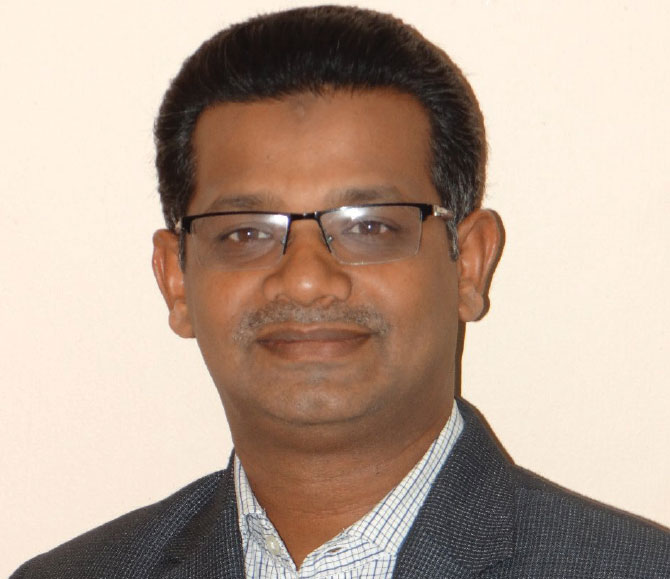
In a recent interview with Renewable Watch, Arif Aga, Director, SgurrEnergy, discussed the company’s role in strengthening the bankability and performance of renewable energy projects through independent engineering and technical advisory services. He highlighted SgurrEnergy’s end-to-end involvement across the project lifecycle and its rigorous, evidence-based due diligence for lenders and developers. Aga noted the growing shift toward wind-solar hybrids, solar plus battery energy storage systems (BESS), and firm and despatchable renewable energy (FDRE) projects as India prioritises grid-supportive power. He also emphasised the importance of robust grid integration, realistic assumptions and quality execution. Leveraging global experience and AI-driven tools, SgurrEnergy aims to enhance reliability, compliance and long-term asset value. Edited excerpts…
 Could you give a brief overview of SgurrEnergy’s key services in the renewable energy sector in India?
SgurrEnergy operates as a specialised engineering and technical advisory firm focused on enabling reliable, grid-compliant renewable assets across India’s rapidly evolving energy landscape. We support the entire project lifecycle – from conceptualisation and feasibility to detailed engineering, construction monitoring and long-term performance evaluation.
We work closely with lenders, developers, independent power producers (IPPs), contractors and equipment manufacturers globally, providing technical assurance, risk visibility and performance insights that drive investment and operational decisions. Our offerings span resource assessment, plant design and optimisation, grid interconnection studies, environmental impact assessments, technical due diligence, lenders’ and owners’ engineering, hydrology studies, quality assurance (QA)/ quality control (QC) audits, inspection services and advanced performance diagnostics.
With over 23 years of engineering leadership and 185 GW of global project experience across more than 55 countries, we bring analytical depth supported by high-resolution simulation tools and multi-dimensional risk evaluation frameworks.
What role do you play in making renewable projects more bankable and how do you conduct due diligence?
Bankability rests on engineering certainty, transparent assumptions and a clear understanding of long-term risks. SgurrEnergy’s due diligence methodology is designed to give lenders, investors and developers a defensible, evidence-based assessment of asset performance and financial viability.
Our process begins with a deep evaluation of site conditions, resource variability, technology suitability and grid evacuation readiness. We review design maturity, structural and electrical robustness, degradation behaviour, energy yield estimates, and system losses using stringent global benchmarks. Engineering, procurement and construction (EPC) capabilities, original equipment manufacturers’ track record, contractual guarantees, and operations and maintenance (O&M) preparedness are examined to determine the project’s resilience over its entire lifecycle.
Our due diligence goes beyond documentation; it is a diagnostic assessment grounded in insights from over 185 GW of global experience. We validate whether a project’s design assumptions are realistic, risks are mitigated and long-term performance expectations are achievable.
For lenders and investors, this translates into clear visibility on technical risk and financial exposure. For developers, it ensures that their assets move from concept to financing with engineering integrity and confidence.
What are the key factors that determine the performance and reliability of renewable energy projects?
The performance and reliability of renewable energy projects depend on three interconnected pillars: accurate inputs, robust engineering and consistent execution. Any deviation in these areas compounds into long-term performance loss.
High-quality resource modelling; realistic assumptions for soiling, temperature and degradation; and precision in structural and electrical design set the foundation of high-performing assets. Technology choices – modules, trackers, inverters and now battery systems – must be aligned with local climatic stresses such as extreme heat, corrosive environments and wind events.
Grid readiness plays an equally critical role. Compliance with dynamic grid codes, reactive power capability, protection coordination, fault ride-through behaviour, and substation design all influence plant stability, especially as India’s grid integrates higher renewable penetration. Long-term reliability is shaped by construction quality, factory-level QA/QC, O&M rigour and continuous monitoring.
SgurrEnergy integrates these elements using advanced simulation tools, detailed engineering, inspections and performance analytics, ensuring assets deliver predictable output, withstand operational stresses and maintain reliability throughout their lifecycle.
Which project types are seeing the strongest demand today (utility-scale solar, wind-solar hybrid, solar + BESS, FDRE) and why?
India’s renewable market is shifting from capacity addition to despatchable, grid-supportive power. As a result, the strongest demand today is seen in wind-solar hybrids, solar + BESS and FDRE configurations.
These formats deliver improved peak management and compliance with emerging round-the-clock (RTC) requirements – capabilities increasingly prioritised by discoms, industries and corporate offtakers. BESS adoption is accelerating due to intermittency challenges, curtailment concerns and the development of ancillary service frameworks.
Standalone utility-scale solar continues to expand, but developers are increasingly designing these assets to be storage-ready. Early-stage activity is also growing in renewables linked to green hydrogen, driven by industrial decarbonisation targets.
With the recent surge in storage to address grid intermittency, how do you support clients in addressing grid integration and variability?
Integrating storage to address grid intermittency requires system-level engineering at – not just pairing batteries with solar or wind. SgurrEnergy’s approach begins with comprehensive power system studies to predict how the plant and the grid will behave under normal, stressed and contingency scenarios.
We conduct load flow, dynamic stability, transient, fault-level, harmonic and protection coordination assessments. For BESS projects, we model dispatch behaviour, cycling patterns, charge-discharge strategies and control logic interactions between inverters, HV systems and the grid.
Our battery sizing is driven by use cases: frequency response, peak shaving, ramp control, reserve provision, compliance with the Central Electricity Authority codes and hybrid/FDRE obligations. We also evaluate inverter limits, communication reliability and control redundancy to ensure seamless grid-facing performance.
Drawing on storage and hybrid experience across global markets, we help developers achieve stable operation, mitigate variability and unlock value sources such as firming, time-shifting and emerging ancillary service markets.
How does international experience influence your approach in India? Any lessons that Indian developers should know?
Our international track record – over 185 GW across 55 countries provides a deep bank of evidence on what drives long-term performance in diverse climatic, regulatory and operational environments. These insights directly inform the engineering and advisory services we deliver in India.
Globally, the most successful assets are those designed with conservative resource assumptions, realistic degradation models and technology choices matched to climate stressors. Equally important is strict QA/QC at the factory and site level, along with early planning for grid flexibility, including DC oversizing, future storage integration and robust substation engineering.
A recurring global lesson is that underperformance often stems from optimistic assumptions rather than technical failures. India’s highly competitive tariffs heighten this risk, making disciplined engineering essential.
By applying global learnings to Indian conditions, SgurrEnergy helps developers minimise long-term losses, enhance resilience against grid volatility, and build renewable assets that remain reliable, compliant and optimised throughout their operational life.
What type of clients and projects do you primarily cater to?
SgurrEnergy primarily serves as an independent renewable energy consultant with a diverse ecosystem of stakeholders driving renewable energy ambitions, including leading developers and IPPs, international lenders and investors, EPC contractors, and equipment manufacturers. Our projects span the full spectrum – utility-scale solar PV, wind-solar hybrids, solar + BESS integrations, FDRE/RTC schemes, floating solar and emerging green hydrogen pilots. With over 23 years of specialised engineering focus and experience with more than 185 GW of capacity globally across over 55 countries, we deliver independent, technically rigorous advisory that de-risks investments and optimises performance.
How is SgurrEnergy incorporating digital tools or AI into its services?
At SgurrEnergy, digital transformation is integral to elevating engineering precision and project outcomes. We are actively integrating generative AI for automated design optimisation, cost reduction and rapid scenario modelling; machine learning algorithms for predictive maintenance and performance forecasting; and geospatial analytics for enhanced quality management, risk assessment, and energy yield predictions. Advanced data analytics enable real-time plant monitoring, fault detection and degradation analysis, while AI-driven tools support grid integration studies and battery dispatch optimisation. Drawing from our global experience, these technologies reduce uncertainties in resource assessment, minimise construction risks and extend asset life, delivering measurable value in high-stakes FDRE and hybrid projects.