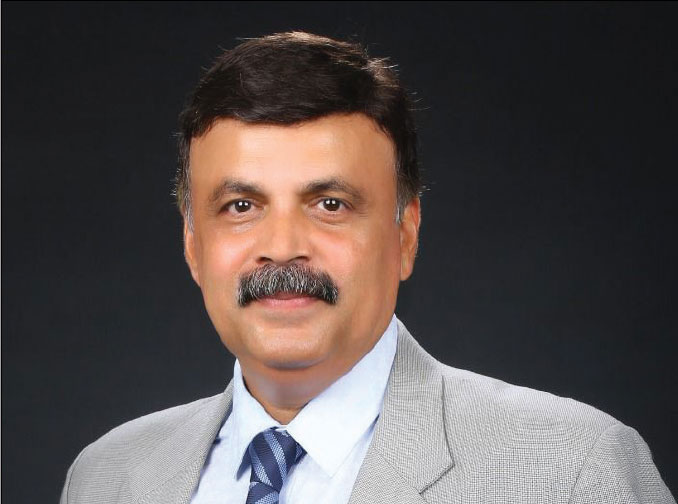
India’s renewable energy ambitions have created a vibrant ecosystem of companies across the renewable value chain, comprising manufacturers, developers, and engineering, procurement and construction (EPC) players. EPC players play a central role in the on-ground execution of projects. Kshema Power is one such EPC firm that works across wind, transmission and, more recently, wind-solar hybrid projects. In an interview with Renewable Watch, Ranjith Nair, Director, Global Expansion and Strategy, Kshema Power, talks about the company’s position in the renewables value chain, the company’s approach to site selection and resource assessment for wind and solar, its stance on storage and hydrogen, and the importance of bringing the infrastructure EPC community into policy conversations for successful project implementation. Edited excerpts…
 How would you briefly describe Kshema Power’s current business focus and portfolio?
Kshema Power essentially conducts the infrastructure EPC for utility-scale wind projects and increasingly, for wind-solar hybrid projects. Historically, the company operated as a back-end partner to original equipment manufacturers (OEMs), doing everything other than the supply of the turbine itself; and over the past five to seven years, the company has moved to work directly with independent power producers (IPPs). Our core offerings include resource analysis, micro-siting, land procurement, right of way (RoW), constructing pooling lines and substations as well as high voltage transmission where required. We also upgrade receiving substations, adding transformers, air-insulated switchgear (AIS) or gas-insulated (GIS) switchgear equipment as necessary. We also undertake civil and electrical works required to interconnect projects with the grid. While wind remains our niche because of the specialised foundations and dispersed land parcels it requires, we have added solar to the portfolio where hybridisation or round-the-clock renewable power is sought.
How do you structure EPC contracts to fast-track commissioning targets while protecting margins?
The contractual approach has changed materially with the switch from the feed-in tariff (FiT) regime to competitive bidding. In the FiT era, OEMs often offered full EPC, including turbine supply; and margins and contingencies were embedded in that package. When competitive bidding forced tariffs down, financiers and OEMs looked to unbundle scope to protect margins. That created the opportunity for specialised EPCs like us to take scope directly from IPPs.
How does Kshema structure project financing and risk-sharing with developers and lenders?
Since Kshema is primarily an EPC company rather than an IPP, financing is usually working capital driven and arranged against advances and milestone billing. An IPP provides an advance to mobilise our payment cycle and it is tied to milestones – releasing working capital as the project progresses. We sometimes use our own funds or short-term loans to bridge timing gaps, but typically the client’s payment schedule supports the execution.
How do you approach site selection and resource assessment differently for wind versus solar to reduce any execution risk?
Solar is comparatively straightforward – irradiation is a fairly universal and well-mapped parameter. Besides, there are many consultants and software suites that do good micro-level assessment. For solar, we evaluate irradiation, alignment, module type that can be used (bifacial or otherwise) and the expected yield.
However, wind poses a different challenge, particularly because of its more intermittent nature compared to solar. We deploy wind masts to gather on-site measurements. The minimum data set for a credible extrapolation is about one year. We use industry standard softwares such as WASP, etc. to model the yield. Climate shifts are changing wind patterns in some regions, hence, we introduce conservative contingencies and cross-check yields against recorded data with long-term regional patterns as well as experience from legacy projects.
What key performance indicators (KPIs) do you track for project accomplishment?
Our KPIs are largely milestone-driven and tied directly to the project contract. The end objective is clearly defined from the start, because delays have implications in terms of liquidated damages and contractual obligations. In the case of government projects, there are also strict timelines that must be adhered to.
Within these timelines, we track KPIs across several critical areas. One of the most important is land procurement. Each parcel of land has a defined size and a fixed deadline by which acquisition or leasing must be completed. This process has become relatively smoother in recent years, as government norms have evolved to allow long-term land leasing. Many landowners prefer leasing their land for 30 or 40 years rather than selling it outright and the acceptance of these arrangements has helped us maintain land-related KPIs more effectively. Procurement and delivery of equipment is another key focus area. Long-lead items are ordered well in advance to avoid execution delays. Timely delivery of these components is critical to keeping the overall project on schedule.
On the execution side, we have also taken steps to improve control over timelines. Earlier, we depended on rented concrete batching plants or third-party suppliers, which often created delays. To address this, we have invested in our own batching plants. One facility is already operational in Madhya Pradesh and another is being set up in Karnataka. This has helped us streamline execution, reduce dependency on external vendors and maintain tighter control over schedules and KPIs during the post-commissioning phase.
Are you working on hydrogen projects and what is your strategy in this space?
We have international green hydrogen experience. The first large green hydrogen project we executed was in Saudi Arabia, where we formed part of a large consortium delivering wind turbine foundations and solar tracker and panel installation as portions of the EPC. That project has roughly 4 GW of renewable power and a grid-scale battery energy storage system, with a storage capacity of 700 MWh to provide round-the-clock supply to electrolysers.
Green hydrogen is strategically important, but economics and offtake risks are the limiting factors today. Green hydrogen parity with conventional hydrogen will take time, about five to ten years at least, before it becomes a commercially viable mass-market fuel. For Kshema, the approach is selective – participate where there is secured offtake and financial closure, and build capabilities to deliver at the required scale.
How do you manage land, RoW and community engagement during development to minimise delays and social friction?
Community engagement and local development are central to our approach. The first thing we do is socio-economic mapping of the project area to understand people’s lifestyles and needs. We invest in local infrastructure such as roads, water tanks, solar pumps, even school infrastructure. We prioritise HSE (health, safety, environment) norms across all our projects before construction starts, for both the workers as well as the local community. These interventions are not just CSR box-ticking, they are essential to build trust and reduce resistance. They also answer the lender and multilateral expectations when projects are funded by development finance institutions such as the World Bank, or other similar agencies.
How do you coordinate with discoms and transmission companies during construction to expedite grid connectivity?
Grid connectivity is often the single biggest reason projects get delayed or fail to move beyond paper. In India, many projects are bid without firm clarity on power sale agreements, land availability or transmission readiness. As a result, even though GWs are announced, a large portion never reaches implementation. Before bidding we assess whether power sale agreements/power purchase agreements are signed and whether the Central Transmission Utility of India Limited (CTUIL)/Power Grid Corporation of India Limited substation is actually planned and tendered and has realistic timelines. Even after a substation is tendered, large GIS or AIS equipment can take 18 to 24 months to arrive, and this has to be factored into project schedules.
Because we have worked with discoms, CTUIL and state utilities and with decades of experience, we understand how these institutions function in practice, not just on paper. We track implementation of transmission projects, whether they are actually tendered and not just announced, and also that these timelines are achievable. This allows us to give developers a realistic picture and avoid committing to locations or schedules that are unlikely to materialise.
What are the main technical or logistical challenges when delivering large transmission or grid interconnection works for renewable parks?
The biggest challenge is misalignment between central bidding timelines and ground realities at the state and transmission levels. Projects are often awarded with unrealistic timelines, sometimes 18 months, without full clarity on land acquisition, state-level approvals or the readiness of transmission infrastructure. Since land is a state subject, each state has different rules and processes, which adds to the problem.
Transmission infrastructure is another critical bottleneck. Substations and evacuation lines are executed by different agencies and delays there can stall an otherwise ready project. In many cases, developers assume that substations will be ready as planned, but in reality, procurement delays, RoW issues and coordination gaps push timelines out significantly.
Another major hurdle is the issue of regulatory challenges faced during execution. Even today, a utility-scale renewable project can require over 100 permits, most of them linked to land, labour and state-level clearances. These are not issues that policy alone can solve; they require strong coordination among central agencies, state governments, transmission utilities and on-ground executors.
Any closing remarks on the sector’s evolution and the role of EPCs?
The sector has matured in many ways, but a structural gap remains – policy and discourse often exclude the EPC community despite its better understanding of on-site realities. Implementation succeeds not because we have announcements, but because land, RoW, grid reinforcement and local administration align. EPCs understand this well. Policy forums and ministries need to be more inclusive of EPC companies so that the actual obstacles to execution are heard and addressed. If we align planning, financing and execution across manufacturers, developers and EPC companies, India can scale its renewable projects faster and with fewer abandoned pipelines.