

By Karan Sharma
India’s public sector undertakings (PSUs) are central to the country’s ongoing energy transition. At the forefront is NTPC Limited, a Maharatna company and India’s largest power producer. Historically coal-dominated, the PSU has put tremendous effort to diversify into clean energy. The change in business strategy has been supported by the formation of its green energy subsidiary, NTPC Green Energy Limited (NGEL), and further supported by NGEL’s wholly owned subsidiary for renewable energy initiatives, NTPC Renewable Energy Limited (NREL).
Against this backdrop, Renewable Watch delves into the portfolio of NTPC Limited and its subsidiaries, the PSU’s key recent developments in the renewable energy space, financial performance, project partnerships and future plans…
Portfolio of installed generation capacity
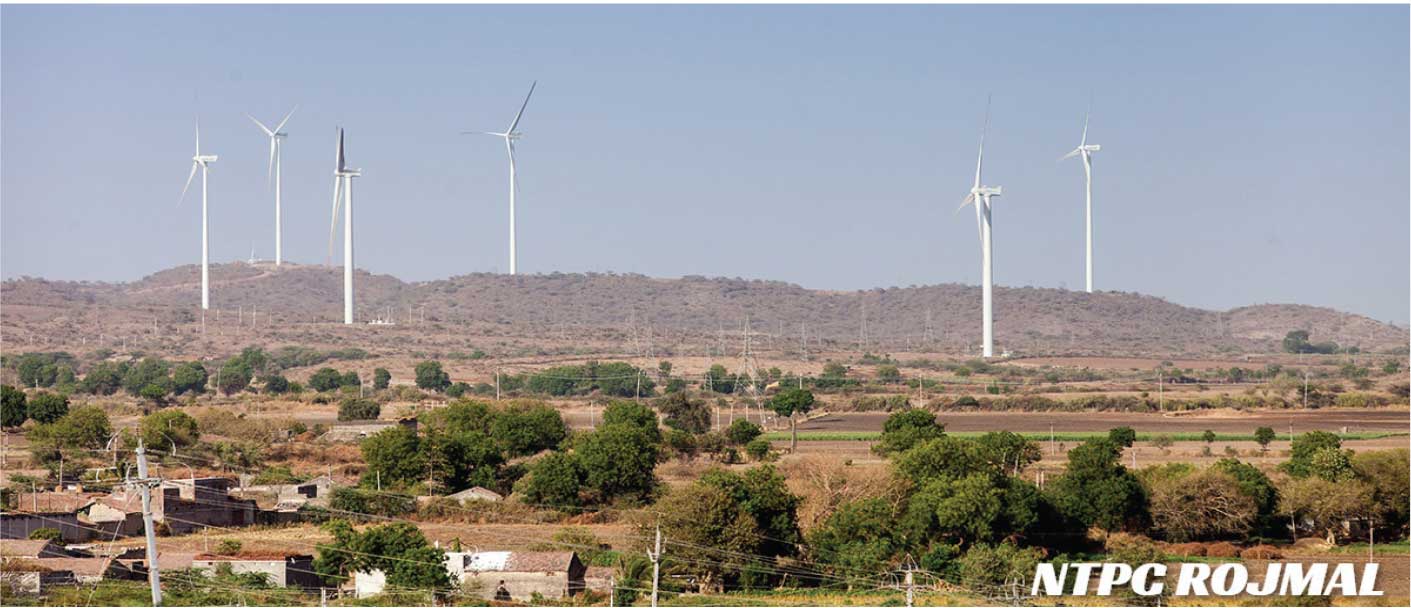
As of July 2025, NTPC Limited’s installed power generation capacity totals 82,836 MW, about 17 per cent of the country’s total installed power capacity. NTPC Limited directly owns 60,978 MW (73.6 per cent), comprising 55,170 MW of coal, 4,017 MW of gas/liquid fuel, 800 MW of hydro, 8 MW of small hydro and 983 MW of solar. The remaining resides with NTPC Limited’s joint ventures (JVs) and subsidiaries. This amounts to a cumulative capacity of 21,858 MW (26.4 per cent), comprising 9,004 MW of coal, 2,494 MW of gas/liquid fuel, 2,925 MW of hydro, 24 MW of small hydro, 6,225 MW of solar, 686 MW of wind and 500 MW of energy storage.
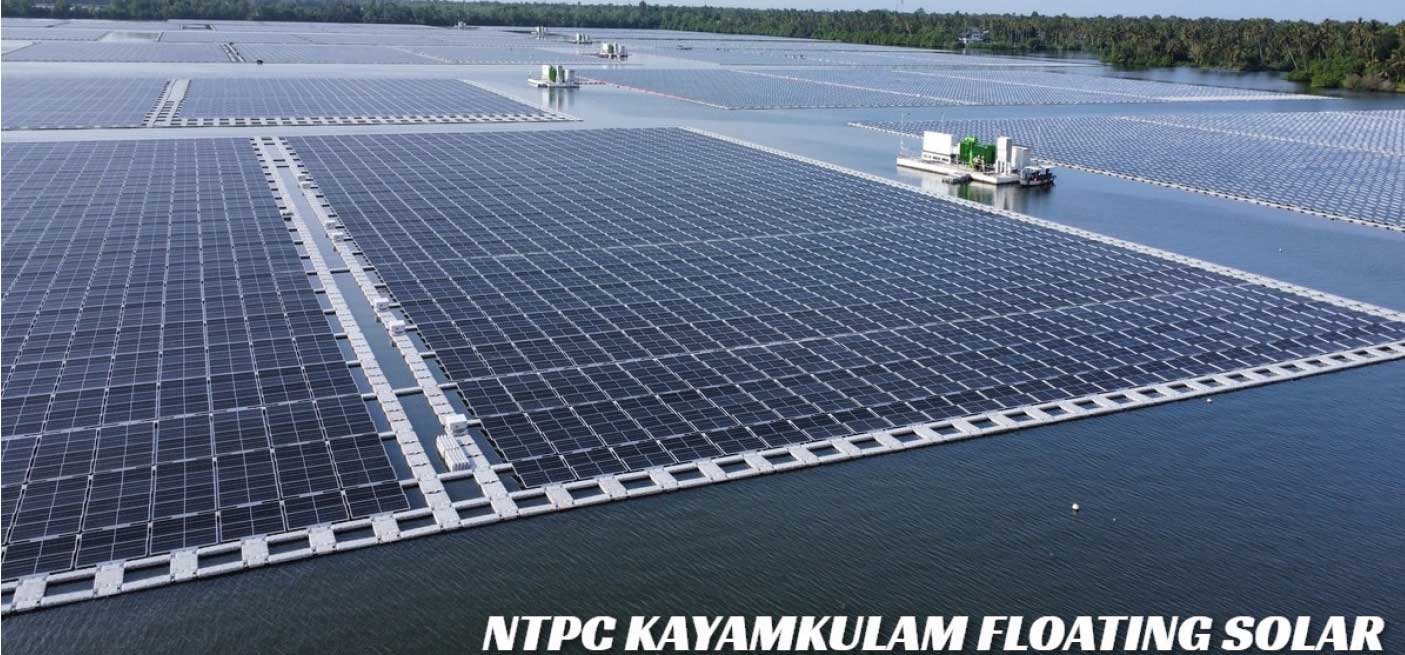
Under its Brighter Plan 2032, the PSU targets 60 GW of renewable capacity by FY 2031-32. NGEL acts as the NTPC group’s lead subsidiary for renewable energy growth through both organic and inorganic routes. Organic capacity addition is planned to be primarily carried out through NGEL’s wholly owned subsidiary, NREL. As of July 2025, NGEL’s overall renewable portfolio comprises around 6 GW of operational, 17 GW of under-construction or awarded, and roughly 9 GW of projects in the pipeline. A major inorganic boost came in February 2025, when NGEL’s JV with Oil and Natural Gas Corporation Limited agreed to acquire Ayana Renewable Power for Rs 195 billion, adding 4.1 GW of operational and under-development solar, wind and hybrid projects to NTPC’s pipeline.
Key recent collaborations with state governments and state agencies
NTPC and its subsidiaries are forging state-level partnerships to expand its renewable portfolio. In February 2025, NGEL signed an MoU with the Madhya Pradesh Power Generating Company to develop 20 GW of renewable energy projects, aiming to support the renewable purchase obligations of the state’s discoms. In March 2025, NTPC, along with NGEL, announced an investment plan of approximately Rs 960 billion for new projects in Chhattisgarh. This includes an MoU with the Chhattisgarh government for the development of 4,200 MW of nuclear power with an estimated investment of around Rs 800 billion, an MoU with Chhattisgarh State Power Generation Company Limited (CSPGCL) for the development of a 1,200 MW pumped hydro storage projects (PHSPs) with an estimated investment of about Rs 58.76 billion, and another MoU with CSPGCL for the development of up to 2,000 MW of renewable energy projects for around Rs 100 billion.
In April 2025, NGEL and Mahatma Phule Renewable Energy and Infrastructure Technology Limited (MAHAPREIT) formed a JV, NTPC-MAHAPREIT Green Energy Limited, with a 74:26 shareholding, to advance projects in Maharashtra. In July 2025, NGEL signed an MoU with Bihar State Power Generation Company Limited to jointly develop solar, wind and battery energy storage system (BESS) projects. In the same month, NREL signed an MoU with the Goa Energy Development Agency to develop 300 MW of clean energy projects in Goa.
Key recent financings for NTPC Limited
To finance its renewables pipeline, NTPC has tapped public markets and equity and debt instruments. In November 2024, NGEL launched an initial public offering (IPO), offering 593 million equity shares at a price band of Rs 102-Rs 108, raising around Rs 100 billion. The IPO proceeds were primarily allocated to NREL, with over Rs 75 billion marked for repaying loans.
In February 2025, the Indian Railway Finance Corporation extended a rupee term loan of Rs 75 billion to NREL for funding the development of 25 GW of renewable energy projects, including solar, wind and hybrid systems, with or without storage, along with 10 GW of PHSPs.
In June 2025, NTPC Limited signed a $750 million, 10-year external commercial borrowing with the IFSC banking units of Bank of Baroda and HDFC Bank located in GIFT City, Gujarat. According to the company, the proceeds from this loan will be utilised to fund capex for ongoing and upcoming renewable and hydro capacity additions.
Furthermore, in July 2025, the Cabinet Committee on Economic Affairs increased NTPC’s investment limit in subsidiaries as well as other JVs from Rs 7.5 billion to Rs 20 billion for renewable energy capacity addition. The move is expected to enable faster capital deployment, large-scale renewable energy storage and green hydrogen projects.
Financial performance
In FY 2024-25, the NTPC group reported revenues of approximately Rs 1,700.37 billion, with a consolidated profit after tax (PAT) of Rs 196.48 billion. Further, in the first quarter (Q1) of FY 2025-26, NTPC recorded a rise in consolidated net profit, rising up to Rs 47.74 billion from Rs 45.1 billion in Q1 FY 2024-25. Additionally, the company’s revenue and expenses for Q1 FY 2025-26 were reported to be Rs 425.72 billion and Rs 389.96 billion respectively.
Meanwhile, in Q1 FY 2025-26, NGEL reported revenue from operations of Rs 6.8 billion and a total income of Rs 7.51 billion. Total expenses for the quarter were Rs 4.92 billion, while PAT for the period was Rs 2.2 billion. For FY 2024-25, NGEL recorded revenue of Rs 22.09 billion from operations, while total income stood at Rs 24.65 billion. Expenses totalled Rs 18.11 billion, while PAT was Rs 4.74 billion for FY 2024-25.
NTPC’s expanding clean energy and storage portfolio: Green hydrogen, BESS, PSPs, biomass, hybrids and power trading
Apart from solar, wind and hydro, NTPC Limited and its subsidiaries have diversified into several other clean energy and storage sectors both as a developer and as a tendering agency. All in all, between January 2025 and July 2025, NTPC floated tenders for projects of more than 4,400 MW of renewable energy capacity. This section covers the recent initiatives of NTPC across green hydrogen, BESS, pumped storage projects (PSPs), biomass co-firing, hybrids and power trading.
Green hydrogen
The PSU has announced multiple pilot and commercial-scale green hydrogen/ammonia tenders and projects. In a big move, NREL recently won the Solar Energy Corporation of India’s green ammonia auction under the Strategic Interventions for Green Hydrogen Transition programme (Mode 2A, Tranche I) to supply 70,000 tonnes per annum of green ammonia at a highly competitive rate of Rs 51.80 per kg. The contracted quantity will be supplied for 10 years to Krishana Phoschem Limited in Madhya Pradesh.
In June 2025, NTPC deployed five hydrogen fuel cell buses in Leh, Ladakh. This follows the commissioning of a green hydrogen mobility station in Leh in November 2024, co‑located with a 1.7 MW solar plant. In April 2025, NREL floated a tender for installing a 2 MW electrolyser at Sipat, Chhattisgarh, as part of its green hydrogen mobility project. In March 2025, it invited bids for hydrogen refuelling stations in Bhubaneswar, Odisha, and Kandla, Gujarat, each including electrolysers and long‑term operation contracts.
In February 2025, it signed a 25‑year power purchase agreement (PPA) with the Indian Army to supply 200 kW renewable energy round-the-clock (RTC) power from a solar‑hydrogen‑based microgrid at Chushul, Ladakh, designed to enhance energy security at remote defence sites. In the same month, NGEL signed an MoU with Bharat Light and Power Private Limited to explore the offtake of green hydrogen and derivatives by third parties.
In January 2025, NGEL signed a JV agreement with New and Renewable Energy Development Corporation of Andhra Pradesh Limited, announcing the Pudimadaka green hydrogen hub in Andhra Pradesh. The hub will include 20 GW of renewables and produce around 1,500 tonnes per day (tpd) of green hydrogen and 7,500 tpd of products such as methanol, ammonia and sustainable aviation fuel. The project involves a $22 billion investment. If successful, it may serve as a benchmark for scaling green hydrogen clusters in industrial and port-adjacent locations. In the same month, NREL invited bids to supply a 1 MW green hydrogen unit in Kandla.
NTPC has also explored the green hydrogen blending space. It signed an agreement with Gujarat Gas Limited to blend renewable hydrogen, produced from NTPC Kawas’s 1 MW floating solar plant, into the piped natural gas network of the Kawas township, starting at around 5 per cent by volume for cooking use. In parallel, the company is advancing hydrogen co-firing pilots at its Kawas, Auraiya and Faridabad gas turbines, with preparations for 5 per cent blending, including on-site solar-powered electrolysers, storage and blending skids.
BESSs and PSPs
To address intermittency issues, NTPC and NGEL have recently moved into the BESS space as well. In January 2025, NTPC invited bids for a proof of concept BESS at the Dadri thermal power station. In February 2025, NTPC Vidyut Vyapar Nigam Limited (NVVN) invited bids for a 250 MW/1,000 MWh standalone BESS on a build own operate model. In May 2025, NGEL floated engineering, procurement and construction tenders for a 250 MW/1,000 MWh BESS project at Kayamkulam, Kerala, and a 130 MW/520 MWh BESS project split between Ramagundam in Telangana (100 MW/400 MWh) and Sipat in Chhattisgarh (30 MW/120 MWh).
NTPC has also explored other innovative storage technologies. In January 2025, NTPC launched India’s first carbon dioxide BESS at its Kudgi station, developed by NTPC’s research and development division, NTPC Energy Technology Research Alliance, in partnership with Energy Dome and Triveni Turbine Limited. The system, with a capacity of 160 MWh, operates on a closed Brayton thermodynamic cycle using anhydrous carbon.
NTPC, through its JV arm, Tehri Hydro Development Corporation India Limited, is advancing the 1,000 MW Tehri PSP on the Bhagirathi river. The variable speed project comprises four reversible 250 MW units. The first unit achieved commercial operation in June 2025, while the second unit entered commercial operation in July 2025. Under its Brighter Plan 2032, NTPC plans to add 20 GW of PSPs, with a target to commercialise 3-5 GW by FY 2031-32. As of June 2025, preliminary feasibility studies have been completed for 18 PSPs, while detailed project reports for four of these are nearing finalisation.
Biomass co-firing
NTPC has accelerated its biomass co-firing programme, having demonstrated safe co-firing of 20 per cent torrefied biomass at its Tanda plant in 2024, the first such trial in India’s power sector. Since 2017, it has sustained 7-10 per cent co-firing of non-torrefied agricultural residues without any boiler modifications. In January 2025, it invited bids for 219,000 tonnes of biomass pellets for the Dadri plant, aiming to cut carbon emissions and support farm residue management. Going forward, NTPC targets 1 million tonnes of biomass co-firing annually by FY2032 and is now also exploring co-firing of torrefied municipal sludge and municipal solid waste to further decarbonise its coal fleet.
Hybrids
NTPC has issued large-scale wind-solar hybrid tenders to facilitate the supply of competitively priced power to the grid. In January 2025, NREL issued a tender for a 1,200 MW solar project with a 600 MW/2,400 MWh energy storage system (ESS). In the same month, its 1,200 MW of wind-solar (Hybrid 02) auction awarded capacity to JSP Green (Jindal Renewables), Adyant Enersol, Green Prairie Energy IV and AMPIN Energy Utility at tariffs between Rs 3.38 per kWh and Rs 3.44 per kWh. In March 2025, its 1,200 MW interstate transmission system-connected wind-solar (Hybrid 03) auction was won by EG Solwin Renewables, Welspun Renewable Energy, NLC India and Adani Renewable Energy at tariffs between Rs 3.35 per kWh and Rs 3.36 per kWh.
Power trading
NVVN, NTPC’s wholly owned trading subsidiary, manages renewable power trading – arranging bilateral and swap power deals, offering solar-bundled RTC products and providing power banking services. NVVN trades on the Indian Gas Exchange, Indian Energy Exchange, Power Exchange India Limited, and across integrated day-ahead/schedule day-ahead markets, term-ahead markets and real-time markets. As a Category I trader under India’s renewable energy certificate (REC)/energy saving certificate (ESCert) framework, it also facilitates REC and ESCert issuance and trading for generators. In FY 2024-25, NVVN renewable trading volumes increased sharply, handling 41.45 BUs of solar and wind power, an 18 per cent year-on-year increase.
Outlook
Going forward, NTPC’s long-term decarbonisation pathway is outlined under its Brighter Plan 2032. By FY 2031-32, the PSU’s total installed capacity is projected to exceed 130 GW, with the renewable share rising to 40-45 per cent. Meeting this target will require annual additions of around 8 GW. NGEL will lead large-scale renewable deployment and strategic investments, while NREL will focus on hybrid, energy storage and green hydrogen projects from pilot to commercial scale.
NTPC also plans to diversify its role in new market segments – achieving a 25 per cent market share in ancillary services and storage and securing 10 per cent in the e-mobility electricity supply business by 2032. Additionally, renewable auctions and large-scale tendering can be expected to remain central to the company’s strategy.
Net, net, NTPC Limited, along with its subsidiaries NGEL and NREL, is helping steer India’s energy transition from conventional coal-based generation to a more renewables and energy storage-heavy grid. Backed by ambitious capacity targets, robust financial performance, strategic partnerships and innovative clean energy initiatives across renewables, storage and green hydrogen, NTPC is well positioned to play a pivotal role in achieving the country’s decarbonisation goals. With its Brighter Plan 2032 road map, NTPC exemplifies how PSUs can drive large-scale energy transformation while fostering sustainability and energy security for India’s growing economy.
(The websites of NTPC Limited and its subsidiaries were last accessed on August 8, 2025, for select data shared in this article.)


