India’s electricity consumption increased from 948,522 GWh in 2014-15 to 1,543,000 GWh in 2023-24, according to “Energy Statistics India 2025” by the Ministry of Statistics and Programme Implementation. Agriculture accounts for 17 per cent of this demand, placing a significant burden on the power sector due to heavily subsidised power from discoms and a significant dependence on diesel for operating irrigation systems. To address this, states are transitioning towards solar-powered agriculture by deploying standalone solar pumps and decentralised feeder-level solarisation (FLS) systems. A brief overview of recent developments in the solar pump segment in two key states − Haryana and Maharashtra.
 Haryana
An agrarian state with a significant contribution to India’s food grain output, Haryana faces an acute water stress crisis. Many of its districts suffer from overexploited groundwater resources, largely due to water-intensive cropping patterns and unrestricted use of subsidised electricity for tube wells. To address this challenge and enhance energy access for farmers, the state has launched its Solar Water Pumping Scheme under the PM-KUSUM scheme to solarise agricultural irrigation.
The Department of New and Renewable Energy, Government of Haryana, is undertaking the large-scale deployment of solar pumps ranging from 3 HP to 10 HP. These solar pumps are offered to farmers at 75 per cent subsidy, with 30 per cent central financial assistance from PM-KUSUM and 45 per cent from the Haryana government. The initiative is aimed at replacing existing diesel-based irrigation systems and reducing dependency on grid electricity. By offering a clean, decentralised power source, the scheme is expected to significantly cut input costs for farmers and improve their incomes.
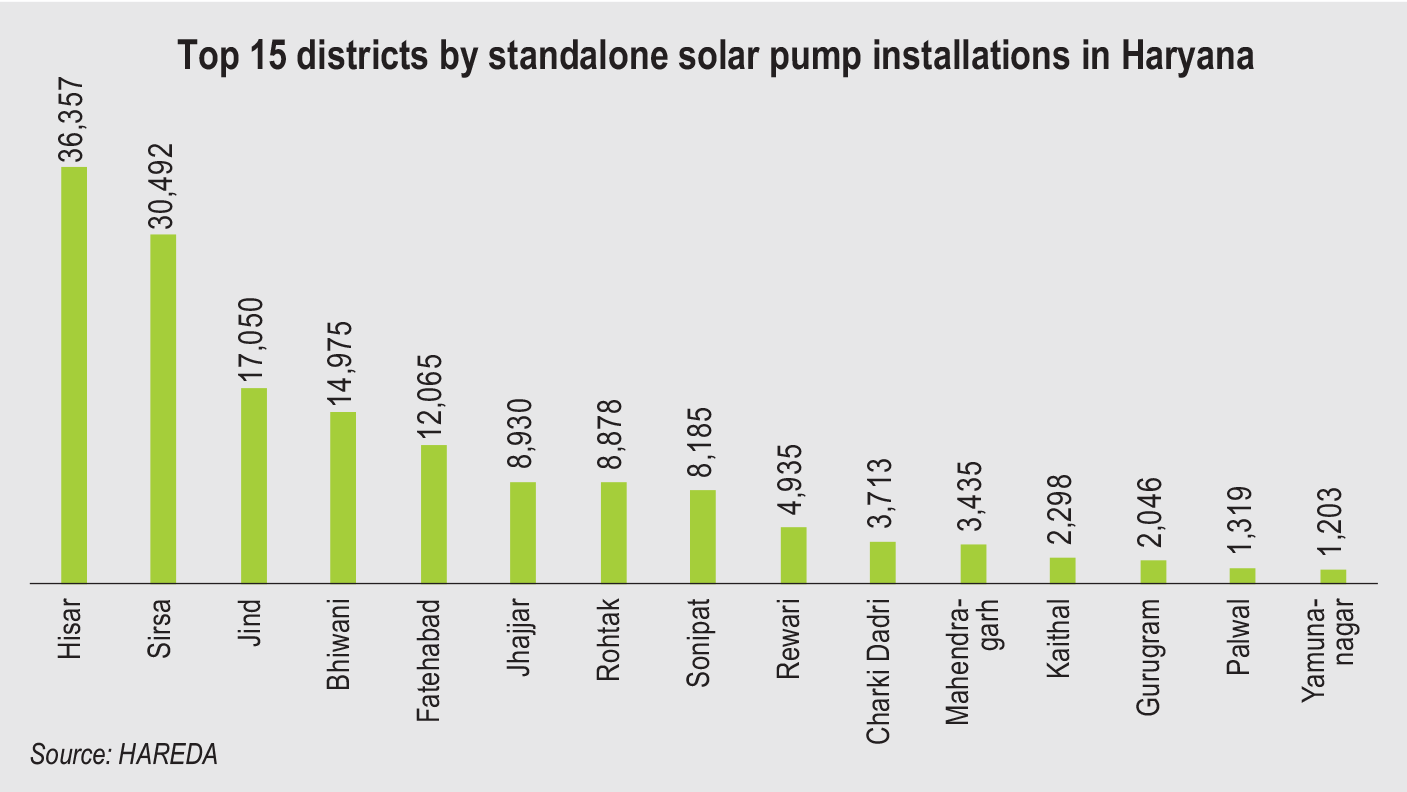
As of mid-2025, Haryana has installed over 157,000 solar pumps, and aims to deploy an additional 70,000 pumps in FY 2025-26. Haryana’s implementation strategy is not limited to standalone pumps; it also includes feeder-level solarisation. Haryana Power Generation Corporation Limited is planning to develop solar plants in each district to power at least two agricultural feeders. A flagship 300-acre solar plant near the 220 kV substation in Ganni Kheda village of Panchkula is being considered a model for clean feeder-based irrigation.
This integrated approach has multiple benefits. It helps reduce the fiscal burden of agricultural electricity subsidies, curbs emissions from diesel use and improves power supply reliability. It also aligns with Haryana’s broader Integrated Water Resources Action Plan, which aims to cut the groundwater deficit by 50 per cent by 2027. The combination of solar energy and efficient irrigation systems is key to achieving these water and energy goals.
Key recent developments
- In November 2024, HAREDA awarded contracts to install 17,458 solar water pumping systems under Component B of the PM-KUSUM programme. Notably, Shakti Pumps secured a contract for 3,174 pumps, AVI Appliances for 2,811 and Oswal Pumps for 2,539. Furthermore, 19 other companies were awarded contracts for 3,243 pumps. The scheme prioritises small and marginal farmers, and aims to install 2 million standalone solar pumps across India.
- In May 2025, KSB Limited received a letter of award valued at approximately Rs 253.4 million from HAREDA. This covers the design, manufacturing, supply, installation and commissioning of 1,161 off-grid solar PV water pumping systems, with execution planned from the second quarter of the 2025 fiscal.
- In June 2025, HAREDA sanctioned approximately 30,471 systems. In July 2025, the chief minister of Haryana directed a phased solarisation of all agricultural tube wells by identifying plots to host centralised solar arrays connected to feeders.
 Maharashtra
Maharashtra, another key agrarian state, is transforming the way it powers its farms. A large share of the state’s farmers rely on rain-fed agriculture and regularly face the risks associated with droughts and unpredictable rainfall. In this context, solar irrigation has emerged as a practical solution to improve water access, lower input costs and build long-term climate resilience. The state has launched multiple solar irrigation programmes in addition to the the centrally sponsored PM-KUSUM scheme. State-led initiatives include the Mukhyamantri Saur Krushi Pump Yojana (MSKPY) and the Mukhyamantri Saur Krushi Vahini Yojana (MSKVY).
The MSKPY was launched in 2019 to replace 100,000 diesel pumps. That target was achieved by mid-2022, helping the state reduce both its fossil fuel consumption and its import bill. By lowering exposure to volatile diesel prices, the scheme has provided greater energy security to small and marginal farmers.
Maharashtra is also scaling up its feeder-level solarisation through MSKVY 2.0. This involves setting up decentralised solar power plants near distribution substations to supply daytime power to entire agricultural feeders. Traditionally, farm power in Maharashtra was supplied at night on a rotational basis, which posed both safety risks and operational challenges. With solar feeder systems, farmers now get consistent daytime electricity, which boosts irrigation efficiency, reduces transmission losses and improves discom performance.
As of June 2025, Maharashtra has solarised 307,194 pumps out of the 775,000 pumps sanctioned under the FLS. Further, under Component B of PM-KUSUM, the state has installed 419,825 pumps out of 555,000 standalone solar pumps sanctioned as of June 2025. Going forward, Maharashtra plans to solarise 30 per cent of its agricultural feeders by the end of 2025.
Key recent developments
- In December 2024, Shakti Pumps received an order worth Rs 7.543 billion to supply and install 25,000 standalone off-grid DC solar pumps under Maharashtra’s “Magel Tyala Saur Krushi Pump” scheme, aligned with PM-KUSUM objectives. CRI Pumps too won a Rs 7.54 billion contract in January 2025 for another 25,000 systems.
- In April 2025, Shakti Pumps secured an additional Rs 124.2 million order for 445 off-grid solar pumps from the Maharashtra Energy Development Agency (MEDA). Subsequently, in June 2025, the company was awarded a larger Rs 1.1458 billion order from MEDA to deliver 4,500 systems within 90 days.
- Further, in June 2025, MEDA awarded Crompton Greaves Consumer Electricals a Rs 1.01 billion contract for 4,500 off-grid solar pumps.
- To improve after-sales service, Maharashtra State Electricity Distribution Company Limited launched a dedicated helpline and portal in June 2025 to handle system faults, theft and weather damage. Notably, all systems are now insured, with mandatory three-day repair commitments.
Conclusion
Developments across Haryana and Maharashtra demonstrate how state-level innovation can drive solar irrigation uptake in diverse agro-climatic contexts. Their approaches, grounded in decentralised solar infrastructure, targeted subsidies and customised scheme design, offer valuable lessons for other regions. These efforts have led to significant progress, with large-scale deployments helping reduce carbon emissions, improve irrigation reliability and ease the rural power subsidy burden. However, challenges persist. These include groundwater depletion, affordability concerns, service gaps, implementation bottlenecks, theft, weather damage and maintenance issues. Going forward, the transition from diesel and grid-based irrigation to solar must be accelerated through deeper structural reforms, innovative financing and local capacity building. As agricultural electricity demand increases, continued support for solar solutions will be key to ensuring energy security, environmental sustainability and inclusive rural development across states.