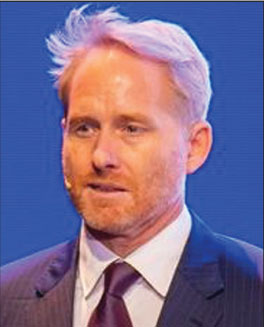
 In an interview with Renewable Watch, Damian Miller, Co-founder and Chief Executive Officer, Orb Energy, discussed the company’s portfolio, cost and payback trends for rooftop solar projects, in-house financing model, and the policy and regulatory challenges in the segment. He also shared Orb Energy’s experience with open access solar parks, residential rooftop solar and solar water heaters, and outlined the company’s plans to scale up to over 1 GW by 2030. Edited excerpts…
What inspired you to venture into the C&I solar segment and what is your current portfolio?
The motivation to launch Orb Energy in 2006 stemmed from a clear opportunity in the off-grid solar market, which was then underserved but commercially viable due to unreliable power supply in many areas. At that time, although the cost of solar was significantly high – around $4 per watt – there was a compelling use case for solar in off-grid applications. My co-founder and I, both coming from Shell Solar, saw a chance to build a business when Shell exited the solar sector. We anticipated that photovoltaic (PV) costs would eventually fall and that India’s growing energy demand would align well with the scalability of solar. This foresight proved accurate as solar costs dropped and net metering policies took hold around 2011-12, paving the way for grid-connected applications. Since then, Orb Energy has evolved its strategy, focusing primarily on commercial and industrial (C&I) customers.
As of now, our portfolio has surpassed 300 MW and we are growing rapidly. Last year, we installed 60 MW and we are targeting to install a total of 100 MW in FY 2025-26. Today, 90 per cent of our portfolio serves C&I clients directly, while the remaining 10 per cent is in the residential sector, which we serve through a dedicated channel partner network.
Within the C&I space, do you focus more on on-site rooftop solar or off-site open access models?
Our strength lies in rooftop solar for small and medium-sized enterprises (SMEs), where we have adopted a capex-driven model from the beginning. Given our off-grid background, we found that SMEs preferred to own their systems rather than lease them, and this aligned well with the commercial realities of the segment. Over the past decade, as solar PV prices have declined, the rooftop solar market has now naturally shifted from being opex-dominated to capex-led. Currently, it is closer to an 80:20 split in favour of the capex model. We support SMEs by not only installing solar systems but also financing them. Uniquely, we are also a solar module manufacturer that offers in-house financing on our own balance sheet. This vertically integrated approach – from manufacturing to financing and servicing–helps deliver a seamless customer experience and distinguishes us in the Indian market.
Could you elaborate on your financing model and how it enables SME customers to adopt solar under the capex framework?
Our financing model is best described as “deferred capex”, a term that has gained traction in the industry. It allows customers to pay for their systems over five years through monthly EMIs. What makes our offering particularly attractive is the provision of zero down payment and zero collateral, subject to a credit assessment. This is a significant advantage for SMEs, especially when banks typically require collateral and can take several months to process loans. In contrast, we can complete the financing within seven days of receiving the necessary documents. While our interest rate is slightly higher than that of banks—around 12 per cent compared to the typical 9 per cent—it is offset by the ease and speed of access. Consequently, we have seen rising adoption of our financing solution, with uptake crossing 50 per cent in certain states last year, up from the historical average of 25-30 per cent.
How have cost trends and payback periods evolved for rooftop solar in the C&I segment?
The fall in global PV prices during FY 2024-25 significantly improved payback periods for rooftop solar systems. Although tariffs vary across states, the payback period for an SME customer in Maharashtra, where the effective grid electricity tariff is around Rs 10.5 per unit, is now under two years. In lower-tariff states such as Odisha, the payback period may stretch to three or four years, but the average remains around three years nationwide. More importantly, our financing model ensures that monthly savings exceed EMI payments from day one. As a result, customers effectively begin saving money immediately and benefit from free electricity for the remaining life of the system after the payback period. This makes rooftop solar an extremely compelling proposition for SMEs, although the key challenge remains persuading SME proprietors to prioritise the investment amidst their day-to-day operational concerns.
What policy and regulatory challenges do you face, especially from discoms who may be reluctant to support rooftop solar for C&I customers?
The resistance from discoms is a well-known issue, particularly regarding the promotion of rooftop solar in the C&I segment. Some discoms see C&I solar as a threat to their revenue and respond by imposing restrictive caps on system size or delaying approvals. For example, in Maharashtra, there are ongoing attempts to tweak policy frameworks in favour of discoms. However, while challenges exist, rooftop solar still works across all states, even in configurations where there is no export to the grid. In Karnataka, for instance, we find a very supportive environment with no cap on system size beyond the sanctioned load, and the policy has remained consistent over the years. Conversely, states such as Gujarat and Tamil Nadu impose additional charges or long approval timelines, making them less friendly to solar developers. Nevertheless, we have been able to navigate the policy landscape in all our operating states in southern and western India, despite occasional hurdles.
How does Orb Energy approach the residential rooftop market and which states are showing promise?
Residential solar is not a strategic focus for us but rather a supplementary segment that we serve through our channel partner network. We delegate residential installations, including those under 100 kW, to partners who manage the transaction and grid synchronisation, making the model economically viable. Among states, Karnataka shows a strong growth in residential installations, with Maharashtra, Andhra Pradesh and Odisha also gaining momentum. Although we are committed to serving residential customers and maintaining high satisfaction levels, our core strategic focus remains the SME segment within the C&I market.
What impact has the PM Surya Ghar scheme had on residential solar adoption?
The PM Surya Ghar scheme has undoubtedly fuelled growth in the residential solar sector. It has spurred a notable uptick in interest and installations, particularly benefiting our channel partners, who report an influx of inquiries and successful projects. From the perspective of residential consumers, it has been a positive development, making solar more accessible and attractive.
How do solar water heaters fit into your business model?
Solar water heating was a significant part of our business in the early days when solar PV was prohibitively expensive. At that time, thermal applications offered a viable alternative. While the segment’s relative importance has diminished over the years, we continue to offer solar water heaters, particularly for customers who still value the product. These are again distributed through our channel partners. Although heat pumps and other electric alternatives are gaining ground, we still see demand in both residential and commercial segments. The product now serves more as a legacy offering than a core focus.
How are your customers’ expectations evolving? Are you seeing demand for storage or round-the-clock renewable solutions?
Indeed, we have seen a shift in demand as rooftop systems alone often meet only 20-25 per cent of an SME’s energy needs. To address this, we ventured into the ground-mounted open access segment around four years ago. However, we approached it differently from the typical group captive model. In our solar parks, such as the 30 MW DC park in Sikeri, Karnataka, we subdivide the land into 2.5 MW plots, each tailored to an SME. These SMEs own the sub-arrays and the land beneath them, financed either by us or through their preferred banks. This model offers asset ownership and accelerated depreciation benefits to the customer, while avoiding the complexities of group captive arrangements. The success of our first solar park has led us to develop a second one in Gulbarga, Karnataka. We plan to roll out similar parks in other states with funding from our upcoming Series D round.
Could you throw some light on your funding strategy and future capacity targets?
We are in the process of raising over $20 million in an equity round, as part of our Series D funding. This capital will support the development of additional solar parks and bolster our in-house financing capability. Going forward, our internal goal is to exceed 1 GW of installed capacity by 2030.