 By Karan Sharma
India’s green hydrogen ambitions are advancing through sector-specific initiatives under the National Green Hydrogen Mission (NGHM), which targets the production of 5 million metric tonnes (mmt) of green hydrogen annually by 2030. To achieve this, India plans to add around 125 GW of renewable energy capacity and install 60-100 GW of electrolyser capacity dedicated to hydrogen production. These initiatives aim to reduce 50 mmt of carbon emissions annually, save Rs 1 trillion in imports and attract investments worth Rs 8 trillion.
Achieving the NGHM’s goals requires significant investments not only in green hydrogen production but also in the infrastructure needed for its transportation, storage and industrial integration. This is especially crucial for energy-intensive sectors like steel, railways, and oil and gas (O&G), which are major contributors to India’s industrial emissions. These sectors are crucial for industrial decarbonisation, and green hydrogen adoption depends on scaling renewable energy, electrolyser plants and logistics networks.
Against this backdrop, Renewable Watch delves into the current status, recent developments and policy updates shaping the integration of green hydrogen in India’s steel, railways and O&G sectors, followed by a future outlook on large-scale adoption…
Green hydrogen in the steel sector
Current status
The steel sector in India accounts for 10-12 per cent of the country’s industrial carbon emissions, as per the Climate Policy Initiative. Replacing coke and coal with green hydrogen as a reducing agent in direct reduced iron (DRI) furnaces and in electric arc furnaces (EAFs) can significantly reduce emissions. As per the “Role of Green Hydrogen in Indian Steel Sector” whitepaper released by EY-Parthenon and WWF-India in April 2025, the the hydrogen-based DRI-EAF process can reportedly reduce emissions by about 90 per cent.
According to the presentation by Naveen Ahlawat, head, green hydrogen, Jindal Steel and Power Limited, at Renewable Watch’s 9th Annual Conference on Green Hydrogen in India, steel decarbonisation requires a combination of renewables, circularity and low-carbon hydrogen measures across the value chain, spanning from mines to metal. A significant quantity of hydrogen is required to reduce iron ore to iron, particularly using the DRI-EAF route, which demands high-grade pellets and continuous, low-cost renewable supply. He also highlighted the scalability limitations due to constrained DRI-EAF construction capabilities and the need for robust upstream and downstream integration. He further stated that transitioning to green steel could halve a passenger car’s carbon footprint, as steel and aluminium make up 70 per cent of a car’s weight.
Further, green steel can lead to a reduction in emissions intensity. As per the “India Energy Scenario for the Year 2023-24” report released by the Ministry of Power in December 2024, the iron and steel sector has achieved its emission intensity reduction targets, lowering emission intensity from 3.1 tonnes of carbon emissions in 2005 to 2.5 tonnes of carbon emissions in 2020.
Industry developments
Several key players in the steel sector have begun the deployment of green hydrogen in their production operations and infrastructure applications. Jindal Steel and Power Limited (JSPL) and Jindal Renewables, in September 2024, announced plans to develop a green hydrogen facility at their Angul plant in Odisha, producing 4,500 tonnes per annum (tpa) of hydrogen, along with 36,000 tonnes of co-produced oxygen, supplying 3 GW of captive renewable energy. Set to be launched by December 2025, this project aims to halve its coal use in DRI operations within 18-24 months.
JSW Steel, as of December 2024, was in the final stages of commissioning a 25 MW electrolyser-driven DRI pilot at its Vijayanagar facility to produce 3,800 tpa of hydrogen, serving as a precursor to a 4 million tpa (mtpa) green steel plant. Additionally, JSW Energy and JSW Steel signed offtake agreements for 90,000 tpa of green hydrogen by 2030, indicating long-term operational integration. Tata Steel, in January 2025, developed API X65 ERW, India’s first hydrogen-grade pipeline steel. These pipes were tested for the transport of 100 per cent pure hydrogen at 100 bar pressure. The company estimates that, to meet the infrastructural and logistical demands of the NGHM, approximately 350,000 tonnes of such hydrogen-compliant steel will be required by 2026-2027.
Policy initiatives
On the policy front, the Ministry of New and Renewable Energy (MNRE) has taken a phased approach to enabling hydrogen integration in steel production. Under the NGHM, a budgetary support of Rs 4.55 billion has been allocated for the implementation of pilot projects in the iron and steel sector till FY 2029-30.
In October 2024, it approved three pilot projects under the NGHM to demonstrate hydrogen use in steel production – a 50 tonne per day (tpd) plant by Matrix Gas and Renewables Limited, a 40 tpd plant by Simplex Castings, and a 3,200 tpd plant by Steel Authority of India Limited at Ranchi. These are the first projects officially sanctioned under the NGHM. Financial assistance of Rs 3.47 billion was provided by the government for these three initiatives, which are slated for commissioning over the next three years. The three pilots are designed to test hydrogen-only-based DRI production using vertical shafts, coke substitution in blast furnaces, and hydrogen injection into shaft-based DRI units. Additionally, the MNRE issued detailed guidelines for these pilots to identify advanced technologies, validate the technical feasibility of green hydrogen-based steelmaking, and assess safety and efficiency.
Green hydrogen in the railway sector
Current status and policy initiatives
Indian Railways, targeting net-zero emissions by 2030, aims to increase the uptake of hydrogen-powered trains. Under the “Hydrogen for Heritage” scheme, Rs 28 billion has already been allocated to develop 35 hydrogen fuel-cell train sets, with an additional Rs 6 billion for establishing hydrogen refuelling and storage infrastructure across five designated corridors. These trains, still in the development phase, are part of a broader strategy aimed at curbing direct carbon emissions from railway operations, which are projected to fall to around 1.37 million tonnes annually by 2025-26 and remain at that level through 2030.
From a regulatory standpoint, some initial policy groundwork has been laid. In February 2025, the Petroleum and Explosives Safety Organisation finalised safety regulations covering hydrogen storage, refuelling depots and onboard systems. These include protocols for leak detection, pressure control, ventilation and emergency evacuation, establishing a safety framework essential for broader deployment.
Industry developments
These plans have begun to take concrete shape through recent industry developments. In March 2025, the Integral Coach Factory completed the first trial of a hydrogen-powered train on the Jind-Sonipat route in Haryana. The train prototype features a 1,200 horsepower fuel-cell engine, with each unit including two hydrogen storage coaches. GreenH Electrolysis, a joint venture between India’s GR Group and Spain’s H2B2 Electrolysis, handled the engineering, procurement and construction of the hydrogen infrastructure at the Jind-Sonipat project. The facility includes a 1 MW proton exchange membrane electrolyser producing 430 kg daily. The train will operate on 1.2 MW fuel cell engines.
 Green hydrogen in the O&G sector
Current status
The O&G sector is one of the largest industrial users of hydrogen, primarily for desulphurisation and hydrocracking processes in refineries. Historically, this hydrogen has been grey, which is derived from natural gas via steam methane reforming and accounts for around 24 mmt of carbon emissions annually in the country, as per EY-Parthenon’s report “How Green Manufacturing is Reshaping India’s Industrial Landscape” released in February 2025.
However, in line with the NGHM, a clear transition towards green hydrogen uptake in the O&G sector is under way. This is being driven by co-located renewable energy generation, infrastructure investment in electrolysis and upgrades in pipeline infrastructure. Going forward, India could reduce carbon emissions by approximately 6.3 mmt by 2035 just by replacing 15 per cent of the hydrogen used in its refineries with green hydrogen, according to EY-Parthenon’s report.
Industry developments
Several PSUs have initiated plans to substitute grey hydrogen with green hydrogen in core refining processes. Indian Oil Corporation Limited (IOCL), in January 2025, issued a tender for a green hydrogen plant with a capacity of 10,000 tpa at its Panipat refinery under the build-own-operate model. The plant is expected to be operational by 2027. In February 2025, Hindustan Petroleum Corporation Limited announced a Rs 1.3 trillion clean energy road map by 2040. It includes plans to ramp up renewable energy capacity from 200 MW to 1,000 MW by 2026, with parallel investment in hydrogen-based refining processes at its Visakhapatnam and Barmer units. Bharat Petroleum Corporation Limited formed a joint venture with Sembcorp in April 2025 to develop green hydrogen, green ammonia and hydrogen bunkering projects, focusing on emissions reduction for port operations and other emerging technologies in green fuels. In May 2025, L&T Energy GreenTech Limited (LTEGL) secured IOCL’s tender to establish a green hydrogen production facility with a capacity of 10 kilo tpa at the Panipat refinery petrochemical complex in Haryana. The facility will be developed on a build-own-operate basis, with LTEGL winning the entire capacity at a rate of Rs 397 per kg.
According to the presentation by Harsh Nupur Joshi, Chief Operations Officer, ONGC Green Limited, at Renewable Watch’s 9th Annual Conference on Green Hydrogen in India in April 2025, ONGC Green plans to achieve net-zero Scopes 1 and 2 emissions by 2038, with an estimated Rs 2 trillion in green investments. Its road map includes installing 10 GW of renewables, developing 180,000 tpa of green hydrogen capacity, and a 2 mmt per annum green ammonia facility in two phases by 2035.
Further, Joshi provided details of ONGC Green’s small-scale biomass-based hydrogen demonstration plant that produces 50 kg of green hydrogen per day at a cost of around $1.2 per kg. Such pilot plants utilise effluent streams and biogenic electrochemical processes to decentralise hydrogen production at oil field sites.
Hydrogen blending in natural gas pipeline
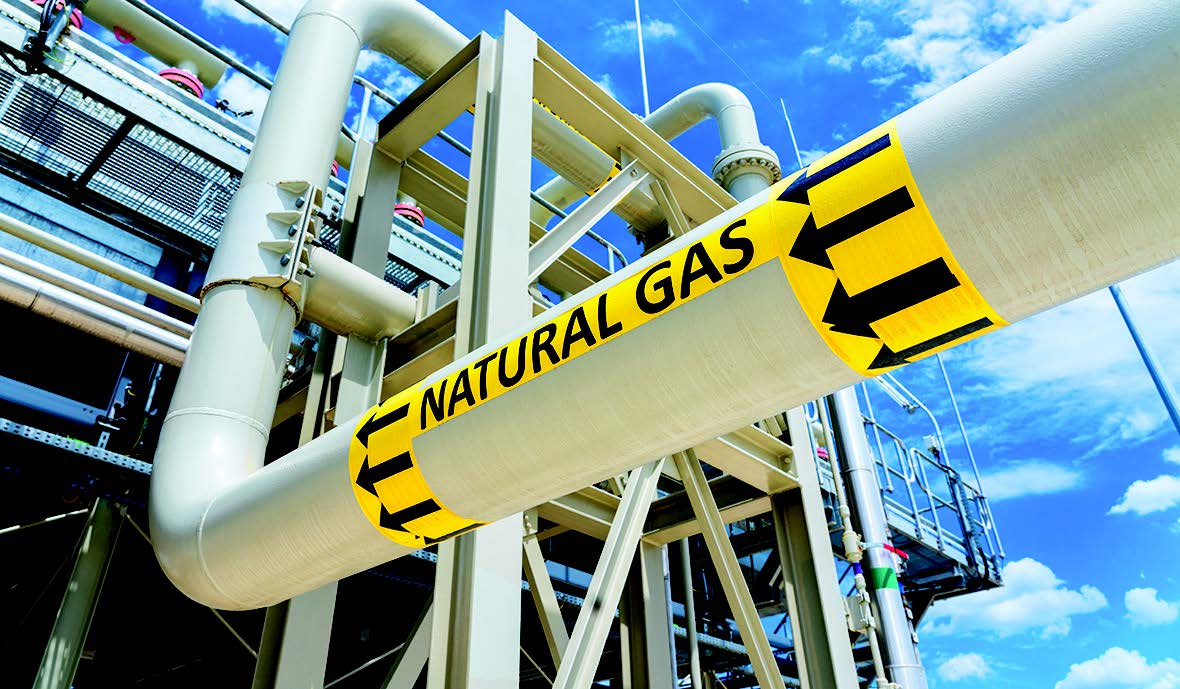
Another initiative to decarbonise the O&G sector is blending hydrogen in existing natural gas networks, with regulatory frameworks under development. The Petroleum and Natural Gas Regulatory Board (PNGRB) is finalising drafts of typical guidelines for hydrogen blending with natural gas, with technical committees evaluating standards for blending up to 10-20 per cent in line with global benchmarks. Approved pilot projects are already testing lower blends, including GAIL (India) Limited and Aavantika Gas Limited’s 2-5 per cent trials in Indore, Gujarat Gas Limited’s 5-8 per cent integration in Surat’s NTPC Kawas network, and Adani Total Gas Limited’s 5 per cent testing in Ahmedabad. To enable scaling, the PNGRB is amending the PGNRB Act, 2006, to formalise hydrogen transmission rules, collaborating with GAIL on testing infrastructure and preparing a road map for dedicated hydrogen pipelines.
Outlook
India’s green hydrogen journey is entering a decisive phase, marked by early project execution and sectoral experimentation across steel, railways and refining. Initiatives ranging from hydrogen-based DRI steelmaking and hydrogen-powered trainsets to refinery blending signal the country’s intent to translate the NGHM from ambition to action.
However, realising the NGHM’s full potential will require India to move beyond pilot-scale activity. Across sectors, the deployment of green hydrogen is constrained by various technological, infrastructural and economic hurdles. In the steel sector, high capex is required to retrofit existing DRI/EAF facilities, and there is inadequate access to high-purity hydrogen and pelletisation infrastructure. The absence of co-located electrolysers further adds to logistical challenges.
For railways, the focus can be on prioritising hydrogen trains for low-volume, non-electrified routes where electrification is economically unviable, while maintaining grid-based electrification on high-density corridors. Support for domestic manufacturing and phased scale-up of train sets will be critical to manage capital costs and build operational viability.
In the O&G sector, more regulatory clarity on blending protocols and capital support for brownfield retrofitting of existing hydrogen production units will be key enablers. Increased investment in decentralised hydrogen generation assets will be key for long-term sectoral
decarbonisation.
The next few years will be pivotal. If sector-specific incentives, infrastructure build-out and regulatory clarity align with industrial uptake, India can not only achieve domestic decarbonisation goals but also position itself as a competitive exporter of green products made from green hydrogen. However, without such systemic alignment, the NGHM risks becoming a well-designed blueprint that falls short in execution.