

By Sakshi Bansal
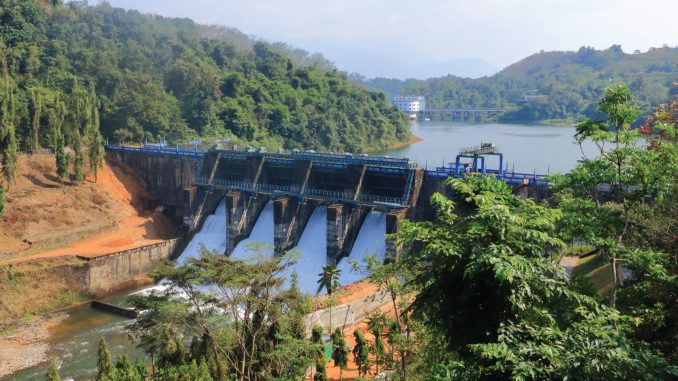
India’s north-eastern region encompasses Assam, Arunachal Pradesh, Meghalaya, Tripura, Manipur, Nagaland, Mizoram and Sikkim. The region is particularly known for its scenic beauty and diverse culture. It holds significant untapped renewable energy potential. As per a Rajya Sabha question (April 7, 2022), the region has a renewable energy potential of around 129 GW from various sources, especially hydro (62.6 GW, for projects larger than 25 MW). According to the Ministry of New and Renewable Energy, as of February 28, 2025, only about 5 GW of renewable capacity has been installed in the region, constituting 3.8 per cent of its total potential. Of this, 86 per cent is accounted for by hydropower plants alone, underscoring the region’s heavy reliance on a single renewable source. Recognising this, both state and central governments have ramped up efforts to scale up hydropower development. In a major step, the union cabinet, in August 2024, approved Rs 41.36 billion in equity support for the development of 15 GW of hydropower projects over the next eight years. Scheduled to run from 2024-25 to 2031-32, the scheme aims to deepen the region’s participation in the sector.
While the north-eastern states are gradually stepping up their efforts in line with India’s broader renewable energy ambitions, their role in the national clean energy transition continues to be overlooked. The region’s distinct geographical features, ecologically fragile landscapes and infrastructural constraints call for a more nuanced and context-specific approach. To truly unlock the Northeast’s renewable energy potential from different renewable energy sources, strategies must be adapted to its local realities, focusing on sustainable, inclusive and resilient solutions that not only meet energy demands but also safeguard the environment and support socio-economic development.
Renewable Watch tracks the trends and developments in the Northeast and provides insights to accelerate installations in the region…
State-wise progress
Sikkim
Among the north-eastern states, Sikkim has the highest installed renewable energy capacity at 2,344.67 MW and has established itself as a strong performer in both large-and small-hydro projects. In fact, hydropower accounts for an impressive 47 per cent of the state’s total installed renewable energy capacity. Sikkim also ranks third among the north-eastern states in installed solar capacity (7.56 MW). Recent developments indicate a growing effort to further expand its solar footprint. A key development came in January 2025, when NHPC Limited issued a tender for the installation of 5.06 MW of rooftop solar projects on government buildings.
Meanwhile, the state continues to strengthen its hydropower sector. In January 2024, Kundan Green Energy Limited received government approval to develop two run-of-the-river hydropower projects at Upper Myong Chu and Lower Myong Chu, with a total investment of Rs 2 billion. Further, in March 2024, the company announced the development of a 21 MW greenfield hydropower plant at Rellichu, awarded by the Sikkim government. The project has been slated for completion in 2026.
Arunachal Pradesh
Arunachal Pradesh has the highest hydro potential in the north-eastern region, with an estimated 2,064.92 MW for small hydro and 50,064 MW for large hydro. It also leads in installed small-hydro capacity at 140.61 MW. However, in large-hydro installations, it ranks second with 1,115 MW, while Sikkim holds the top position with 2,282 MW. The state’s installed renewable energy capacity is 1,270.46 MW.
While other renewable sources such as bioenergy, agrivoltaics and wind have limited feasibility in the state due to geographical and technical constraints, the state government has nonetheless undertaken initiatives to expand its renewable energy portfolio. The Arunachal Pradesh State Electricity Regulatory Commission (APSERC) introduced the Terms and Conditions for Determination of Renewable Energy Tariff Regulations, 2024, effective from 2024-25 to 2026-27. It aims to establish annual generic tariffs for small-hydro and biogas projects, as well as project-specific tariffs determined on a case-by-case basis, while designating all renewable plants as “must-run” facilities. Further supporting solar adoption, the APSERC Rooftop Solar Net Metering Regulations, 2016, enable consumers to install systems ranging from 1 kWp to 1 MWp, encouraging decentralised power generation.
To advance clean energy, Arunachal Pradesh is developing major hydropower projects. In November 2024, the Cabinet Committee on Economic Affairs approved two hydropower projects in the state. These include the construction of the 186 MW Tato-I hydroelectric plant (HEP), requiring an investment of Rs 17.5 billion, and the 240 MW Heo HEP in Shi Yomi district, with an investment of Rs 19.39 billion. Both projects will be executed through joint venture (JV) companies formed between North Eastern Electric Power Corporation Limited and the state government. Currently, there are 35 operational small-hydro projects in the state, with a total allocated capacity of 570.75 MW. These are expected to attract an investment of Rs 70 billion.
Beyond hydro, key recent initiatives in the state’s solar segment include a tender by the Arunachal Pradesh Energy Development Agency in February 2025 to commission DC solar water pumping systems of 2-7.5 HP capacity at various locations in the state under Component B of the Pradhan Mantri Kisan Urja Suraksha evam Utthaan Mahabhiyaan (PM-KUSUM). Moreover, in March 2025, SJVN Limited floated a tender for a 1.6 MW grid-connected rooftop solar project on government buildings in the state under the PM Surya Ghar: Muft Bijli Yojana.
Although the state has been actively promoting rooftop solar installations, the current system size limits (ranging from 1 kWp to 1 MWp) may constrain adoption among small households and commercial or industrial consumers with varying energy needs. To enhance uptake, it is essential to revisit policies, reconsider the capacity thresholds, and encourage the integration of storage solutions with rooftop solar systems for greater flexibility and reliability.
Assam
Assam has made remarkable progress in the renewable energy sector, harnessing its rich natural resources. With 578.45 MW, Assam has the third highest renewable energy installed in the north-eastern region. The state has a renewable energy potential of 15,078 MW, with solar power leading at 13,760 MW. However, the state has an installed solar capacity of only 192.34 MW and aims to expand its solar capacity to 500 MW by 2027.
The state is also emerging as a hub for sustainable fuels, with investment opportunities in green hydrogen, green ammonia, sustainable aviation fuels, compressed biogas (CBG) and smart chemicals. Against this backdrop, the Assam government has launched the Assam Integrated Clean Energy Policy [ICEP], 2025, aiming to position the state as a hub for renewable energy investments. This new policy builds upon the foundation laid by the earlier policy introduced in 2022. it promotes the development of solar, wind, small and mini hydro projects, pumped storage facilities, battery energy storage systems (BESSs), green hydrogen production, biofuels and electric vehicle infrastructure. A key focus of the policy is solar energy expansion, with large-scale projects such as a 250 MW solar plant being developed by Assam Power Distribution Company Limited (APDCL). Additionally, the Mukhya Mantri Sauro Shakti Prokolpo initiative will fund common infrastructure for solar parks, making project development easier and more attractive for private players. Alongside solar, the policy promotes the development of wind and hydro power to create a more diversified and balanced renewable energy portfolio.
Recent key initiatives in the state’s solar segment include an MoU between Tata Power and the Assam government to develop up to 5 GW of renewable energy projects, including solar, wind, hydro and energy storage, with an investment of Rs 300 billion over the next five years. As part of this partnership, the state government will identify and lease 20,000 acres of encumbrance-free land while assisting in private land acquisition for project development. Additionally, Assam will enhance infrastructure, ensure seamless transmission connectivity and promote renewable energy parks through state agencies.
Beyond its solar advancements, Assam is strengthening its infrastructure for green hydrogen production, supported by ongoing collaborations and the inclusion of green hydrogen in the ICEP. The green hydrogen policy under Assam’s ICEP 2025 aims to produce 2,000 kilotonnes per annum by 2030, commission at least one green hydrogen valley, develop one gigafactory for electrolyser manufacturing, and create 10,000 jobs per annum for the production of green hydrogen in the state. Industry developments have started to take shape in the state. SGEL Assam Renewable Energy Limited, a JV between SJVN Green Energy Limited and APDCL, plans to establish a 25 MW green hydrogen plant in Assam.
The state has introduced a new policy for different clean energy segments. However, for it to work, Assam should focus on developing proper frameworks and procedures, budgetary support, coordination and collaboration, capacity building and training, among others. Together, these measures will be key to translating policy intent into tangible outcomes.
Meghalaya
Although Meghalaya ranks fourth in total installed renewable energy capacity (395.11 MW) among the north-eastern states, with hydropower contributing the most, the state’s overall installed capacity is well below its potential. To address this, the state has been making efforts by introducing policies to accelerate the development of renewable energy. To promote rooftop solar energy generation, the Meghalaya State Electricity Regulatory Commission (MSERC) implemented the Rooftop Solar Grid Interactive Systems based on the Net Metering Regulations in February 2015. Later, in May 2024, MSERC introduced the Terms and Conditions of Green Energy Open Access Regulations, 2023, enabling consumers with a minimum contracted demand or sanctioned load of 100 kW to access green energy through open access mechanisms.
Moreover, in December 2024, Meghalaya launched its Power Policy 2024 to build a sustainable and efficient energy framework. Key goals include setting up a state power trading company, boosting different renewable energy segments, and reducing technical and commercial losses. The policy targets 100 MW of solar and up to 82 MW of wind capacity by 2030, with pumped storage projects planned to address peak demand.
Although the state has recently introduced these policies, their impact will only be realised through effective on-ground implementation and the successful execution of renewable energy projects.
Mizoram
As of February 28, 2025, the total installed renewable energy capacity stands at 135.86 MW in Mizoram.
Mizoram was an early adopter of renewable energy policies, introducing the Mizoram Renewable Energy Policy in 2003. The policy allowed clean energy projects in the range of 10 kW and 25 MW. Its 2017 solar policy set a target of 80 MW and promoted rooftop solar systems across the residential, commercial, industrial and government sectors. The policy also emphasised off-grid and decentralised applications such as solar lanterns, home lighting, hybrid systems and water pumps to improve rural energy access. Further enhancing the renewable energy landscape, the Joint Electricity Regulatory Commission for Manipur and Mizoram introduced the Methodology for Determination of Green Energy Open Access Charges Regulations in April 2024. It provided a structured framework for green energy open access and banking charges, streamlining access for consumers and boosting investor confidence.
Manipur
As of February 28, 2025, the total installed renewable energy capacity stands at 124.24 MW in Manipur.
Manipur took a significant step towards renewable energy adoption by introducing its Renewable Energy Policy in 2006. This policy aimed to promote electricity generation from solar, wind, small-hydro, biomass and waste recycling, with a particular emphasis on enhancing rural energy security. Building on this foundation, the Manipur Solar Policy, 2014 was launched to harness the state’s solar potential, focusing on rooftop solar installations and small grid-connected solar projects. To further accelerate solar adoption, a joint net metering policy for Manipur and Mizoram introduced in 2016 and amended in 2022, enabled consumers to opt for net or gross metering, further accelerating solar adoption.
Nagaland
Nagaland has also taken steps to promote solar energy adoption through the Nagaland Electricity Regulatory Commission’s Rooftop Solar Grid Interactive System Net/Gross Metering Regulations, 2019. This framework provides a structured approach for implementing rooftop solar systems, enabling consumers to benefit from net and gross metering options. The total renewable capacity in the state is 110.84 MW as of February 28, 2025, comprising 75 MW of large hydro, 32.67 MW of small hydro and 3.17 MW of solar.
Tripura
Tripura holds the lowest potential for solar power among the north-eastern states, with an estimated capacity of 2,080 MW, alongside 46.86 MW in small hydro and 5 MW in biopower. However, only 37.25 MW of renewable energy capacity has been realised so far. To bridge this gap, the state has been actively working to enhance its installed renewable energy capacity.
In February 2024, the Tripura Electricity Regulatory Commission drafted the Grid Interactive Solar Rooftop Photovoltaic System under the Gross/Net Metering Regulation, 2024 to regulate and promote rooftop solar energy generation. Apart from rooftop solar, the Tripura Renewable Energy Development Agency (TREDA) is spearheading efforts under the PM-KUSUM scheme by targeting the installation of over 10,000 solar-powered irrigation pumps in rural areas. This initiative aims to ensure reliable irrigation for farmlands, directly benefiting local farmers. So far, TREDA has successfully deployed 3,616 solar-powered pumps, irrigating 7,232 acres and supporting 3,616 marginal farmers. Additionally, work is in progress to install 5,051 more pumps, with plans to add another 2,264 in the near future.
The Ministry of Development of North Eastern Region has sanctioned Rs 810 billion for setting up 274 solar microgrids in remote tribal hamlets across Dhalai, Unakoti, South, West and North Tripura districts, where conventional electricity has not yet reached.
Although recent progress in the solar segment is visible, the efforts remain far below its true potential. The Ministry of Power’s Resource Adequacy Plan (2024-25 to 2031-32) highlights a shortfall in Tripura’s renewable purchase obligations, underscoring the urgent need for action. To bridge this gap, Tripura must accelerate the contracting of additional solar, hydro and wind capacities to align with demand projections and national renewable energy targets.
The way forward
Recognising the diverse geographical and socio-economic characteristics of each north-eastern state, such as Sikkim and Arunachal Pradesh’s significant hydropower potential; Assam’s suitability for wind, biomass, hydro and solar energy; and Manipur, Mizoram and Nagaland’s prospects for solar power; a tailored approach to enhancing clean energy uptake based on its individual diversity is essential.
Beyond large, small-hydro and run-of-the-river projects, the north-eastern region must prioritise decentralised solar, micro wind-solar hybrids and BESS, especially for remote, flood-prone areas. Emerging technologies like green hydrogen and CBG can further diversify the energy mix. Overall, unlocking the potential of different renewable and storage solutions will require the states to address several gaps. Many states either lack dedicated renewable energy policies or operate under outdated frameworks. For instance, Manipur and Mizoram introduced renewable energy policies in 2006 and 2003 respectively, which no longer reflect the latest technological advancements and policy developments. To accelerate clean energy deployment, it is imperative that these states update their policies to align with evolving industry trends, enabling the seamless implementation of renewable energy projects.
Going forward, a positive trend in the Northeast will be the uptake of cross-border trade of electricity, especially hydropower, with Nepal, Bhutan and Bangladesh. On the downside, large-scale hydro development in China poses risks to the downstream regions of the Brahmaputra river. Overall, the north-eastern region will be at the centre of South Asia’s energy geopolitics.


