

By Sakshi Bansal
Haryana ranked fifth among Indian states in terms of per capita energy consumption in 2019-20, as per Lok Sabha data. Therefore, decarbonising the state’s energy sources is crucial for meeting the country’s climate targets. As of November 2024, Haryana’s installed renewable energy capacity stands at 2,322.47 MW, with solar power accounting for 1,956.35 MW. This includes 266.8 MW from ground-mounted systems, 766.06 MW under the PM Surya Muft Bijli Yojana and 923.49 MW under the Pradhan Mantri Kisan Urja Suraksha evam Utthaan Mahabhiyan (PM-KUSUM). Bioenergy contributes 292.2 MW, comprising 151.4 MW of bagasse cogeneration, 111.26 MW of non-bagasse cogeneration, 11.2 MW of waste-to-energy (WtE) and 18.76 MW of off-grid WtE capacity. In addition, the state has 73.5 MW of installed small-hydro capacity, and 2,330.73 MW of large hydro capacity, as of November 2024. The total power capacity in the state stands at 13,974.11 MW, with 9,219.97 MW of thermal capacity (coal: 8,638.38 MW; gas: 581.59 MW). Overall, the state’s total renewable energy capacity of 4,653.20 MW, including large hydro, accounts for around a third of its total installed power capacity.
While Haryana lags behind neighbouring states such as Rajasthan, Uttar Pradesh and Punjab in renewable energy development, it is witnessing a positive shift. The state government is making concerted efforts to revitalise the renewables sector through the introduction of progressive policies. These initiatives have positioned Haryana as an attractive destination for developers, driving the development of several new projects, particularly in the solar energy space. Renewable Watch highlights the key developments, emerging growth trends and future prospects of Haryana’s renewable energy sector.
Solar
Haryana, a small yet highly cultivated state, faces significant land constraints for large ground-mounted solar projects. However, its urban areas, with a large number of commercial and industrial enterprises as well as housing societies, present a promising alternative for large rooftop solar installations. Recognising the opportunities and challenges, the Haryana New and Renewable Energy Department released the draft Haryana Solar Power Policy, 2023, with a focus on rooftop solar projects, ground-mounted solar and the solarisation of irrigation.
The department has set a target to install a combined solar capacity of 6,000 MW by 2030 in Haryana. The new policy aims to install 1,600 MW of rooftop solar capacity, 3,200 MW of ground-mounted solar plants and an additional 1,200 MW through the solarisation of irrigation pumps. The draft policy is set to replace the state’s existing 2016 solar power policy. In contrast to the prior policy, which did not have provisions for battery storage, the new policy focuses on the inclusion of solar power projects in the state, both with and without battery energy storage systems, and the integration of solar projects with other renewable resources, such as hybrid projects. It also promotes the implementation of large-scale solar projects on canal tops, banks and other water bodies. Additionally, the new policy highlights the potential for government subsidies on storage systems for utility-scale solar power projects supplying power to discoms.
The new policy has retained the provision of allocating 20 per cent of the total capacity of ground-mounted megawatt-scale solar power projects for small generators with capacities up to 2 MW. Furthermore, the policy stipulates that there will be no restrictions on the installation of solar power plants by entities for their own consumption. These plants can be established at any location in India, where benefits can be availed through open access. The policy incorporates both net metering and gross metering arrangements, highlighting that the maximum rated capacity of a rooftop solar system installed by a consumer should not exceed the connected load for low-tension connections and the contract demand for high-tension connections. The state government is also exploring the possibility of providing capital subsidies to incentivise the adoption of rooftop solar. It also promotes decentralised and off-grid applications and the development of solar-powered electric vehicle charging stations. In cities where customers do not have access to sufficient roof space, the state will support innovative billing systems such as group virtual metering and virtual metering. Additionally, cross-subsidy charges, additional surcharges and wheeling charges will not be applicable if the generated solar power is consumed on the premises.
Apart from this, the state is leveraging its rich agricultural landscape to drive its renewable energy agenda. A key initiative in this effort is the PM-KUSUM scheme, aimed at promoting solar energy adoption in the agricultural sector. Under this scheme, farmers can access solar pumps ranging from 3 HP to 10 HP with a 75 per cent subsidy, of which 30 per cent is provided by the Indian government. As per Lok Sabha data, Haryana is a frontrunner in implementing Component B of the scheme, achieving 69 per cent of its target by installing 136,572 solar pumps out of the 197,655 sanctioned, as of October 31, 2024. The total budget for Component B is Rs 114.38 billion, with Rs 37.49 billion (33 per cent) already utilised. Haryana has also secured the second-highest allocation of Rs 8.84 billion for the programme, further solidifying its leadership in solar pump deployment. These achievements position Haryana as one of the top-performing states in the PM-KUSUM initiative, reflecting its strong commitment to renewable energy adoption and agricultural sustainability.
 Furthermore, the state has set an ambitious target to install rooftop solar panels on 500,000 homes by 2030. The response has been remarkable, with over 350,000 households already registered for the initiative. Leading this shift is the Haryana Renewable Energy Development Agency (HAREDA), which is driving efforts to solarise government buildings across Gurugram. As part of this initiative, Gurugram’s deputy commissioner has urged departmental officers to register their buildings on the PM Surya Ghar portal. The campaign is already making headway, with rooftop solar surveys completed for 1,070 government buildings in Haryana, paving the way for the installation of 50 MW of solar capacity.
Haryana’s solar push does not stop there. The state has set its sights on transforming at least one village in every district into a solar village. To support this vision, the government is offering grants to encourage citizen participation. Households will receive Rs 30,000 for installing a 2 kW solar plant and Rs 78,000 for systems of 3 kW or more. For Antyodaya families, the support is even more substantial, with an additional grant of Rs 50,000 to make solar adoption more accessible.
The state’s renewable energy growth has gained momentum in recent months, marked by a series of significant developments and project milestones in solar irrigation. In March 2024, Alpex Solar secured solar pump contracts worth Rs 437 million in Haryana. In November 2024, the Haryana discom invited bids for 27 MW of solar projects under PM-KUSUM. In the same month, HAREDA awarded contracts for the commissioning of 17,458 solar water pumping systems under Component B of the PM KUSUM programme.
Bioenergy
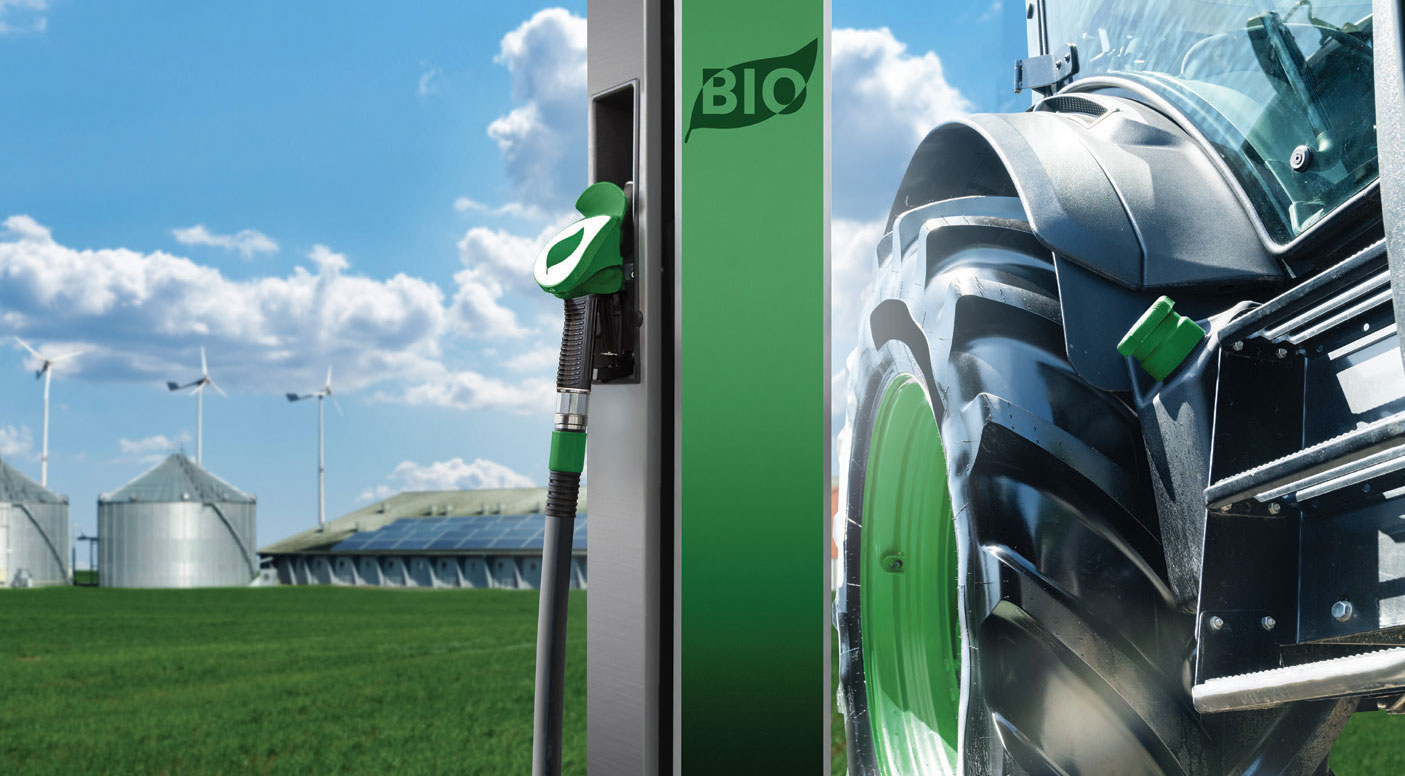
Haryana is one of India’s major bioenergy hubs owing to its strong agricultural base and abundant biomass resources. As an agrarian state, it possesses vast potential for biomass-based energy production. As of October 2023, Haryana had an annual surplus of approximately 0.3 million tonnes of paddy straw, as per data provided by the Chief Minister’s Office. This agricultural by-product holds immense potential to produce electricity, biogas, compressed biogas, bio-manure, biofuels and ethanol.
Recognising this opportunity, the Haryana government has adopted a multi-pronged strategy to combat stubble burning while promoting clean energy. Central to these efforts is the Haryana Bio-energy Policy 2018, which aims to transform biomass into a valuable energy source. The policy provides farmers with an additional revenue stream and generates employment in rural areas. To directly address stubble burning, the government has approved several stubble-based biomass projects aggregating 49.8 MW across key districts. Of these, two major projects are already operational — a 15 MW plant in Kaithal and another 15 MW plant in Kurukshetra. Meanwhile, projects in Fatehabad (9.9 MW) and Jind (9.9 MW) are nearing completion, as per the Economic Survey of Haryana 2023-2024. Further, in October 2023, the state government introduced the Haryana Ex-Situ Management of Paddy Straw Policy, 2023, to eradicate crop residue burning by 2027. This policy aims to convert paddy straw from an environmental challenge into a valuable energy resource. Under the new policy, projects that use paddy straw as their primary feedstock are eligible for incentives outlined in the Haryana Bio-energy Policy 2018 and its subsequent amendments.
The impact of these policies is already visible. In February 2024, LR Energy commissioned a compressed biogas plant in Karnal with a production capacity of 2,000 metric tonnes per annum. This was followed by the commissioning of another CBG plant in April 2024 by Indraprastha Gas Limited at Mugal Mazra village in Karnal district. Building on the momentum, in June 2024, Maruti Suzuki India Limited announced the installation of a pilot biogas generation and purification plant at its Manesar facility.
Green hydrogen
The state government is also actively promoting hydrogen as a clean energy alternative. Through strategic projects and policy initiatives, Haryana aims to integrate hydrogen into key sectors. To this end, it is setting up hydrogen refuelling stations, fostering research and development in hydrogen production technologies, and forging partnerships with industry leaders to accelerate hydrogen adoption. The Haryana government released the preliminary version of the Haryana Green Hydrogen Policy 2024 on February 15, 2024. The policy targets the production of 250 kilo tonnes of green hydrogen annually and the establishment of 2 GW of electrolyser manufacturing capacity by 2030. By leveraging the state’s clean energy potential, it aims to improve energy security, optimise the use of renewable resources, and utilise biomass effectively to reduce reliance on fossil fuels.
Recently, efforts have been made by various players in the state to promote this segment. In March 2024, Hygenco Green Energies developed an off-grid green hydrogen plant at Jindal Stainless in Hisar, Haryana. Furthermore, in October 2024, GreenH Electrolysis introduced a 1 MW PEM electrolyser at its manufacturing facility in Jhajjar, Haryana. Moreover, GreenH Electrolysis entered into a contract with Medha Servo Drives in December 2024 to build a hydrogen production and refuelling station in Jind, Haryana, to supply hydrogen for India’s first hydrogen train.
Future outlook
Haryana’s power sector performance in recent years has been a mixed bag. In fiscal years 2021-22 and 2022-23, the state reported no peak power shortages. However, 2023-24 saw a shortfall of 244 MW in peak power demand met. Over the years, the difference between energy required and energy supplied also narrowed significantly, decreasing from 506 million units (MUs) in 2022-23 to 348 MUs in 2023-24. This improvement reflects Haryana’s enhanced capacity to meet its growing energy demands. On the distribution front, Haryana’s two discoms have made notable progress. The overall average aggregate technical and commercial losses decreased from 12.9 per cent in 2021-22 to 12.01 per cent in 2022-23. Although the state’s collection efficiency marginally declined from 99.82 per cent in 2021-22 to 98.84 per cent in 2022-23, Haryana is taking decisive steps to address this challenge. A key initiative in this area is the adoption of smart metering technology. Out of 1,000,000 sanctioned smart meters, 847,467 have already been installed as of November 28, 2024, according to the National Smart Grid Mission. Haryana is taking several steps to increase renewable energy uptake, but significant work remains for the state’s discoms to uniformly achieve 43.33 per cent of their renewable purchase obligations by 2028-29. Meeting this target will require sustained investments in diverse renewable energy sources, wind energy projects in the Aravalli Hill Ranges, energy storage systems, floating solar and hybrid projects.
In addition, Haryana is signing long-term power purchase agreements for large hydropower projects to meet growing peak power demand and reduce reliance on coal power. These agreements will help meet the state’s RPOs. Further, fostering research and development in clean energy technologies and building stronger partnerships with private sector players, academic institutions and key stakeholders will be critical. With a clear roadmap and a multi-pronged strategy, Haryana aims to position itself as a leader in India’s renewable energy revolution.

