

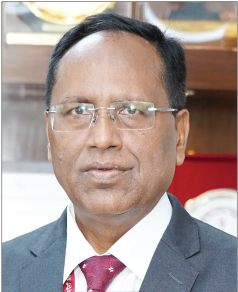
 In a recent interview with Renewable Watch, Raj Kumar Chaudhary, Chairman and Managing Director, NHPC Limited, talked about the current state of the hydropower sector, as well as some of the major developments in this space. He also spoke about NHPC’s key upcoming projects and future plans and targets. Edited excerpts…
What is your assessment of the current state of the hydropower segment?
Hydropower projects and pumped storage projects (PSPs) are critical components of the power sector and are essential for India’s future, especially with the projected large-scale integration of renewable energy. These projects play a crucial role in balancing the variability of renewable sources. Moreover, they are vital for achieving India’s aim of 500 GW of installed capacity from non-fossil fuel sources by 2030 and reaching net zero carbon emissions by 2070.
According to the Reassessment Study (2017-23) by the Central Electricity Authority, India possesses an estimated exploitable hydropower potential of 133 GW, along with a pumped storage potential of about 120 GW. However, only around 31 per cent of the hydropower capacity and just 4 per cent of the pumped storage capacity have been harnessed so far. The sluggish growth of hydropower capacity in recent years can be attributed to several factors, including long gestation periods, highly capital-intensive nature of projects, remoteness of project sites, issues related to resettlement and rehabilitation, and law and order challenges.
The government has renewed its focus on hydropower development by launching various reforms in the sector. These include granting renewable energy status to large hydroelectric projects (HEPs), which allows new HEPs and PSPs to access concessions and green financing available to renewable energy initiatives.
These reforms by the government are expected to significantly enhance the performance of the hydropower sector in the near future.
What steps are being taken to streamline project execution?
Land availability and its acquisition are among the core structural issues that significantly impact hydro projects. According to the Right to Fair Compensation and Transparency in Land Acquisition, Rehabilitation and Resettlement Act, 2013 (RFCTLARR), the minimum time required for land acquisition is approximately 3 years and 11 months. This lengthy process can delay projects considerably before they even begin construction, hindering timely implementation and development in the hydro sector. Various aspects, such as the formulation of social impact assessments and social impact management plans during the land acquisition process for hydropower projects, are time-consuming activities. Addressing these challenges takes considerable time due to the provisions of legislative acts and notifications, such as the Environment Impact Assessment Notification, 2006; the Van (Sanrakshan evam Samvardhan) Rules, 2023; and the RFCTLARR Act, 2013. Proper planning is required at every stage, from survey and investigation until the construction stage, to deal with these challenges and delays.
Robust liaisoning with stakeholders, including state governments, project-affected families and local communities, is crucial before starting any hydropower project. NHPC engages with local communities early in the process to raise awareness about the benefits, such as employment opportunities, local development and infrastructure improvements. Additionally, NHPC implements various corporate social responsibility programmes in project sites, focusing on education, healthcare, skill development and infrastructure. These efforts help create goodwill and reduce resistance, facilitating smoother project implementation. Hydropower projects require various statutory clearances, such as environment, forest and wildlife clearances, which are also time-consuming activities.
The Van (Sanrakshan evam Samvardhan) Rules, 2023 state that primarily, the compensatory afforestation, in lieu of forest land proposed for diversion, must be carried out on equivalent non-forest land that is not under the management and administrative control of the forest department. Additionally, it is important to note that hydropower projects are generally developed in remote and hilly regions where non-forest land is scarce, making it difficult to find suitable land. This issue further prolongs the process of obtaining forest clearance.
NHPC conducts detailed and rigorous environmental impact assessments to evaluate potential impacts and incorporates mitigation measures to minimise environmental damage. It has been increasingly adopting sustainable practices, such as fish ladders and afforestation, and maintaining minimum environmental water flow downstream to preserve biodiversity. We are working towards obtaining faster clearances by improving compliance with environmental laws and ensuring the timely submission of reports and documentation. We are employing technologies like geographic information systems and remote sensing to identify and assess land more efficiently, reducing the time required for land surveys and minimising disputes.
We also ensure the execution of various environmental management plans, such as catchment area treatment, rehabilitation and restoration, fishery management plans, health management plans, muck disposal plans and landscaping and restoration plans through a competent management system to avoid unnecessary delays and litigations. NHPC is adopting a multifaceted approach to address the challenges of land acquisition and environmental clearances. This strategy combines technological advancements, improved stakeholder engagement, collaboration with government entities and regulatory reforms.
What measures is NHPC taking to promote the flexible operation of hydropower plants?
Accelerating the execution of HEPs and adding more hydro capacity into the grid is the key to complementing the ever-increasing share of renewable energy sources in the energy mix. At present, NHPC is engaged in the construction of nine hydro projects of 9,314 MW capacity. Further, NHPC has taken up 15 PSPs with a total installed capacity of 15,630 MW. The addition of our hydro and pumped storage capacities will play a crucial role in balancing the grid and promoting the flexible operation of hydropower plants to complement the increasing share of renewable energy.
How does NHPC plan to maintain its leadership position in the hydropower sector amid increasing competition from other renewable energy sources?
Hydropower plays a critical and multifaceted role in India’s energy transition journey as it aims to shift towards a cleaner and more sustainable energy mix. Due to India’s ambitious renewable energy goals and the increasing reliance on variable sources like solar and wind, hydropower is essential for ensuring grid stability, energy storage and system flexibility. NHPC is a premier hydropower utility in India, has commissioned 22 HEPs with an aggregate installed capacity of 6,971 MW in very far-flung/remote areas of the country. Besides this, NHPC is presently engaged in the construction of nine hydro projects with an aggregate installed capacity of 9,314 MW, including subsidiary/joint venture companies. This includes the 2,880 MW Dibang Multipurpose Project in Arunachal Pradesh, which is the largest hydro project in India in terms of installed capacity.
As a core player in the hydro sector, NHPC does not foresee any competition from other renewable sources, as it is recognised as a facilitator or a contributor to the energy transition rather than a competitor. We view this as an opportunity. While solar and wind power provide clean energy, they are intermittent in nature, relying on sun and wind availability. Hydropower can effectively compensate for this intermittency, providing stability to the electric grid while also serving as a clean, green source of energy. During its journey of approximately 50 years, NHPC has harnessed capabilities to develop hydro projects from concept to commissioning, including in-house design and engineering, as well as geotechnical studies. In addition to being a consistent performer with numerous successes in the hydro segment, NHPC’s growth over the years has been supported by continuity management through risk assessments, deployment of state-of-the-art technologies, human resource management and strategic planning.
NHPC has also diversified its business portfolio into other renewable energy segments and has commissioned five renewable energy projects (four solar and one wind) with an aggregate capacity of 261 MW. Additionally, 1,290 MW of solar projects are also under implementation by NHPC/subsidiaries.
The Ministry of New and Renewable Energy has designated NHPC as a renewable energy implementing agency (REIA) for the development of renewable energy projects across the country. NHPC has already commissioned of 700 MW as REIA. Further, 5,580 MW of renewable energy power projects are under implementation by NHPC as the REIA/intermediary procurer.
To meet the country’s ambitious goal of enhancing non-fossil energy capacity to 500 GW and fulfilling 50 per cent of energy requirements from renewable sources by 2030, NHPC is geared to triple its installation base by adding 16,000 MW, aiming to become a 23,000 MW company by investing about Rs 1,000 billion by 2032. In the long term, NHPC is committed to achieving the target of 50,000 MW by 2047, which will require an approximate investment of Rs 3,500 billion. Notably, NHPC’s generation capacity, both added in the past or planned for the future, is entirely based on renewable sources such as hydro, solar and wind. Therefore, every effort made by NHPC to increase its generation capacity contributes to India’s energy transition journey.
What is the status of NHPC’s upcoming HEPs?
NHPC is executing nine hydro projects across the country, with an aggregate installed capacity of 9,314 MW. The 800 MW Parbati-II HEP is scheduled to be commissioned in this financial year and three units of the Subansiri Lower HEP are expected next FY. Further, NHPC plans to gradually add rest of the under-construction hydropower projects by 2032. It has implemented a multilayer monitoring mechanism to ensure the timely completion of projects. The construction schedules are prepared using a specialised software application and are monitored on regular basis at site as well as corporate office. NHPC management holds monthly project review meetings to monitor the progress of projects and resolve various issues for their timely completion.
What are your key priorities for NHPC?
NHPC’s primary focus remains on its core competency i.e hydropower while also expanding its presence in renewable energy. In line with the paradigm shift towards clean energy and the trajectory of energy markets in the country, NHPC is also exploring development of PSPs and has taken up 15 PSPs with a total installed capacity of 15,630 MW.
Driven by the Government’s push for hydrogen as a future clean fuel, NHPC has taken initiatives to develop green hydrogen technology, with a 25 kWe capacity pilot green hydrogen project in Leh and one pilot e-mobility project each at Leh and Chamba. With learnings from these pilot projects, NHPC intends to scale up green hydrogen projects in the near future.
In hydropower, NHPC’s key priority is to ensure the timely commissioning of its under-construction projects, modernise existing hydropower infrastructure and make every effort to initiate projects in the pipeline after securing all statutory clearances and approvals. We also aim to acquire both new and stalled hydro projects, including PSPs, in various parts of the country.
NHPC has signed a Memorandum of agreement with the Arunachal Pradesh government for the implementation of two projects – Kamala HEP (1,720 MW) and Subansiri Upper HEP (1,605MW). NHPC is actively pursuing the above two projects, whose DPRs are under preparation. The company has expanded its international business footprint in Nepal. Currently, NHPC is preparing the DPR for developing three HEPs totalling 1,844 MW in Nepal – Phukot Karnali (624 MW), West Seti (800 MW) and SR-6 (420 MW).
What is your outlook for the hydropower segment going forward?
The outlook for the hydropower segment is positive, but it faces both opportunities and challenges in the years ahead. The sluggish growth of hydropower in India can be attributed to several challenges being faced by the sector, and thus, its benefits have not received the attention they deserve. However, the need of the hour has given it due recognition.
The past few years have brought about significant change in the country’s power sector. The hydropower segment has gained momentum, due to government reforms and initiatives introduced in the recent past. For example, streamlining clearance procedures and minimising the time required for obtaining statutory clearances have facilitated the earlier commencement of project execution. To enhance the viability of HEPs/PSPs, the government has introduced various measures, including the hydro purchase obligation, tariff rationalisation measures, the waiver of interstate transmission system charges (18 years from the commercial date of operation for HEPs, where work is awarded and PPA is signed by June 30, 2025; for PSPs, the waiver is for 25 years), and budgetary support for the cost of enabling infrastructure as well as for the flood moderation component. The government has further enhanced the scope of enabling infrastructure to include transmission lines, communication systems, etc. Now, hydro-rich states are more inclined to incentivise hydro development through staggered free power and waiver of state GST.
With all these initiatives and measures, alongside the opportunities in the sector, such as targets set by the Indian government, rising electricity demand and untapped hydro potential, the hydropower segment is entering a golden era, and its future looks promising.

