In an interview with Renewable Watch, Prashant Choubey, President, Business Development, Avaada Group, talked about the key highlights of the company in the past year, the plans in the green fuels, energy storage and domestic manufacturing segments, the challenges faced by developers, and policy suggestions for the government. Edited excerpts…
What were the key highlights for the company over the past year?
The year 2024 has been a transformative one for the Avaada Group, marked by significant achievements that have further cemented our leadership in India’s renewable energy landscape.
A standout moment was the laying of the foundation stone for our gigawatt-scale integrated solar Photovoltaic manufacturing facility in Nagpur, Maharashtra. In Maharashtra, we also secured significant capacity to develop large-scale decentralised agricultural solar PV projects and signed a pivotal MoU for two pumped storage projects (PSPs) with substantial capacity. These initiatives represent significant strides towards enhancing energy independence and sustainable infrastructure.
In Uttar Pradesh, we initiated the development of a gigawatt-scale solar PV module manufacturing facility equipped with state-of-the-art automation and advanced technologies. This year, we also inaugurated a 70 MW solar power plant in Banda district, and our solar projects are operational in other districts of the state.
In Rajasthan, we recently signed an MoU with the state government to develop a 1,200 MW PSP with significant investment over the next five to seven years. Besides, we also announced an investment of Rs 1 trillion in the state, encompassing green ammonia, wind power and solar power projects spread across Jhalawar, Kota, Barmer and Bikaner.
During the year, we secured a strong pipeline of renewable energy projects, which will be set up across various states. Additionally, we successfully closed approximately Rs 3.15 billion in financing for a captive solar project in Karnataka. We also secured green financing of Rs 11.9 billion for a new solar project in Gujarat. Notably, we successfully closed one of the largest refinancing transactions in India’s renewable energy sector, securing about Rs 44.71 billion from the National Bank for Financing Infrastructure and Development for our four solar projects in Rajasthan. We also secured Rs 5.97 billion in refinancing for commercial and industrial (C&I) solar projects in Karnataka and Maharashtra.
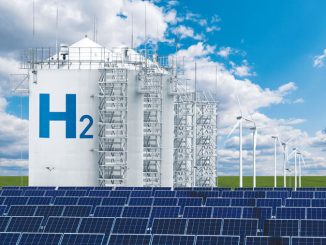
In Odisha, the foundation stone was laid for our green hydrogen project in Gopalpur, Ganjam. Avaada achieved a major milestone in green hydrogen and its derivatives by signing a landmark MoU for a long-term green ammonia supply contract. This highlights our commitment to spearheading innovations in the green energy ecosystem.
As we reflect on 2024, these accomplishments have positioned the Avaada Group as a frontrunner in India’s clean energy transition. With an ambitious target of creating a 30 GW clean energy portfolio by 2030, we are steadfast in our mission to drive a sustainable and self-reliant energy future.
What is the company’s current project portfolio?
The Avaada Group has established a diverse and robust portfolio encompassing the entire energy transition value chain. Currently, we have an impressive mix of operational and under-implementation capacities strategically located across multiple states, harnessing the nation’s vast renewable energy potential.
Our portfolio includes large-scale renewable energy plants including solar, wind, solar-wind hybrid plants and decentralised agricultural solar projects, as well as innovative ventures into green fuels such as green hydrogen and its derivatives like green ammonia, green methanol and sustainable aviation fuel. We recently laid the foundation stone for our new gigawatt-scale integrated solar PV manufacturing facility in Nagpur. Our investments in PSPs and integrated solar PV manufacturing facilities reflect our holistic approach to building an end-to-end clean energy ecosystem.
Looking ahead, we remain firmly on track to achieve our ambitious target of 30 GW of operational renewable energy capacity by 2030, reinforcing our commitment to advancing India’s clean energy transition. Through strategic expansion, cutting-edge innovation and sustainable practices, we aim to contribute significantly to India’s journey towards energy self-reliance and a greener future.
What is your outlook for domestic manufacturing of solar components?
Currently, Indian companies rely heavily on imports for solar energy components, which constrains the growth and competitiveness of the domestic solar industry. However, we are optimistic that this scenario will lead to a transformative shift in the next four to five years. India is poised to establish a complete solar manufacturing ecosystem in a significantly shorter time frame compared to other countries that took over two decades to achieve similar milestones.
At the Avaada Group, we firmly believe in developing capabilities towards Atmanirbhar Bharat and are proactively contributing to this transformation by diversifying our portfolio into solar manufacturing. A significant step forward is the foundation of our gigawatt-scale integrated solar PV manufacturing facility in Nagpur. This state-of-the-art facility spans the entire solar value chain, from ingot-wafer production to cell and module manufacturing, and extends to cutting-edge battery and electrolyser technologies. By also developing ancillary units for module glass and frames, we are fostering a robust domestic supply chain.
Additionally, we are developing another gigawatt-scale solar PV module manufacturing facility in Uttar Pradesh, equipped with advanced automation and technologies. These initiatives align with our vision to make India self-reliant in solar manufacturing while driving innovation and competitiveness in the global market.
What are the key challenges faced by developers in the country?
The renewable energy sector faces several challenges that require immediate attention. Unhealthy competition due to the reverse auction system has strained project margins, while supply chain disruptions, including module shortages and rising prices of key commodities such as steel, copper and aluminium, along with high wind turbine costs driven by geopolitical factors, are pressing concerns. Additionally, large-scale land acquisition and right-of-way issues pose significant logistical and financial hurdles. The high cost of capital further impacts project returns by limiting reductions in interest rates. Grid stability is another critical issue as the growing integration of renewable energy into the power system creates new challenges.
Pending signing of power purchase agreements (PPAs) by renewable energy implementation agencies (REIAs) with state discoms is a significant concern for developers as delays jeopardise the bid process. New bids are issued regularly, but developers remain uncertain about the timeline for PPA signing. The staggered timeline for levying ISTS charges is another concern, as discoms are wary of these charges inflating the overall landed cost of power. There is an urgent need for the Ministry of New and Renewable Energy, REIAs and state discoms to jointly form a strategy for issuing bids with a predefined timeline to sign contracts. Without this, the call for bids may reduce until the pendency gets resolved.
Further, early clarity on the extension of the ISTS charges waiver is crucial, as only seven months remain before the zero charges regime ends. This waiver has driven large-scale capacity additions. Its absence should not impact the overall capacity addition, especially when we require over 50 GW per year of installations to meet the 500 GW non-fossil fuel target.
Uniformity in policies and regulations related to open access is the need of the hour to promote the C&I sector. Electricity, being a subject in the Concurrent List of the Constitution, implies that central and state governments can both legislate on the sector. Both are expected to work in unison to deliver a reliable, affordable and sustainable electricity system. A power council, similar to the GST Council, could be established to act as a coordinating force between the central and state governments. Periodic conferences of power ministers can serve as a crucial platform to develop a common agenda and ensure alignment between strategy planning and its implementation.
There is a need for the effective implementation of renewable purchase obligations and the institutionalisation of green energy policies across states. Accelerating the development of state-level green energy corridors, evacuation systems and grid infrastructure is essential to complement the target of achieving 500 GW of renewable capacity. Promoting green energy storage solutions, such as pumped storage and battery projects, will enhance grid stability, while incentivising hybrid and RTC renewable energy solutions can ensure round-the-clock power availability. Financial reforms, including classifying the energy transition sector under priority lending, separating renewable energy from conventional power sector challenges, and enabling institutional investors to finance projects during construction phases, are crucial for improving access to affordable funds. Addressing land acquisition challenges and taking firm action against site-specific issues such as theft and extortion are vital for safeguarding investments. Finally, liberalising open access rules for industries will help drive green energy adoption, enabling companies to achieve their sustainability and net zero targets. These measures will significantly strengthen the sector and ensure India’s clean energy transition progresses smoothly.