

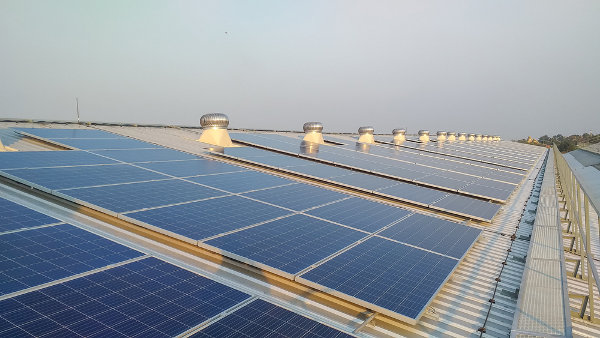
 Access to reliable energy is essential for the economic development and social well-being of all communities and individuals. Despite various initiatives, Indian villages still struggle with inadequate power supply, frequent load shedding and poor electricity quality. To overcome these challenges, it is essential to harness the country’s abundant solar energy potential and establish a reliable energy grid through distributed energy, particularly solar. Distributed solar enables local production and consumption of energy, allowing households and other electricity consumers to become part-time producers who can sell excess energy back to the grid or to other users. Various policies have been introduced by the government to promote these systems.
The most recent scheme, PM Surya Ghar: Muft Bijli Yojana, was launched in February 2024 to enhance solar rooftop capacity across households and support the adoption of decentralised energy production. It has a budget allocation of Rs 750 billion, with plans to install rooftop solar in 10 million households, and is set to be implemented by fiscal year 2026-27.
Against this backdrop, the Ministry of New and Renewable Energy released the guidelines for the Model Solar Village programme in August 2024, which aims to create one solar village in every district of the country. The total budget allocated for this component is Rs 8,000 million, with a central financial assistance (CFA) of Rs 10 million per village. The objectives of this scheme are to:
- Solarise one village per district and encourage large-scale rooftop solar deployment
- Provide clean power access across villages
- Empower villages to become secure in meeting their electricity requirements
- Ensure 24×7 solar-powered electricity for all households and public areas in villages
- Promote technologies such as solar home lighting systems, solar water systems, solar pumps and solar streetlights.
To qualify for the programme, a village should be a revenue village with a population exceeding 5,000, except for special category states, where the population requirement is lowered to 2,000. Model Solar Villages will be selected through a competition where villages will be mobilised to install rooftop solar systems and solar pumps and then evaluated based on the total renewable energy capacity. Potential candidate villages will first be identified by district-level committees. Following this, a six-month competition period will be held to select one Model Solar Village in every district. Mobilisation will be supported by village panchayats and door-to-door outreach and awareness campaigns, with connections established amongst vendor networks and banks as well for sensitisation. To enable far-reaching technology adoption, cooperatives and self-help groups will be critical for spreading awareness about the benefits of this scheme.
Regarding financial support, while each Model Solar Village is eligible for a grant of Rs 10 million as CFA, only public projects can receive up to 100 per cent of the project cost as CFA. Meanwhile, if projects are being set up for collectives, they must contribute at least 10 per cent of the project cost to avail the CFA. Further, this scheme is not meant for individual beneficiaries. The CFA will be released in three stages, with each instalment to be used within 6 months. 40 per cent of the CFA will be disbursed upon the award of work and upon completion of work, and the remaining 20 per cent will be given after six months of operation.
The Model Solar Village scheme has the potential to significantly advance the benefits of distributed solar across the country and promote its large-scale uptake. The spirit of competition and recognition will encourage villages and districts to adopt solar, accelerating India’s journey towards achieving its renewable energy goals.
However, there are several challenges to address. The project should be implemented with complete transparency and take all stakeholders into consideration – from self-help groups and local entrepreneurs at the village level to district, state and central-level implementing agencies. Further, the feasibility of solar setups in each village may vary depending on local circumstances. Another concern is regarding the uneven distribution of resources among villages, as well as the six-month timeline, which may be too short for many villages to transition to solar.
Net, net, the Model Solar Village scheme is a step in the right direction in enabling solar energy adoption right at the grassroots level. However, to ensure its streamlined and effective implementation, meticulous planning and timely monitoring of progress are essential. Further, enough capacity building is needed at the district and village level for sufficient support and to avoid resource-related disparities, considering the short competition timelines.
By Nidhi Dua
