

In a recent interview with Renewable Watch, Srivatsan Iyer, global chief executive officer, Hero Future Energies, delved into the current state and future outlook of the renewable energy sector in India, focusing on its recent achievements and challenges. He provided insights into the significant strides made in government policy and renewable energy capacity, as well as persistent issues such as dependency on global supply chains and grid integration challenges. He also discussed the commercial and industrial (C&I) market growth, driven by cost savings and sustainability goals, and its promising future. He highlighted the optimistic outlook for the renewable energy sector in the near, medium and long terms, emphasising the role of government incentives, technological advancements and environmental regulations. Additionally, he reviewed the recent business highlights of Hero Future Energies, and talked about the company’s top priorities for the coming years…
What is your perspective on the current state of the renewable energy sector in the country? What have been the key hits and misses in the past one year or so?
 Key hits
The government has made commendable strides in creating a conducive environment for renewable energy growth in the country. The introduction of ambitious renewable energy targets, aiming for 43.33 per cent renewable energy by 2030, reflects a strong commitment to decarbonisation and responsible growth. Explicit policy support, combined with significant public and private investments, has spurred impressive renewable energy growth, with the total renewable energy capacity reaching approximately 175 GW. Solar energy has seen remarkable growth, now contributing over 67 GW to the grid. Additionally, India’s leadership in international coalitions and forums such as the International Society of Automation, the International Renewable Energy Agency and the G20 Energy Transitions Working Group underscores its commitment to global renewable energy transitions.
Key misses
This sector is still dependent on global supply chains for critical components and equipment. While domestic manufacturing of these has been incentivised, the overall capacity is still catching up to meet the growth requirements of renewable energy in India. Grid integration of intermittent renewable sources requires advancements and increased investments in evacuation and transmission infrastructure, and in storage and grid management.
What are the biggest issues and challenges facing the segment? How can these be resolved?
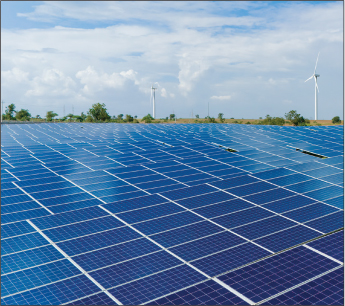 Regulations vary across states, impacting market entry and expansion. Inconsistent understanding and/or implementation of policies across states and delays in policy implementation also create uncertainty. Streamlining regulations and ensuring timely execution can address these issues. Concomitant with the significant increase in solar and wind capacity, advancements in storage technologies and grid infrastructure are essential for efficient integration.
I look forward to a comprehensive approach involving policy alignment, financial innovation, technological advancement and environmental stewardship. This holistic strategy will ensure the long-term viability and success of IPPs in an evolving energy landscape.
How has the C&I market for renewables grown over the years? What is expected in the next few years?
The C&I market for renewables has experienced significant growth over the past decade. Driven by the need for businesses to reduce operational costs and meet sustainability goals, the market has seen a surge in renewable energy adoption. Early adopters reaped the benefits of cost savings and enhanced corporate social responsibility, encouraging others to follow suit.
Technological advancements have played a pivotal role in this growth. The decreasing costs of equipment such as solar panels and battery storage have made renewable energy projects more financially attractive. Additionally, incentives and favourable regulatory frameworks have encouraged investment in renewable energy. Corporate power purchase agreements have become a popular mechanism for C&I entities to secure long-term renewable energy supply, providing price stability and promoting large-scale project development.
In the next few years, the C&I market for renewables is expected to continue its upward trajectory. Key drivers will include lower cost of renewables compared to current sources of supply, coupled with heightened awareness of climate change, stricter environmental regulations and increasing pressure from stakeholders for companies to adopt sustainable practices.
Overall, the C&I market for renewables is poised for robust growth, driven by economic, technological and regulatory factors. This growth will contribute significantly to global efforts to mitigate climate change and transition to a sustainable energy future.
What is your outlook for the renewable energy sector in the near, medium and long terms?
I am highly optimistic about the sector’s outlook. In the near term, government incentives, corporate sustainability commitments and technological advancements will drive the rapid adoption of renewables.
In the medium term, improved grid infrastructure and advanced storage technologies (batteries, pumped hydro, etc.) will enhance the reliability/despatchability of renewable energy. These factors will significantly contribute to sector growth in all markets, as the trend shifts towards renewable energy with storage that is becoming competitive with the new-build capacity of conventional power generation. In the long term, renewable energy is poised to dominate global energy production due to better new-build economics as well as climate change concerns and stringent environmental regulations.
What have been the key business highlights of Hero Future Energies in the past one year?
We have strengthened our business and position in the market by winning several new-age, high capacity utilisation factor projects that combine battery energy storage, such as the Solar Energy Corporation of India Limited’s (SECI) Hybrid Tranche VI Peak Power Project of 120 MW, SJVN Limited’s firm and despatchable renewable energy (FDRE) bid of 120 MW, and another 150 MW under the greenshoe option. We also secured 100 MW under the NHPC peak power bid, 120 MW under the NTPC FDRE bid and 120 MW under the SECI FDRE II bid. On the international front, our 1 MWp rooftop solar project in Vietnam became fully operational in August 2023, expanding our presence in another global region.
What is your company’s focus for the future in terms of technology, market segment or geography?
We will continue to leverage projects that integrate energy storage as we expand our technical capabilities in this area. We are also exploring upcoming solutions for long-duration energy storage, driven by increasing renewable energy penetration and the corresponding need for grid stability across all the markets we are present in. Green hydrogen is another sector that will receive more focus as demand picks up in the face of industrial decarbonisation requirements, both for green hydrogen itself as well as derivatives such as green ammonia and methanol. We are focused on solidifying our strong presence in the Indian utility-scale market while simultaneously expanding our presence in Europe and Southeast Asia. We will also be forging partnerships with leading C&I customers in India towards developing their net zero road maps and fulfilling their demands for clean energy.
What are your top priorities for Hero Future Energies for the next few years?
We look forward to building our new projects over the next 24-30 months to ramp up our generation capacity, focusing on projects with integrated energy storage. We will be implementing projects totalling 2.6 GWp in the next two and a half years as we double down on our recent success in complex bids. We will also continue to deploy new technologies emerging in the market, to improve the economics and despatchability of renewable energy.

