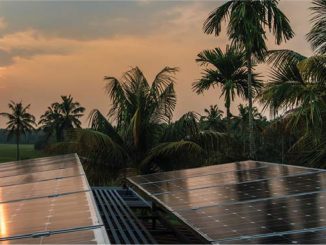
Solar power is one of the most eco-friendly and cost-effective sources of electricity generation. Given that large parts of the Asian region receive abundant solar radiation, many countries have optimal conditions for harnessing solar energy.
Within the solar power segment, rooftop solar is gaining significant importance as these small systems do not require large capital investments or extensive civil works, making them easier to install. Furthermore, these systems reduce the burden on utilities and help meet local energy demand. In South Asian countries, particularly, rooftop solar is emerging as an attractive and sustainable option for meeting the energy needs owing to limited land availability and a rising population in the region. These installations can significantly contribute to sustainable development and tackle the complex challenges of rapidly urbanising societies by utilising existing infrastructure, promoting energy equity and increasing climate resilience.
Renewable Watch provides an overview of rooftop solar trends and developments in South Asian countries and strategies to accelerate installations in this segment…
Country-wise progress
India
With over 300 million households and nearly year-round abundant sunshine, India has immense potential for solar rooftop installations, according to a report by the Institute for Energy Economics and Financial Analysis. The rooftop solar programme initially aimed for an installed capacity of 40 GW by 2022. The timeline for the programme has now been extended till March 2026. As of April 2024, the country’s grid-connected rooftop solar capacity stood at 12 GW or 14.6 per cent of the installed solar capacity.
The commercial and industrial (C&I) segment has been responsible for much of the capacity additions in the country’s rooftop solar space. It has witnessed the entry of specialised developers providing a range of attractive business models to clients, especially in the opex space. Thus, customers do not have to worry about the capital costs or the installation and maintenance of the projects.
Among the states, Gujarat is on top, with the highest installed capacity of 3,506.17 MW, followed by Maharashtra with 2,071.69 MW, Rajasthan with 1,191.89 MW and Kerala with 675.25 MW. These states collectively account for more than half of the total rooftop solar installations in the country as of April 2024. The capacity addition in these states has been supported by a facilitating policy and regulatory framework, subsidies and net metering.
The Indian government has been taking further positive steps to increase the uptake of rooftop solar projects. In February 2024, the government launched a landmark scheme for the segment – PM-Surya Ghar: Muft Bijli Yojana. The scheme, with a total outlay of Rs 750 billion until 2025-26, aims to provide free electricity up to 300 units every month to 10 million households across the country. The scheme has received an overwhelming response, with over 10 million registrations within one month of its launch in February 2024, as per PM India. Under the scheme, a central financial assistance (CFA) of 60 per cent of the system cost will be provided for 2 kW systems while 40 per cent of the additional cost will be covered for systems of 2-3 kW capacities. The CFA will be capped at 3 kW.
In the same month, the power ministry incorporated enabling provisions in the electricity consumer rules to accelerate rooftop solar development in the country. Under the amended rules, solar rooftop PV systems of up to 10 kW capacity have been exempted from the requirement of technical feasibility study. Meanwhile, the timeline for completing the feasibility study has been reduced from 20 days to 15 days for systems with more than 10 kW capacity.
In January 2024, the Ministry of New and Renewable Energy sanctioned updated benchmarks for CFA under the rooftop solar programme. For 1-3 kW capacity individual household projects, the CFA has been updated to Rs 18,000-Rs 20,000 per kW. Meanwhile, for projects in the 3-10 kW range, the adjusted CFA is Rs 9,000-Rs 10,000 per kW. For resident welfare associations or group housing societies and common facilities for projects up to 500 kW, the CFA has been updated to Rs 9,000-Rs 10,000 per kW. Furthermore, in order to expedite the widespread acceptance of grid-connected rooftop solar systems, the ministry has issued directives to streamline the implementation and application procedures.
While the PM-Surya Ghar: Muft Bijli Yojana is expected to accelerate the uptake of residential rooftop solar systems, reduce household electricity costs and strengthen the grid, additional measures as well as clarity on the implementation procedure of the scheme may be required to give an impetus to the segment. This is especially the case for the C&I segment, which continues to face bureaucratic hurdles and restrictions from discoms.
Bangladesh
As per a report by the Centre for Energy Research of United International University, the total installed rooftop solar capacity reached just 164.5 MW in 2024, with 88.2 MW from 2,125 net metered installations and 76.36 MW from 232 non-net metered system installations. The growth of the rooftop solar segment in Bangladesh was driven by a government mandate in 2010 requiring new buildings and industries to install rooftop solar systems to qualify for grid connection.
In July 2018, after a gap of almost eight years, the government introduced net metering guidelines. The guidelines aimed to encourage industries and buildings with three-phase connections to deploy rooftop solar, enabling grid connection through two-way meters. Further, in April 2020, the Bangladesh Bank incorporated rooftop solar with net metering into its green refinancing scheme, allowing owners of industries and certain building categories to access low-cost financing. In addition, the bank included solar rooftop in the sustainable finance taxonomy to encourage financial institutions to offer loans to support the sector’s growth.
Furthermore, Infrastructure Development Company Limited (IDCOL), a non-banking financial institution in Bangladesh, established a goal to finance 300 MWp of installations on industry rooftops by 2025. According to the CEO of IDCOL, rooftop solar panels across the country have the capacity to produce more than 4,000 MW of power. In August 2023, the Bangladesh government widened the scope of net metering guidelines requiring net metered solar systems to be installed in big and newly built residential, industrial, commercial, educational, charitable and medical buildings in order to facilitate new grid connections.
While several measures have been implemented to increase the adoption of rooftop solar installations, there is a need to simplify the loan disbursement process, ensure panel quality and waive the import duty on inverters, which was raised from 11 per cent to 37 per cent due to the absence of domestically manufactured high quality inverters.
Sri Lanka
Sri Lanka has made significant progress in deploying rooftop solar compared to utility-scale solar. Reportedly, solar rooftop power generation in the country surpassed 750 MW by mid-February 2024. However, of the seven million buildings in Sri Lanka, only 50,000 have solar panels put on their rooftops. This represents a huge opportunity to increase solar power generation from rooftop solar systems. In Sri Lanka, rooftop solar is powered by the net metering programme, which was launched in 2010, and is further being promoted under the Soorya Bala Sangramaya initiative (Battle for Solar Energy). The initiative, launched in 2016, aims to install 1 GW and 1.5 GW of solar rooftop capacity by 2025 and 2030 respectively.
In partnership with the Ceylon Electricity Board, Lanka Electricity Company Limited, Sri Lanka Sustainable Energy Authority and the Ministry of Power and State Minister of Solar, Wind, and Hydro Power Generation Projects Development, the programme was introduced to encourage the installation of small solar power plants on the rooftops of residences, religious places, hotels, commercial buildings and industries. Based on the electricity consumption, the consumer has the choice of opting for one of three schemes: net metering, net accounting, or micro solar power producer. To support this programme and in order to fund the construction of rooftop solar PV systems, the Asian Development Bank approved a $50 million loan in 2017 to enable institutional and domestic customers to finance the installation of rooftop solar generation facilities. Later, in 2020, the country received a $100 million line of credit from the Indian government to support the installation of rooftop solar systems on government buildings.
Although the country has been making efforts to install solar systems on rooftops, it is far from achieving its target of 1,000 MW by 2025. Addressing grid instability, implementing storage solutions and providing solar training programmes to fill the skill gap in the workforce will be crucial to achieving the targets set by the government.
Maldives
The Maldives Ministry of Environment and Energy, in collaboration with the World Bank and the Scaling Up Renewable Energy Programme (SREP), developed the Accelerating Sustainable Private Investments in Renewable Energy (ASPIRE) programme in 2014, with a focus on installing solar panels on rooftops. Supported by $11.7 million in SREP funds, the programme aims to scale up solar generation to 20-40 MW. The initial phase of ASPIRE focused on installing 4 MW of solar systems on public buildings in Malé and the nearby residential island of Hulhumalé. The first sub-project with 1.5 MW of rooftop solar PV capacity, in Hulhumalé, has been operational since March 2018. Through power purchase agreements with State Electric Company Limited, the ASPIRE initiative provides support for solar panel installations.
By early 2020, the installation of rooftop solar panels in the Greater Malé Region had expanded significantly, reaching over 3,000 kWp. In November 2023, the environment ministry initiated the first phase of a programme called Magey Solar, aimed at enabling households to produce power from solar energy. Under this phase, households will receive 3 MW of solar PV systems. The government has already started public auctions to find a supplier for this phase.
Other countries
The rooftop solar market is still relatively undeveloped in Afghanistan, Nepal, Pakistan and Bhutan. In Afghanistan, the rooftop solar segment has been propelled by the draft regulation on net metering introduced in March 2017. Following this draft policy, a feasibility study for a 15 MWp rooftop project was undertaken in Kabul. However, there has been no development update since then.
Nepal implemented a net metering policy in 2018, but in July 2022, the Nepal Electricity Authority suspended net metering entirely. It was reinstated in 2023 with a lower feed-in rate of NPR 5.94 per kWh, down from NPR 7.30 per kWh. This change has made it difficult to persuade potential investors of the reliability of the net metering policy, thereby deterring substantial investments in the sector.
Pakistan introduced a net metering policy in 2017 to promote the uptake of solar power among residences and commercial entities. Meanwhile, the Bhutanese government is executing a rooftop solar installation initiative for 300 households. However, only a few projects have been implemented so far in these countries.
The way forward
South Asian countries have immense rooftop solar potential. However, leveraging this potential requires the implementation of robust strategies, the establishment of supportive policy frameworks and collaboration. Each South Asian country needs to tailor its approach to enhancing rooftop solar uptake based on its individual diversity and unique methods of harnessing renewable energy sources.
Overall, unlocking the full potential of this segment will require the introduction of innovative business models such as the community solar model. This approach can effectively address market obstacles in providing solar solutions to residential households, tackling issues such as financial accessibility and insufficient roof space. This model will also address discoms’ concerns regarding revenue decline while promoting the rapid deployment of rooftop solar.
Further, raising awareness to address information asymmetry is essential. Favourable financing mechanisms will be crucial for advancing further in this direction. Governments can also introduce financial measures for households, providing access to capital at favourable rates. There is also a need to streamline approval processes and ensure quality assurance through the development of testing facilities.
Going forward, the governments of South Asian countries like Afghanistan, Bhutan, Nepal and Pakistan can work on updating their net metering policies with clarity on rooftop solar incentives to attract interest from the public and private sectors