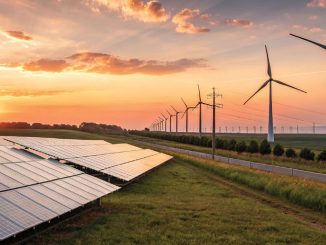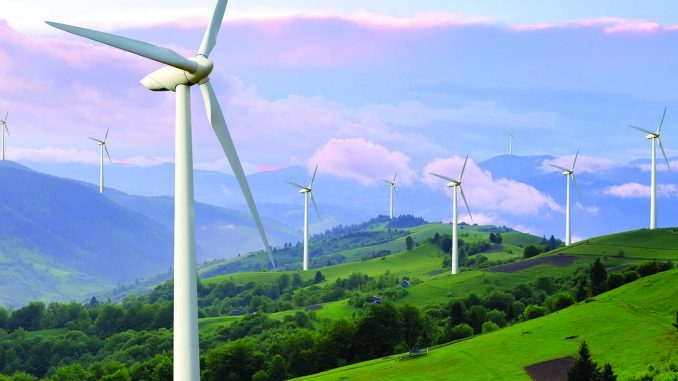
The key goal at COP28 to triple renewable energy production by 2030, in line with the Paris Agreement, highlighted the critical role of wind energy in meeting climate targets. This mandate requires countries to come together in a coordinated effort, expediting the energy transition by implementing clean energy solutions that facilitate a threefold increase in global renewable capacity.
In this context, the Global Wind Energy Council’s (GWEC) Global Wind Report 2024 provides an analysis of the advancements in the global wind sector. In 2023, 117 GW of new wind power capacity was added, pushing the global total installed wind power capacity beyond 1 TW, which reflects a 13 per cent year-on-year increase. Wind energy installations need to be ramped up from 117 GW (106 GW from onshore wind and 10.8 GW from offshore wind) in 2023 to at least 320 GW by 2030. This tripling of annual wind energy installations would bring the total capacity to about 3 TW by the end of the decade.
Renewable Watch presents the key takeaways of the report…
Global market overview
At the country level, China and the US continued to be the two biggest global markets for onshore wind additions, followed by Brazil, Germany and India. Together, these top five markets accounted for 82 per cent of the world’s new installations in 2023, which is a 9 per cent increase from 2022. Regionally, the Asia-Pacific and Latin America regions have added over 75 GW and 6 GW of onshore wind capacity respectively. New installations of onshore wind in Europe and Africa and the Middle East did not exceed their 2022 records, but both regions still recorded their second-highest years for new installations. In North America, total onshore wind additions dropped to 8.1 GW in 2023, marking a 16 per cent decrease compared to 2022.
The offshore market saw the commissioning of 10.8 GW of new capacities in 2023, increasing the total offshore wind capacity to 75.2 GW worldwide. China maintained its position as the global leader in annual offshore wind development, commissioning 6.3 GW in 2023, bringing its total offshore wind capacity to 38 GW. In other parts of the Asia-Pacific region, Taiwan commissioned 692 MW, Japan 62 MW and South Korea 4 MW of new offshore wind capacity in 2023. Europe commissioned 3.8 GW of new offshore wind capacity across six markets. It continues to lead in floating wind technology, with 37 MW of commissioned floating wind capacity in 2023, accounting for 79 per cent of all floating wind additions in 2023 and bringing the total capacity to 208 MW.
Moreover, this year’s report examines the growth challenges in the wind energy sector, focusing on critical areas such as market economics and investment, supply chains, grid and storage infrastructure and public support for the energy transition. The report underscores the need for a collective effort to redesign markets to encourage large-scale renewable energy expansion. This approach should focus on public-private partnerships to drive investment, particularly in emerging markets and developing economies. Furthermore, it suggests that policymakers should strike a balance between diversifying the supply chain and implementing strategic onshoring while preserving global supply chain connections to avoid project delays or disruptions to the broader energy transition. It further stresses upon the importance of public support for grid expansion, more precise goals for grid investment and system flexibility, as well as the need for anticipatory funding and infrastructure investments.
India’s progress so far
With 45 GW of installed onshore wind capacity as of January 2024, India is ranked fourth globally in terms of overall wind installations. After China, it is the second-largest wind market in the Asia-Pacific region. By 2030, India targets to have 140 GW of installed wind power capacity. The commissioning of nearly 2.8 GW of onshore wind power in 2023 was made possible by a number of institutional and regulatory actions by the central and state governments. This marked the largest annual installation level since 2017. As of September 2023, concluded wind and hybrid tenders indicate that there is a pipeline of over 13 GW of wind projects in the country. To ensure that targeted levels of annual wind and renewable auctions are met, the central government has authorised PSUs, such as NHPC Limited, NTPC Limited, Indian Railways, SJVN Limited and PTC India Limited, to conduct the auctions. In 2023, state utilities announced standalone wind, round-the-clock (RTC), firm and dispatchable renewable energy, and hybrid auctions totalling 21 GW of capacity.
Furthermore, the revised Strategy Paper for Establishment of Offshore Wind Energy Projects, which presents three models for allocating 37 GW of capacity through 2030, has been published. This represents significant progress towards the completion of the first offshore wind farm tender. In February 2024, Solar Energy Corporation of India Limited announced the leasing of an offshore wind seabed with a capacity of 4 GW in Tamil Nadu. The offshore wind lease guidelines have also been released. Together with an interstate transmission system (ISTS) waiver till 2032, viability gap funding for the first 1 GW of offshore wind capacity has been granted. Moreover, PSUs are showing strong interest in forming partnerships and joint ventures, such as collaborations between Oil and Natural Gas Corporation Limited and NTPC Green Energy Limited (NGEL), Larsen and Toubro (L&T) and Navantia, NGEL and Gujarat Pipavav Port Limited, and Stiesdal and L&T.
Key policy enablers driving India’s progress
India has been proactive in policy making, driving the growth of the wind sector. This includes targeting 10 GW of annual onshore wind bids from 2023 to 2027, making changes to bidding regulations, waiving ISTS charges until June 2025 and implementing wind-focused renewable purchase obligations from 2023 to 2030. Additional measures include announcement of tenders for firm and dispatchable renewable power supply as an improved version of the RTC tender for renewable and storage projects, mandates for distribution licensees and consumers to purchase minimum renewable energy shares, and the timely disbursement of payments by discoms and transmission planning to accommodate 48 GW of onshore wind capacity by 2030. Furthermore, the revised National Repowering and Life Extension Policy for Wind Power Projects, 2023 aims to promote the replacement of older wind turbines with more efficient ones.
India to become an export hub
India, being the second-largest centre for assembling onshore wind turbines and producing key components in the Asia-Pacific region, is in a prime position to expand its wind manufacturing capabilities. It stands to gain from the “China + 1” strategy being adopted by key players in the supply chain. India’s own onshore wind demand can be met by domestic manufacturing through 2030, with the potential for additional export and trade value if manufacturing capacity is further increased. Furthermore, the country can take more steps to reduce the import of certain large components such as castings, generators and pultrusion carbon fibre. To this end, at the Vibrant Gujarat Summit in January 2024, Reliance Industries Limited announced plans to establish India’s first carbon fibre facility at Hazira, Gujarat, to support wind sector blade manufacturing. Moreover, investments in domestic offshore wind manufacturing are likely to follow the successful awarding of offshore wind bids. The level of interest will depend on the attractiveness of the financial and non-financial incentives offered by the central and state governments. Notably, India is exceeding expectations as a production hub in the supply chain, with major Indian conglomerates ramping up investments in the cleantech sector, in line with the Make in India policy for localising strategic industries. Going forward, the country is poised to solidify its role as a global export hub for the wind industry.
Outlook
The GWEC has updated its onshore wind estimate for 2024-28 to 22.8 GW and anticipates a sustained recovery. India’s installed wind capacity is predicted to reach 73 GW in 2026-27 and 122 GW in 2031-32, according to the central government’s National Electricity Plan for the period ending in 2032. Furthermore, the winners for an additional 13 GW auction launched in 2023 are anticipated to be announced this year. Despite favourable policy and regulatory trends, the current onshore wind projections through 2030 indicate a significant shortfall compared to the government’s target of reaching 140 GW of installed capacity by the end of the decade. This is because onshore wind faces several challenges, such as state-level barriers related to right of way, power purchase agreement sanctity issues, payment delays and land allocation difficulties. The industry is also grappling with rising turbine prices due to inflation in commodity prices and increased financing costs.
Overall, policymakers and industry players must collaborate to remove the barriers in wind power project development. This calls for local policy measures focusing on project permits, technology compatibility, manufacturing readiness, supply chain growth and a robust grid infrastructure to foster decentralised wind energy development and navigate volatile market conditions.