By Divya Sharma, India Executive Director, Climate Group
India’s economy will likely quadruple by 2050 (from $3 trillion today to $12 trillion by 2050), and businesses will play their part in this expansion. But it is India’s ambitious goal of net zero by 2070 that we must not lose sight of. This goal can be achieved much earlier if businesses adopt sustainability measures soon and are able to influence companies in their supply chains.
At the Climate Group, we have been working with major businesses for 15 years now. More than 150 of them are members of our RE100, EP100, SteelZero, EV100 and EV100+ initiatives in the country. We are helping them set ambitious targets and accelerate the pace of action, at-scale. If they start asking for renewables, invest in EVs and net zero steel, real change can be set in motion.
The switch to renewables
There is a co-benefit advantage for corporates to switch to renewables. It is not just that India’s sustainability agenda will benefit from businesses transitioning, but it is increasingly making business sense for them to become sustainable. In our experience, while reducing operating costs is one of the major factors behind businesses switching to renewables, they are looking forward to several intangible benefits such as listing on global sustainability indices and value unlocking in the capital markets as well. We have seen that capital-intensive businesses have also succeeded in raising capital at lower rates because of their sustainability goals and long-term commitment towards climate action.
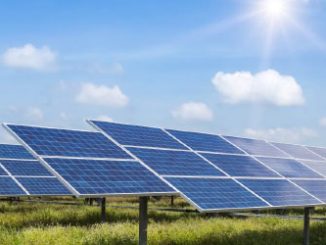
There are over 185 companies who are RE100 members, our global initiative as part of which businesses commit to 100 per cent renewable electricity. Indian headquartered RE100 members have on average an ambitious target of 2035, despite some of them being from the hard-to-abate sectors like cement. The reported renewable energy consumption of the companies was a substantial 17 TWh in 2022. This indicates that there is willingness and demand to change.
At the Climate Group, we are not only asking companies to take the RE100 pledge but are also working with them on responsible electricity procurement. Currently, we are building a renewable energy procurement framework to ensure that they procure electricity generated by ensuring social justice, community development, land rights and adequate economic benefits to the affected community.
However, our members are also seeing some barriers. They face several procurement challenges such as lack of adequate and uninterrupted supply of electricity. While, in the near term, these challenges continue to affect renewable energy adoption, several steps are being undertaken by the central and state governments to streamline policies and augment green energy capacity. India has already set a target of adding 500 GW of non-fossil-based electricity capacity by 2030.
Outlook
What we are doing is amplifying the voice of businesses on their key barriers to progress and showcasing a demand for sustainable alternatives. This outlook is important. For example, in the transport space, various Indian companies (including some of our member companies) were able to aggregate demand of about 7,750 zero emission trucks by 2030 at the Clean Energy Ministerial last year. It gave clear demand signals from 16 diverse businesses from the cement, chemicals, steel, dairy and food, and service sectors. We are also supporting three companies piloting e-trucks and scoping out collaboration opportunities for asset utilisation and common charging infrastructure.
Similarly, emerging businesses such as e-commerce are finding a collective voice through our dialogue and advocacy initiatives. We are assisting in bundling regulatory concerns and addressing the gaps via representation in various national forums.
In all, businesses must embrace net zero. It is now easier than ever.
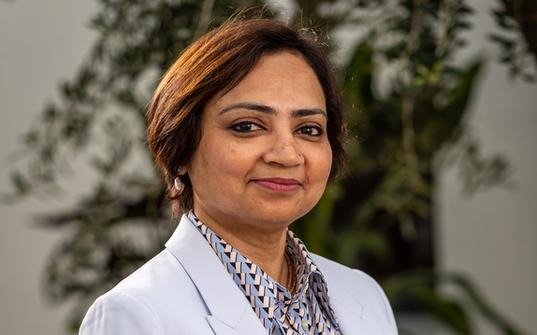
About the author: Divya Sharma is the India Executive Director of Climate Group. In this capacity, she leads a team of professionals who work with businesses and governments around critical systems on climate action, ranging from industries, transport, energy, built environment and food. Divya is an international climate and urban development expert, specialising in climate resilience and urban development planning with almost 20 years in India and internationally.