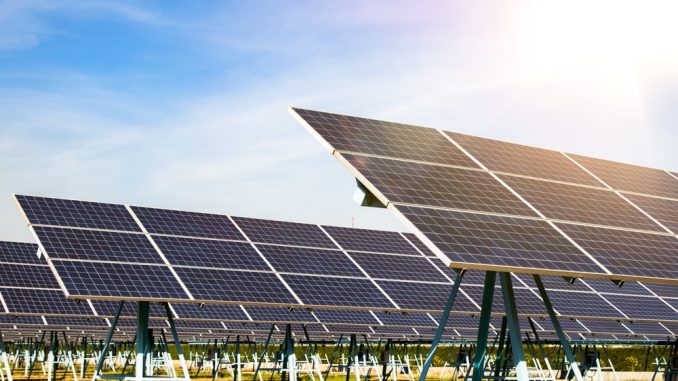
Amongst all solar power plant components, while modules perhaps get the most attention, it is the module mounting structures that form the backbone of the solar projects. Solar panels need mounting structures for getting attached to the ground or rooftops and also getting aligned at the right angles to receive maximum sunlight. In addition, mounting structures also protect solar panels from natural forces like strong winds or flooding.
India’s solar power market is expanding at a rapid scale and so is the demand for required equipment like mounting structures. This trend is expected to continue in line with the country’s target to add more than 200 GW of solar capacity by the end of this decade. And with such massive capacity additions expected over the next few years, it is vital that mounting structures are constantly upgraded to improve performance in terms of both cost and product quality. Estimates suggest that solar mounting structures can account for 7-10 per cent of the total project cost of solar power plants. While this share is significant, it can further increase if poor quality or inadequate design of mounting structure is chosen as it can lead to losses in terms of output as well as high maintenance costs.
Design and materials
Solar modules can be installed on ground, rooftops, floating platforms in water, poles, carports and even canal tops, and the mounting structures are designed differently for each of these cases. For instance, for roof-mounted racking systems, metal clips (flush mounts) or weights (ballasted mounts) are used to secure modules. There are pros and cons associated with both of these arrangements. Flush mounts have lower costs but can lead to leakages in roofs whereas ballasted mounts can increase the weight on roof. For floating solar systems or canal top systems, extra care needs to be taken regarding corrosion on mounting structures due to moisture. Meanwhile, for ground-mounted systems, mounting structure design needs to account for soil conditions and topography.
To ensure robust and high-quality module mounting structures that can last for the entire project lifetime, it is critical to choose the right materials. The choice of material often depends on not just the location or type of solar project but also the climate. While mounting structures have been traditionally made with steel, iron and aluminium, zinc coating has now become common to prevent rusting and corrosion. In India, galvanized steel made by coating steel with molten zinc is now widely used for making solar mounting structures. JSW Steel, Pennar Industries, Ganges International, Nuevosol, Loom Solar, Metalkraft, Jakson, Strolar, SunShell Power, SNS Corporation, Aerocompact and Tata International are some of the market players in the Indian mounting structure space.
Recent technology advancements
There have been various innovations in the module mounting structure space to improve system performance and reduce costs. Thus, mounting structure manufacturers are now focusing on lightweight materials to optimise costs. Meanwhile, various materials and their combinations are also being tried and tested to achieve the right balance of less cost and high quality. For instance,
A Spanish startup Landatu Solar announced a new mounting structure for rooftops and flat surfaces last year which features a two-piece high-density polyethylene (HDPE) ballast system. The system features a fillable base, and a cover and this base can be filled with water, gravel or even sand to provide sturdy system. While the unfilled base weighs less than 3 kg, it has a volume of 56 liters and can reach up to 100 kg when filled. This Landblock is 465 mm x 1,235 mm x 480 mm in size and can reportedly withstand wind speeds of up to 162 km per hour. The innovative product offers various benefits for installers. Firstly, it is much lighter than concrete ballast mounting systems and is easier to handle. It can be easily transported to the desired location and then quickly filled with water or sand or gravel to complete installation. In addition, perforation of rooftop is not required, and the modules can be directly fixed on the mounting structures using plugs and screws. The mounting structures are reportedly easier to transport as they can be stacked on top of each other allowing for space optimisation.
Efficient manufacturing processes are being developed to prevent unnecessary wastage and reduce production costs. Meanwhile, standardized designs are also being formulated. At the same time, adjustable angles are also becoming popular to improve overall generation from solar projects. At the same time new products are also being designed to allow for easier handling and installation on site with less manpower and effort. For instance, Mibet has introduced a new solar mounting structure that is specifically designed for solar projects on balconies. The system is pre-bolted and fixed, and thereby does not require welding and drilling during installation. Further, the product does not require any additional space or any change to the building’s structure and can be installed instantly on a wall or balcony with just one or two people required for the entire process. The mounting structure is easily adaptable to different types of balconies and can be mounted on concrete garage rooftops, flat rooftops with cement ballast, or balcony or terrace walls using expansion bolts.
Recycling and reusing of materials are slowly gaining traction as this helps manufacturers to reduce production costs, and also to provide conscious buyers sustainable materials for their solar projects. Case in point, a Swiss startup called Turn2Sun Renewables has developed a mounting structure that is made of wind turbine blades. This “Blade2Sun” solution uses blades from end-of-life wind turbines to support a metal structure that mounts solar modules, and there is no need of metallic beam-based mounting structures. The major benefit of this arrangement is that these end-of-life wind turbine blades have virtually zero cost, and thus, the product is very cost competitive when compared to other similar systems. Further, the product helps recycle metals from wind turbine blades, thus helping in reducing the consumption of new metal for production of mounting structures.
Further, digital solutions are also being explored in the mounting structure space, though this is still at a nascent stage. Integration of digital technologies can help in in quality control, operations, and maintenance, as well as in initial design and layout. For instance, Aerocompact’s module mounting structures come with proprietary AEROTOOL design software. Its recent TSE15 product in COMPACTMETAL TS series has a height of 80 mm allowing for adequate roof clearances and rear ventilation. Further, the raised short rail requires minimal additional assembly effort and Aerotool helps in project planning with recommendations for the appropriate bit extension.
Future outlook
The mounting structure space is expected to continue growing over the next few years with improvements in materials, design, technology and changing needs of buyers. As buyers focus on reducing implementation timelines and labor costs, there is going to be a greater focus on lightweight products that are prefabricated and require minimal civil works. Further, the Indian market offers immense opportunities to mounting structure manufacturers as they can cater to clients looking for products suitable for various climatic and geographic conditions.
There are going to be definite concerns regarding supply chains and cost volatility of raw materials. For instance, the successive waves of the pandemic and the Russia-Ukraine crisis led to upheavals in the commodity markets, and this combined with a volatile currency and increased transport costs led to serious repercussions for the metal and minerals industry as well. Equipment prices witnessed an increase in the solar space leading to hike in project costs for both installers and developers.
Thus, going forward, the mounting structure players need to focus on constant technology upgradation combined with diversification of supply chains to ensure secure operations.