Transformers are crucial and costly elements of the transmission system and play a vital role in maintaining consistent electricity flow over extended distances. The demand for transformers is on the rise, primarily due to the expansion of the transmission and distribution (T&D) segment. Their availability and durability can significantly impact grid reliability, as it enhances voltage control. This is necessary, given the intermittent supply of renewable energy. Transformers find applications in various fields, including both traditional and renewable energy installations, as well as in railway and metro systems.
Transformers enable the adjustment of voltage levels, transferring electrical energy between alternating current (AC) circuits. Their usage spans a broad spectrum, from elevating voltage for long-distance electricity transmission from generators to lowering the voltage in conventional power circuits for the operation of low voltage devices. As static components in electrical systems, transformers facilitate the transfer of electrical power through electromagnetic induction between circuits. This application enables substantial energy conservation by amplifying voltage and reducing current, given that losses are proportional to the current flow in the wire. Typically, electricity undergoes transformations as it passes through four or five transformers on its journey from power plants to end-users.
Furthermore, transformers exhibit an average efficiency of approximately 98.5 per cent, establishing them as one of the most energy-efficient devices. However, to prevent the accrual of significant energy losses over their extended operational lifespan, it is advisable to invest in highly efficient transformers. Moreover, the adoption of superior-grade materials, optimal design and reduced maintenance costs contribute to a decrease in unexpected failures. While the enhanced efficiency of transformers may incur a higher initial purchase cost, the incorporation of additional copper in windings and superior core materials justifies these expenses.
In a written reply to a question in the Rajya Sabha on December 5, 2023, Raj Kumar Singh, minister for power and new and renewable energy, stated that the capacity of the national grid is being expanded continuously to meet the increasing electricity demand and the rise in generation capacity. On an average, about 16,000 ckt. km of transmission lines and 75,000 MVA of transformation capacity (voltage levels of 220 kV and above) are added per year in the country. Apart from this, a total of 87,379 ckt. km has been added as of October 2023, compared to the targeted 107,315 ckt. km.
Technology trends
The most prevalent type of transformer used in renewable energy applications is the inverter transformer. In these systems, the direct current (DC) generated by photovoltaic (PV) cells is converted to alternating current AC through inverters. Subsequently, the AC power is integrated into the power grid via a step-up transformer. This process aligns the output AC power with the phase frequency and voltage of the existing grid to integrate PV power into the grid. While PV inverters demonstrate high efficiency and minimal injection of DC, harmonics or reactive power, challenges in solar power system design arise due to the limited size of inverters, typically reaching around 500 kVA. Restrictions on inverter size consequently impose limitations on the size of PV systems, hindering the advancement of inverter technology.
Isolation transformers are commonly employed to protect inverters from grid-side surges and prevent any DC injection from the inverter into the grid. While many inverter models come equipped with built-in isolation transformers, their increased cost and reduced efficiency prompt some consumers to opt for inverters without them. However, isolation transformers may be unnecessary if the PV system incorporates another transformer, such as a step-up transformer.
For managing and transmitting substantial volumes of electricity from variable renewable energy installations, both dry-type transformers and liquid-filled transformers are gaining traction. Dry-type transformers enclose windings and cores in a sealed tank filled with air or gas under pressure, connecting renewable energy sources to the grid or load. Liquid-filled transformers utilise mineral oil, synthetic ester or natural ester fluids, making them suitable for diverse applications such as residential, commercial and industrial rooftop solar installations; and onshore pad-mounted, ground-mounted, offshore-tower and nacelle-mounted wind projects. 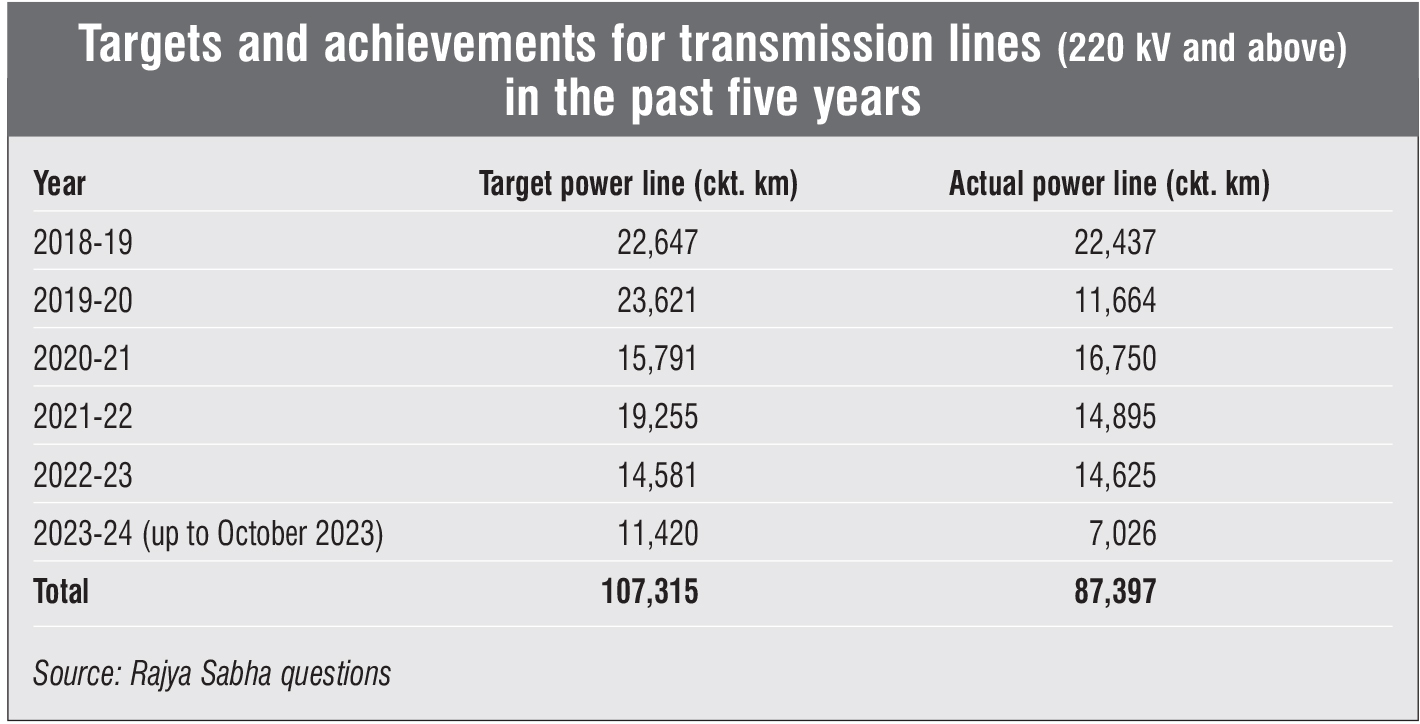
In the future, the surge in rooftop installations is expected to increase the number of prosumers willing to sell and procure electricity from the grid. Transitioning to smart transformers will enable bidirectional energy flow, ensuring electricity availability during peak hours at competitive prices. Smart transformers contribute to grid resilience by offering resistance against various forms of volatility and instability.
Solid-state transformers (SSTs) consist of control circuits, high-power semiconductors and high-frequency transformers. They facilitate seamless AC-DC and DC-AC conversions and provide enhanced control over power distribution networks. SSTs are more robust, reliable, efficient and cost-effective compared to conventional transformers, finding common use in renewable energy sources such as solar and wind energy and traction locomotives. The ageing T&D infrastructure is expected to support the growth of the SST market.
The integration of internet of things (IoT) technology will play a pivotal role in collecting real-time data on grid performance, providing utility companies with immediate insights to prevent outages and downtime. This, coupled with artificial intelligence/machine learning, IoT can provide utilities with advanced warnings about potential issues by modelling the performance and usage intensity of components. This proactive approach enables diagnosing and scheduling repairs in advance, leading to reduced operations and maintenance (O&M) costs. Ultimately, smart transformers enhance the efficiency and decrease the O&M costs of T&D utilities.
Challenges and the way forward
A key challenge with transformers is their O&M. Inadequate operational practices can deteriorate asset health and lead to poor equipment performance. Often, utilities neglect preventive maintenance, with maintenance efforts being initiated only after equipment failure. Apart from this, the absence of mandatory guidelines for the proper installation and O&M of transformers often leads to improper earthing practices, the usage of substandard materials in transformer manufacturing and the overloading of transformers. Moreover, there are instances of tampering or bypassing of protection equipment, along with theft of materials or oil, which can lead to hazardous situations such as fires and eventual transformer failure. These challenges collectively contribute to operational inefficiencies and hinder the reliability of transformers.
To address these challenges effectively, industry experts suggest that manufacturers could extend maintenance services during the warranty period of transformers in selected sample areas. This would not only set the standard for proper transformer maintenance but also enable utilities’ maintenance staff to receive valuable training and hands-on experience in the best maintenance practices.
Adopting the best O&M practices for transformers is crucial for ensuring the reliability, efficiency and longevity of these critical components. Regular inspections, uniform operational practices, the deployment of smart transformers, the adoption of distribution transformer monitoring units and transformer failure analysis are key factors that contribute to the health and performance of transformers. Implementing these practices helps utilities reduce downtime while enhancing the overall efficiency and sustainability of the T&D system.
Growing renewable capacity will necessitate investments in the T&D sector in order to upgrade and incorporate smart technologies that can facilitate the intermittent and bidirectional flow of electricity. Constructing new transformer substations in inner-city zones or expanding existing facilities poses significant challenges due to limited space availability. As a result, there is an increasing demand for compact and discreet underground transformer substations in densely populated areas. Further, the power sector is exploring the adoption of transformer-less high voltage direct current transmission systems. For wider acceptability and implementation, conducting pilot project studies to gain valuable experience and insights is crucial. Overall, the outlook for the transformer market remains positive owing to various growth drivers.