By Sonali Deshpande, Senior Policy Analyst, Industry, Energy Innovation; and Nikit Abhyankar, Associate Adjunct Professor, Co-Faculty Director, India Energy and Climate Center, Goldman School of Public Policy, U.C., Berkeley
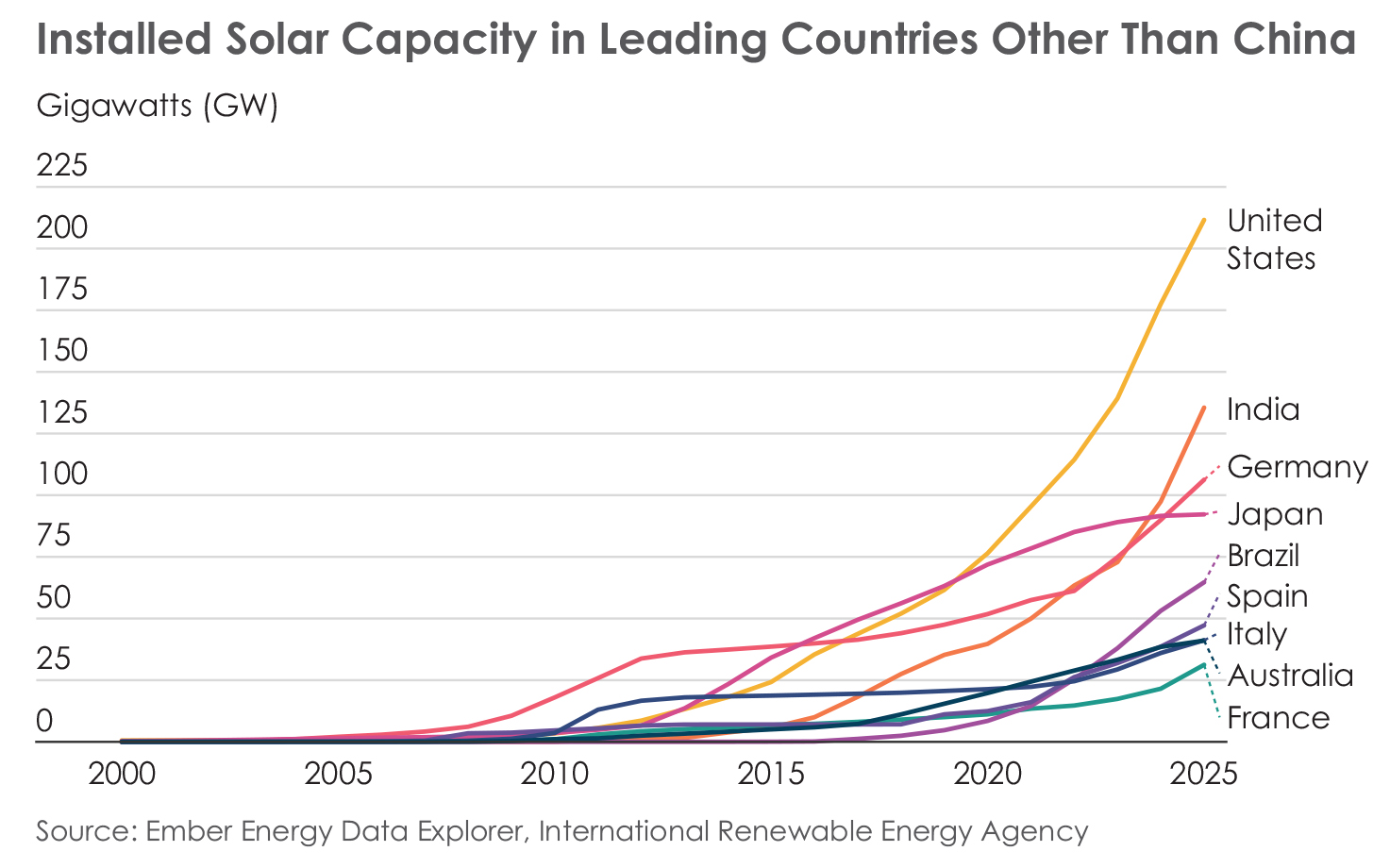
India is poised to surpass the US to become the world’s second largest renewable energy market. Indian solar deployments grew 45 GW last year alone, close to Spain’s entire installed solar capacity. Meanwhile, India’s solar and storage prices are about Rs 3 per kWh, among the world’s cheapest. This is inflation-proof power, locked at flat nominal prices for 12 to 25 years, compared to volatile fossil fuel imports whose prices soar whenever conflicts such as the one in West Asia break out.
It is now time to plug in that cheap, clean power. Nearly 42 GW of competitive renewable projects have not found buyers. Distribution companies, burdened by legacy contracts, hesitate to sign new long-term agreements with renewables developers. Market structures, not costs, block the uptake of clean energy in India. Industrial electrification could be the answer – and a major economic opportunity. New research from Energy Innovation and U.C. Berkeley’s India Energy and Climate Center shows that solar-powered electrification is already cost-competitive with burning fossil fuels across all temperatures industry uses today.
 The three pillars of India’s solar advantage
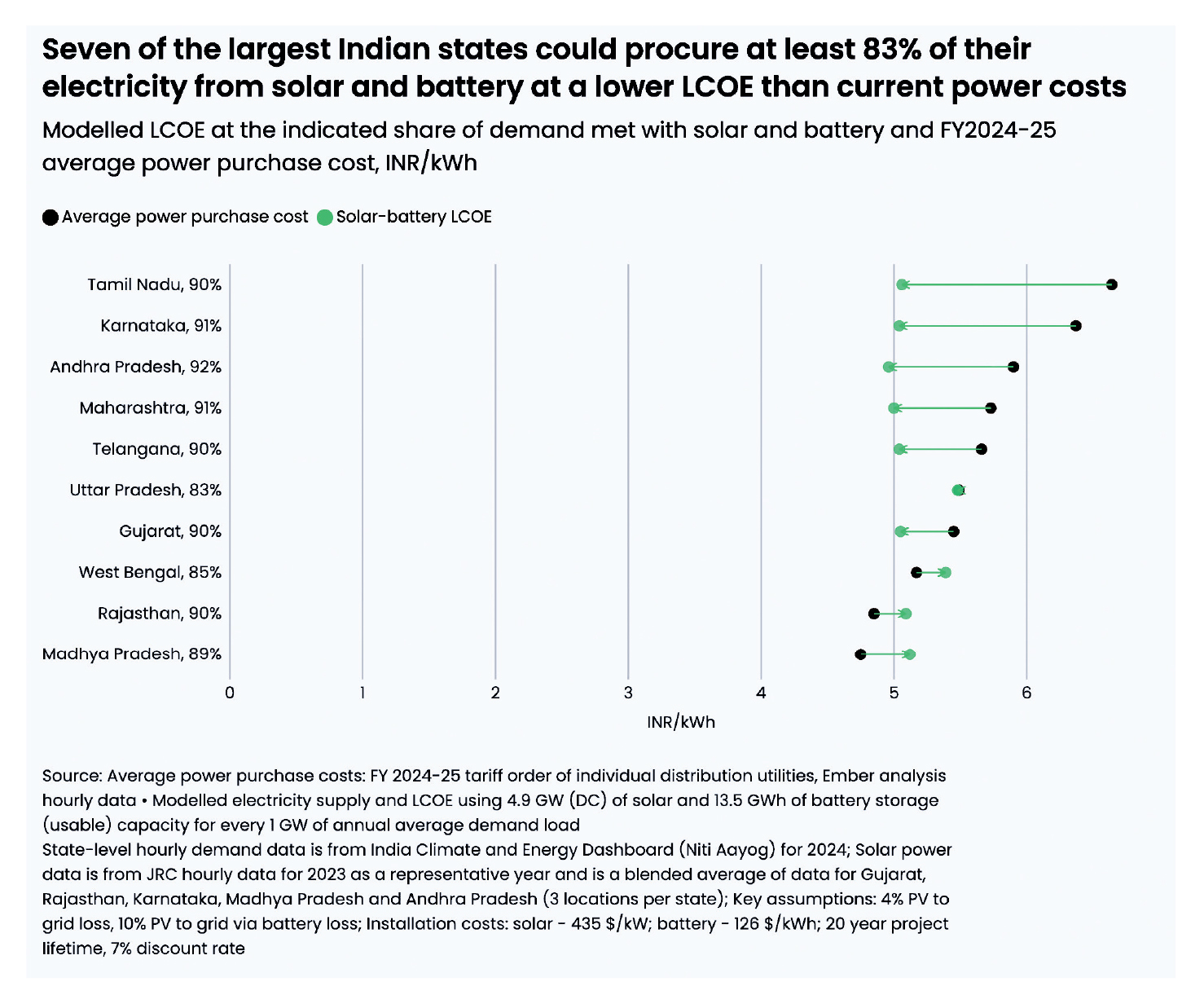
India has three unique structural assets making large-scale industrial electrification possible. First, cheap battery storage. Firm power is critical for meeting industry’s continuous energy demand, and pairing solar with batteries is dirt cheap in India. Recent bids imply round-the-clock solar and storage, delivered at factories, is already 20-30 per cent cheaper than prevailing industrial electricity tariffs.
Second, India’s national grid connects factories in Tamil Nadu and Punjab to cheap solar in Rajasthan and Gujarat. Other countries operate fragmented grids that prevent geographic arbitrage, but India can ensure its abundant clean power reaches the industries that need it, wherever they are.
Third, the unique institutional framework that gives electricity consumers direct access to clean power. Under India’s Green Energy Open Access Rules, manufacturers using over 100 kW can directly obtain renewable energy from third-party developers or off-site captive power plants, paying modest network charges. Large manufacturers can bypass distribution-level charges altogether by connecting directly to the high voltage transmission network, paying a fraction of what most industrial consumers pay.
Solar-powered industry can cut costs today
With abundant, cheap and firm clean power that industrial facilities can readily access, India can lead the world in clean, electrified industry. Manufacturers burn through nearly 50 per cent of India’s final energy, most of which is coal and imported petroleum and gas, mainly to produce heat. Switching from industrial fossil fuels to solar and storage shields industry from volatile global energy markets and protects Indians from toxic smog. It also results in cost savings for industry, boosting India’s competitiveness and economic growth.
Electric heating is cheaper than burning petroleum or gas across all industrial temperature ranges, and some electric technologies out-compete coal. Heat pumps, which provide three to five times more heat than the electricity they consume, deliver heat up to 200 °C at 38-51 per cent lower costs than coal-fired boilers when powered by solar and storage. Meanwhile, solar-powered equipment out-competes coal-fired furnaces above 1,000 °C, including thermal batteries that store excess solar as heat that can be delivered when needed.
Although grid electricity costs three times the price of solar and at least 60 per cent more than solar and storage, grid-based electrification beats oil and gas in four out of five temperature bands. It even out-com-petes coal under 100 °C, where heat pumps are most efficient, or above 1,000 °C, where combustion efficiency collapses.
The policy gap
The global trade environment is creating pressure for Indian firms to electrify, as carbon border adjustments affect exports and global tariffs drive India’s solar panel manufacturers to domestic buyers. The right domestic policy environment, centrally coordinated under a clean heat mission, can tap this unprecedented opportunity. The highest priority policy is standardising open access charges across states, a major source of uncertainty for power procurement through open access. Additionally, co-locating solar parks with industrial clusters can reduce grid costs and expand access to the cheapest power.
States should consider ambitious institutional innovations. Andhra Pradesh recently granted Google a first-of-its-kind distribution licence allowing the company to directly procure and manage power for its $15 billion data centre hub in Visakhapatnam. This model, tailored to large manufacturing clusters, could dramatically streamline clean energy procurement.
India can make industrial electrification easy and bankable with a clean power and clean heat procurement platform, green manufacturing zones with shared clean energy infrastructure, and targeted concessional financing and capital cost support, especially for small and medium enterprises. The infrastructure that transformed India’s power sector – low clean energy prices, a robust national grid and smart open access rules – can now transform industry, cutting pollution while making India more competitive. That is not just good energy policy – it is an economic imperative.